


Five models and how they differ
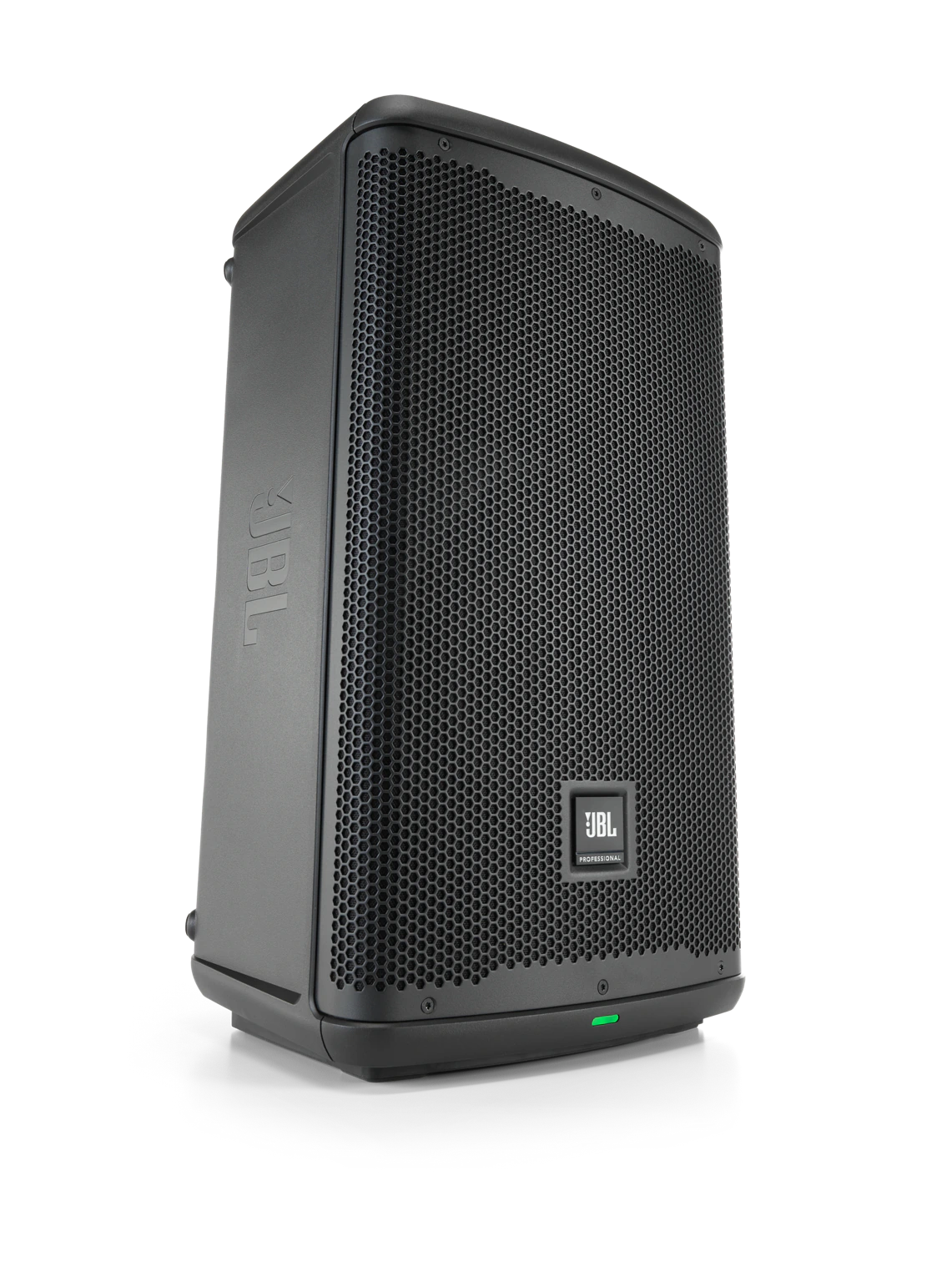
The JBL EON710 is the lightest mains-powered speaker: a 10″ woofer and a 1″ tweeter, up to 125 dB with bass down to 52 Hz. It is the speaker for speech, background music and small rooms. Our Speech kit for up to 50 people runs on two of them.
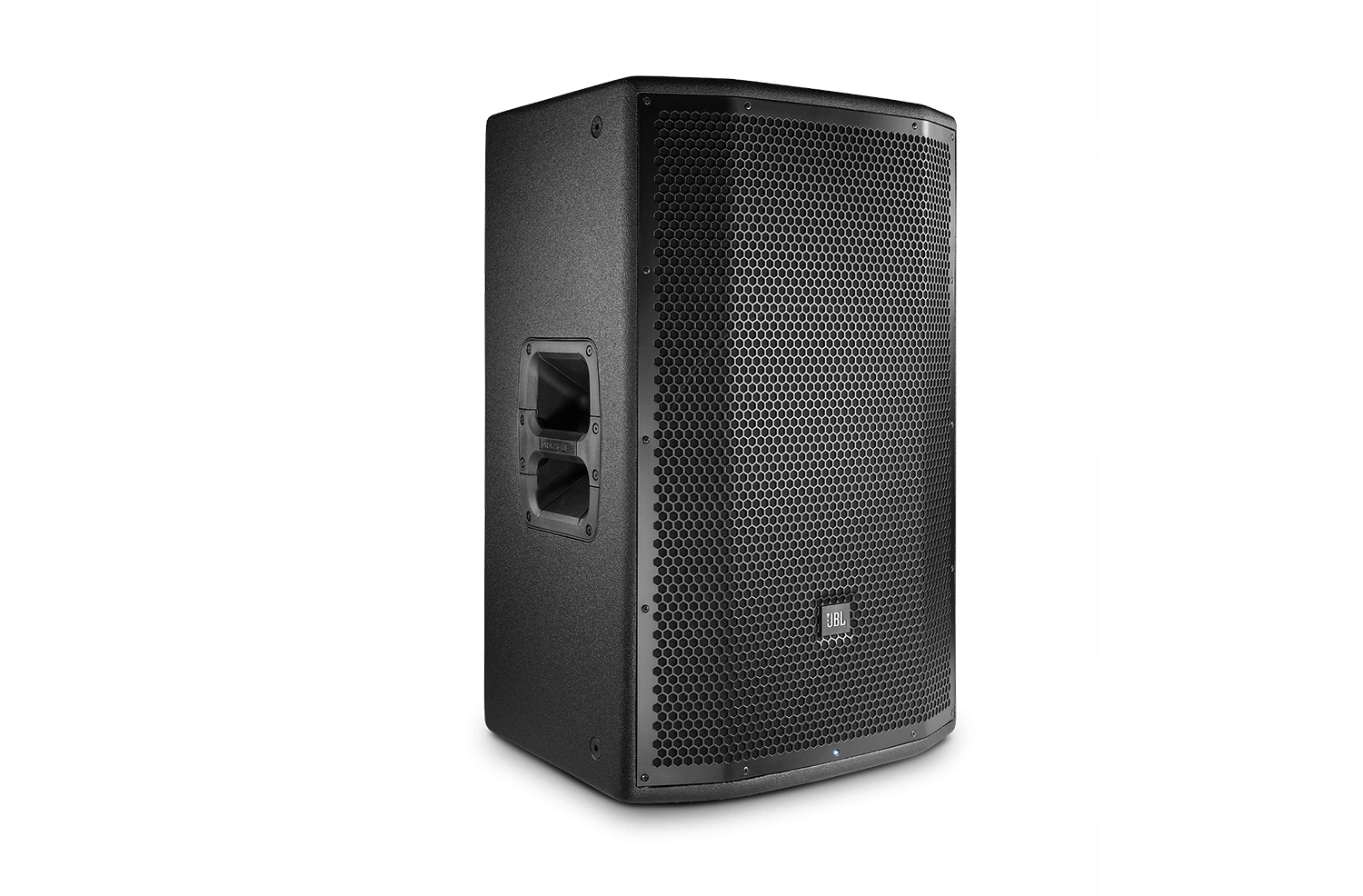
The JBL PRX812 and PRX815 are two sizes of the same series, both with 1500 W of amplification. The PRX812 (12″, 135 dB, from 44.8 Hz) is the all-round choice for a wedding, seminar or party. The PRX815 (15″, 137 dB, from 42.9 Hz) gives more bass in the same room and suits dance music played without a subwoofer.
The JBL SRX812P is a touring-series box: 12″ woofer, 3″ compression driver, 2000 W and 136 dB, 40 Hz to 21 kHz. Where it differs most from the PRX is at high level: it stays clean where a PRX would already be at its limit. We use it with subwoofers in the Party kit for up to 200 people, the Live band kit for up to 200 people and the Outdoor event kit for up to 300 people.
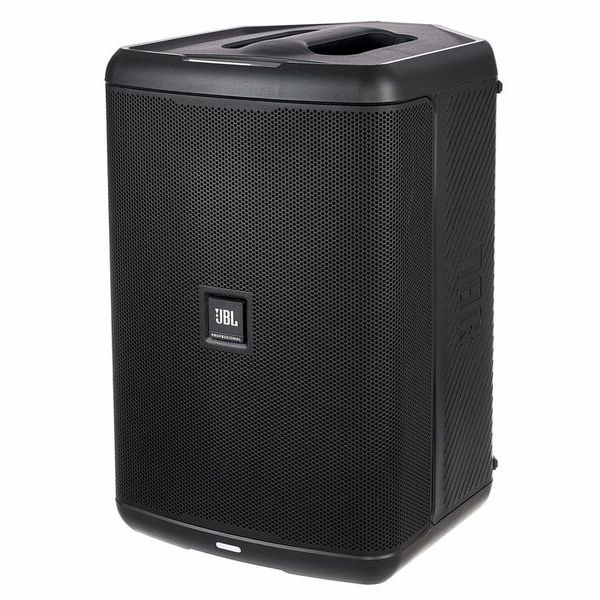
The JBL EON ONE Compact is a battery speaker with a small built-in mixer, up to 12 hours per charge and 112 dB. It is for places with no socket: a trail, a sports field, an outdoor ceremony.
How many speakers for which event
For speech, coverage matters more than power. Two EON710 cover a meeting room of up to 50 listeners. A seminar of up to 150 takes two PRX812, as in the Presentation and seminar kit for up to 150 people. In a long narrow hall more speakers help, not a bigger one: a second pair halfway down the room reaches the back rows.
For music and dancing, think about bass straight away. A party of up to 100 works well on a pair of PRX815 with one SRX818SP subwoofer, as in the Party kit for up to 100 people. For up to 200 people or a band, go for a pair of SRX812P with two subs. Our guide on sizing a sound system for 50, 100, 200 or 500 people has the detailed numbers.
All the speakers can run as a mono or stereo pair. At an event a pair is nearly always better than one big box, because the sound spreads more evenly and nobody sits right in front of a speaker.
Stands and poles: which and why
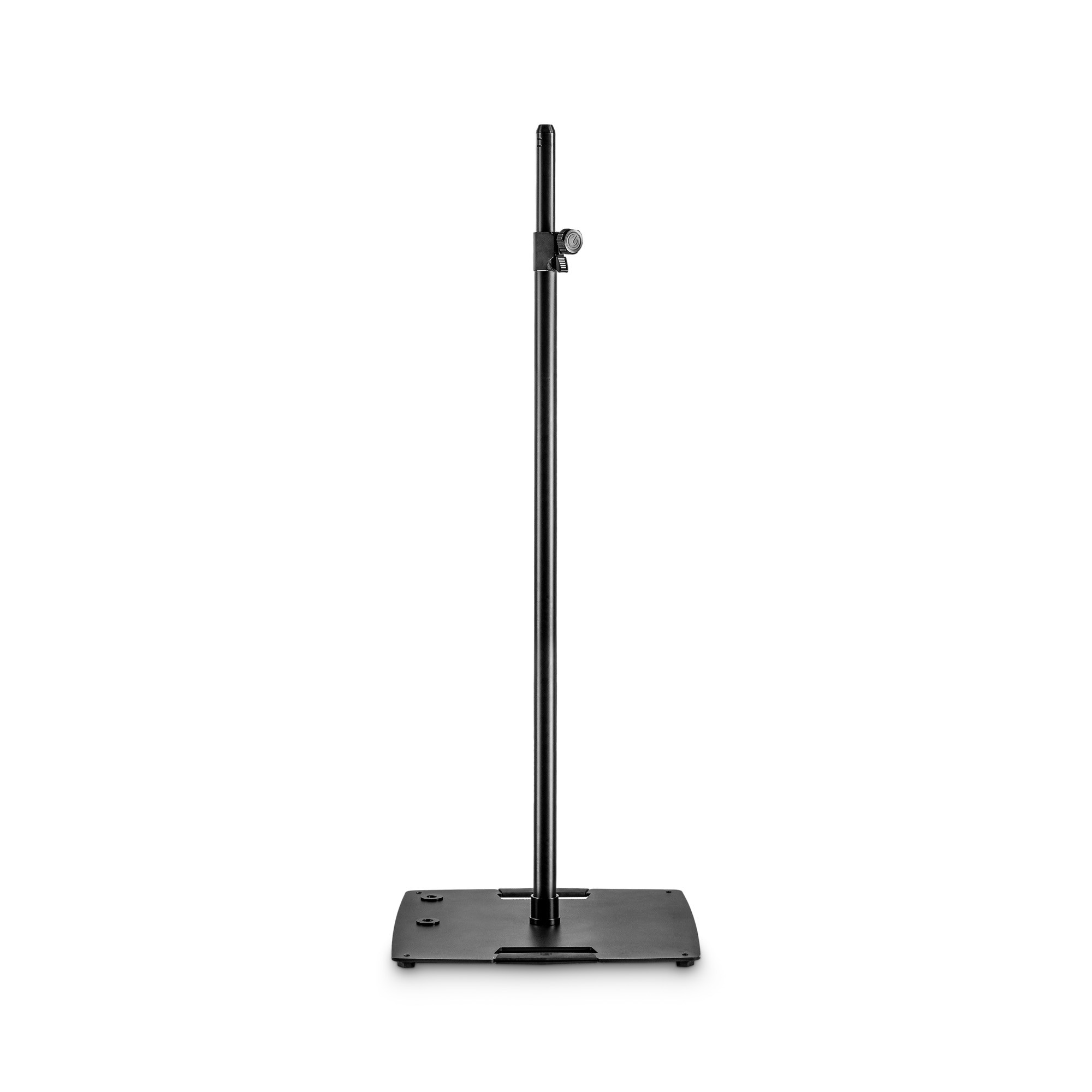
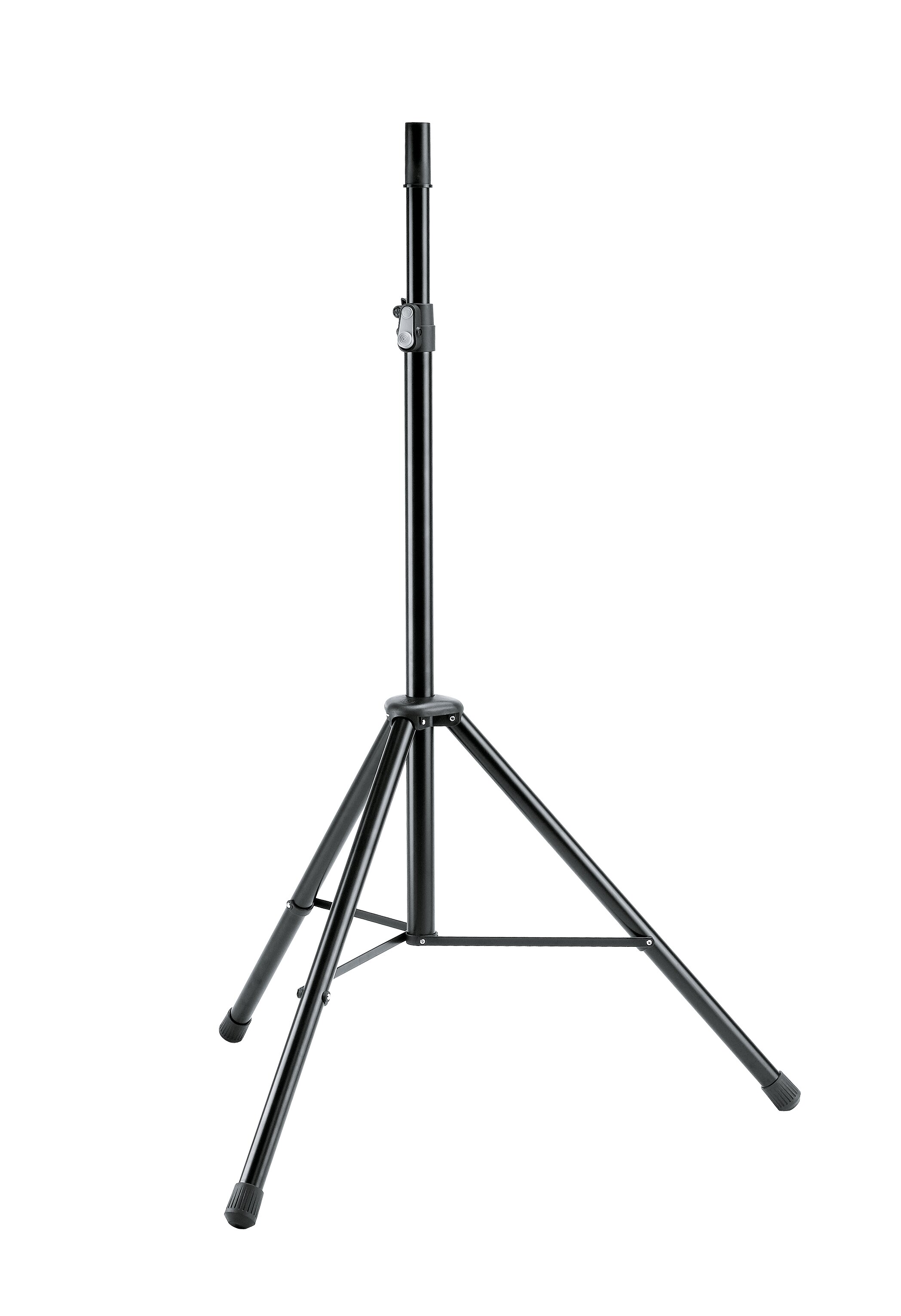
A speaker must sit above the audience's heads, otherwise the front rows soak up the sound. There are three options. The standard Speaker Stand is a light tripod for the EON710 and PRX boxes. The Gravity TLS 431 B is a touring stand with a square steel base for loads up to 25 kg; it stands firmer on a slippery floor and where people walk past it.
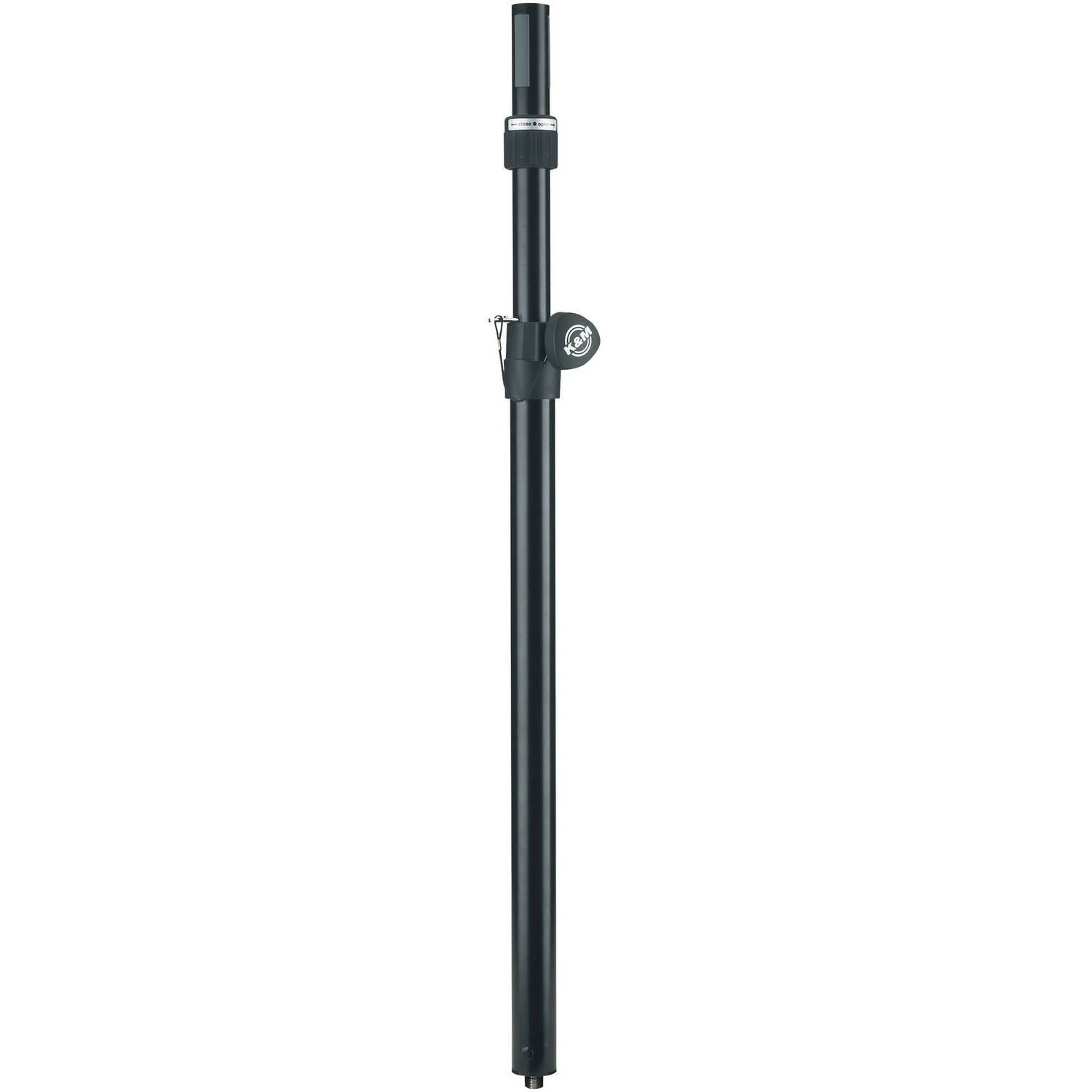
The Speaker Pole is a spacer that sits on top of a subwoofer and carries the speaker. If you rent subs you do not need separate stands: the pole goes into the sub's socket and the speaker on the pole. The system takes less floor space and the cables stay short.
- Speaker Stand: standard tripod, easy to carry
- Gravity TLS 431 B: steel base, up to 25 kg, steadier in a crowd
- Speaker Pole: speaker on top of a sub, no stand needed
What else to take with the speakers
Each speaker needs one XLR cable for signal and one power cable. If the speakers stand far from the stage or mixer, measure the distance beforehand and add a couple of metres. For a laptop, take a DI box or a USB DI such as the Radial USB-PRO to avoid hum.
Two or more sources (a microphone plus music) need a mixer. For a simple event the Soundcraft Signature 10 is enough; for a bigger one the Soundcraft Ui24R can be run from a tablet in the middle of the room.
Common mistakes when setting up speakers
The most common mistake is placing speakers behind the microphone. The sound from the box comes back into the mic and you get feedback. Put the speakers in front of and to the sides of the presenter, so the mic stays behind them.
The second is leaving a speaker on the floor or a table: the front rows get too much and the back rows too little. The third is turning the speaker's volume knob to maximum and keeping the mixer low; better keep the speaker at a moderate level and the mixer fader in its working range. Spread the stand legs fully and tape the speaker cable to the floor so nobody trips over it.