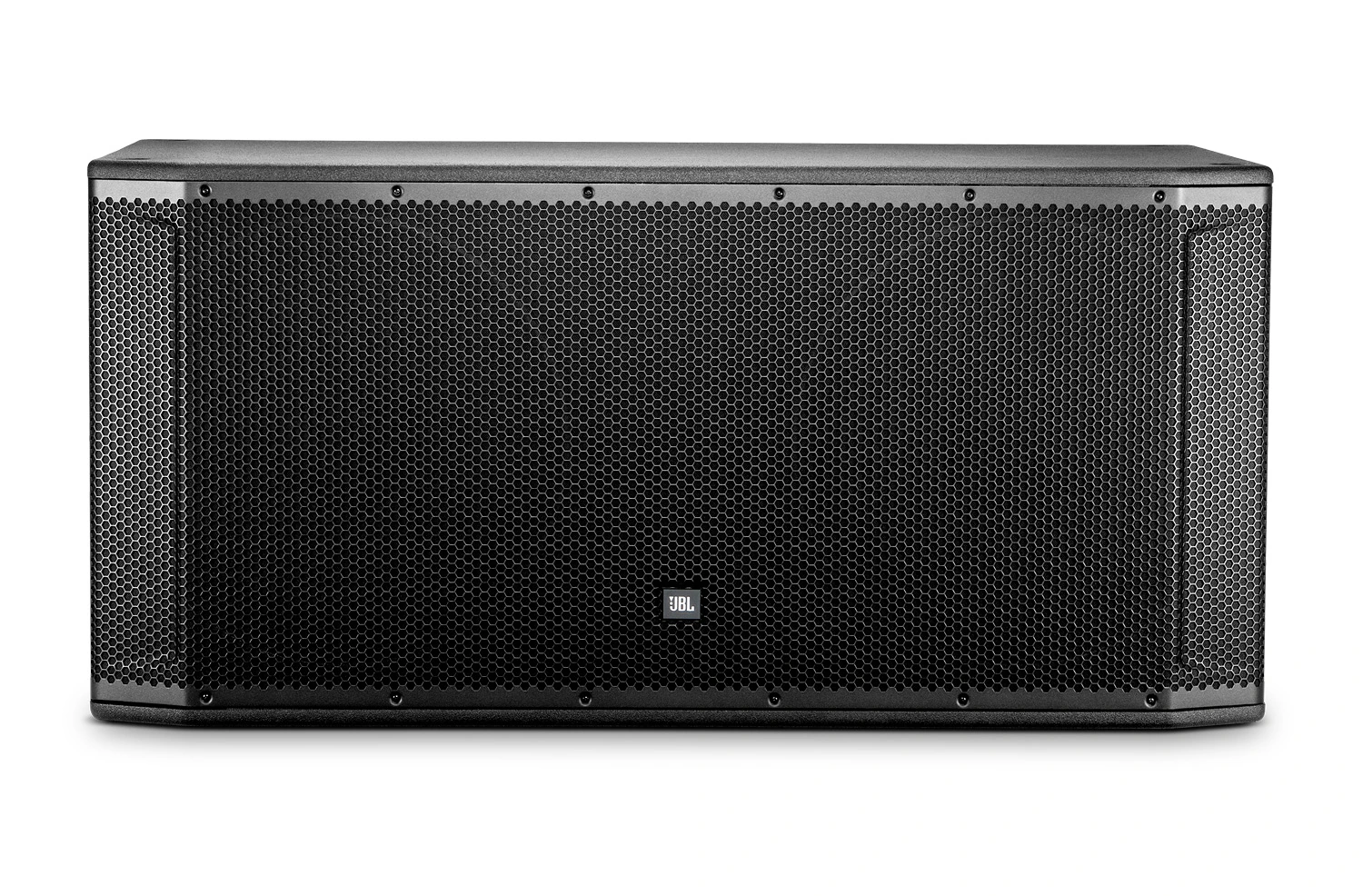
Active speaker
An active speaker has its amplifier and signal processing built into the cabinet, so it needs only mains power and an audio signal.
Everything in one box
An active, or powered, speaker contains three things that are separate in a passive system: the amplifier, the crossover and a protection limiter. The manufacturer has tuned them for that exact cabinet, so the tweeter and the woofer each get the right frequency band and the right power. The user does not have to work out impedance or choose a matching amplifier.
How to connect an active speaker
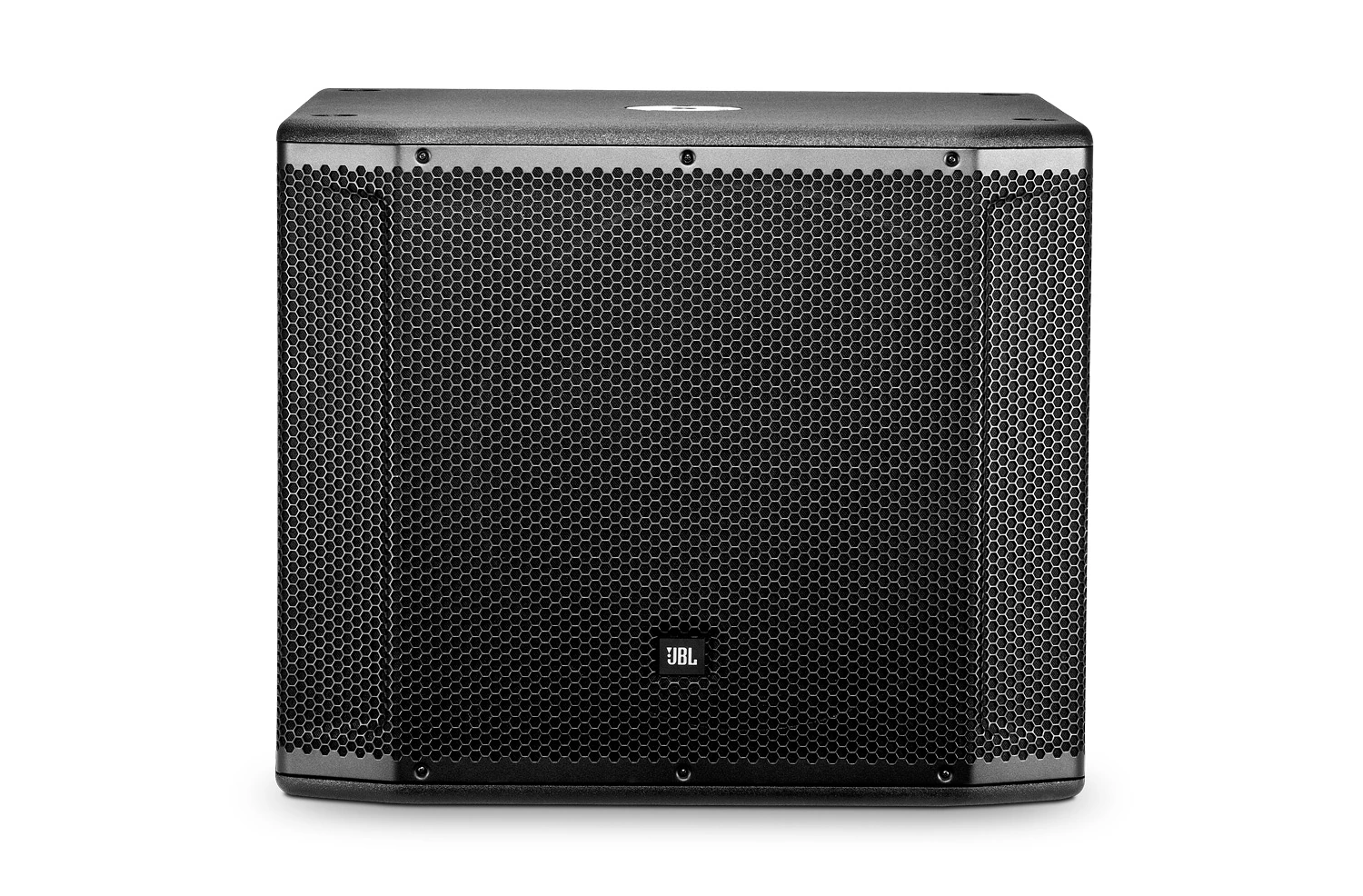
Each active speaker needs two cables: a power cable and a signal cable, usually XLR. The signal comes from the mixer at line level. When the speaker is used with a subwoofer, the mixer feed often goes into the subwoofer first and on to the top speaker, which is how the JBL SRX818SP works with an SRX812P. Some speakers also have a microphone input on the back, but for a larger event a mixer is the safer choice.
Examples from the rental list
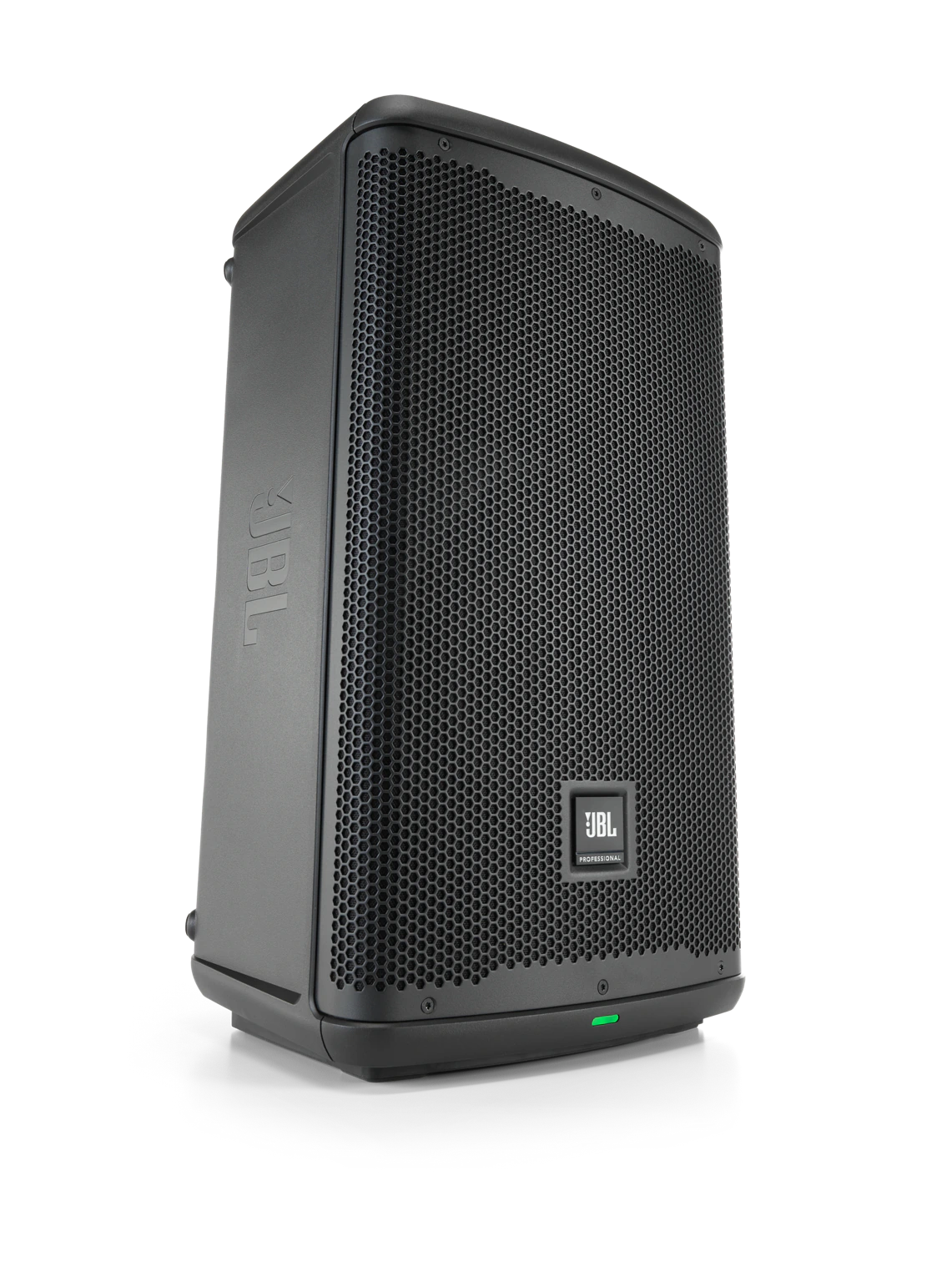
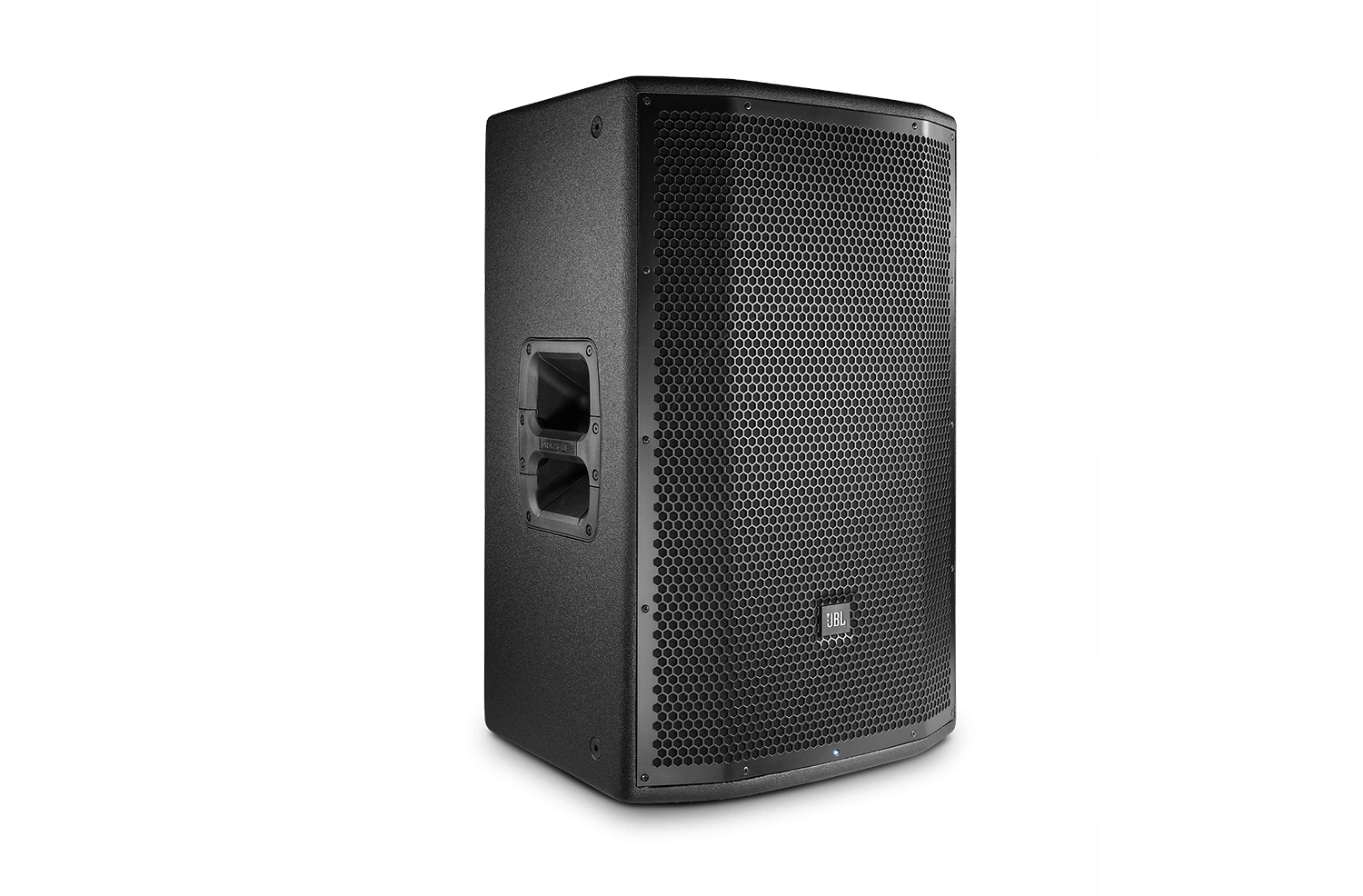
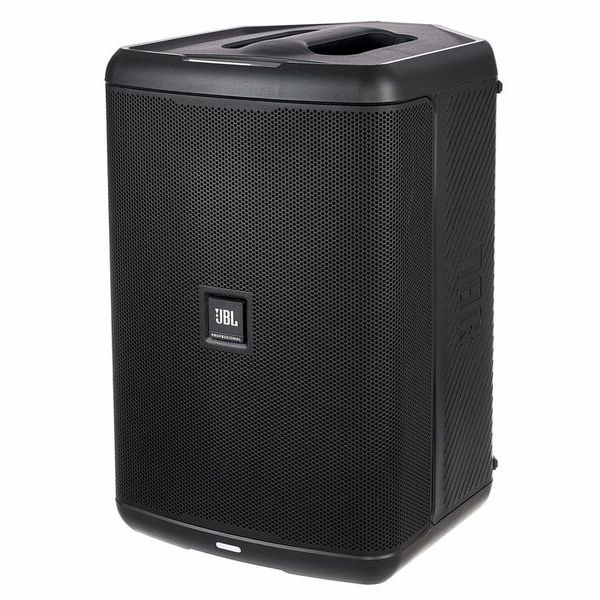
All JBL PRX and SRX speakers in the catalog are active. The JBL EON710 has a 10-inch woofer and, per the catalog, 650/1300 W; it suits speech and lighter music. The PRX812 and PRX815 are 1500 W boxes with 12- and 15-inch woofers. The SRX812P is 2000 W and is listed at up to 136 dB. The most portable is the JBL EON COMPACT ONE, which adds a battery and a built-in mixer.
What to watch out for
An active speaker needs power exactly where it stands. Outdoors or in a big hall that means an extension lead to every box, run safely. Another common mistake is turning the speaker's volume knob to maximum and the mixer down. It is better to leave the speaker input where the manufacturer recommends and set the level from the mixer. If the speaker's limit light starts flashing, the speaker is at its edge and it is time to reduce the level or add speakers.