
RIO1608-D2 or RIO3224-D2
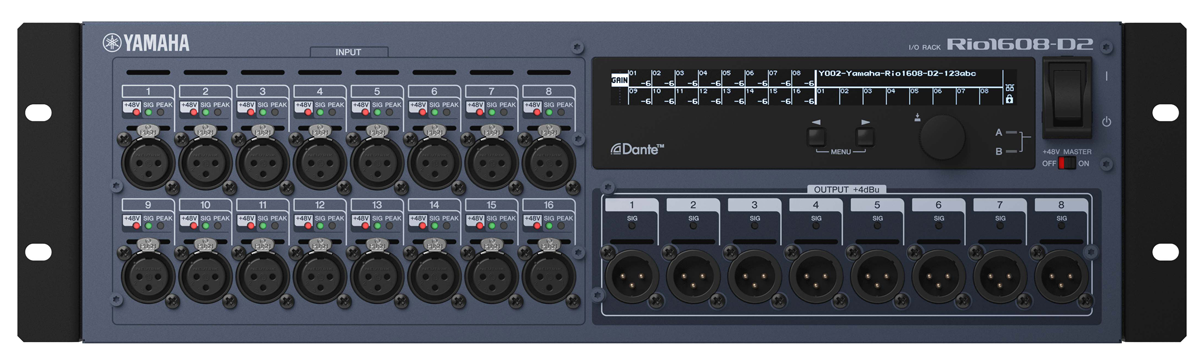
The Yamaha RIO1608-D2 is a Dante stagebox with 16 analogue inputs and 8 analogue outputs. It is enough for an acoustic group, a smaller band or a conference stage. The Concert kit for up to 500 people pairs it with a Yamaha QL1: the QL1's 16 local inputs stay at the desk, and the stagebox's 16 come from the stage.
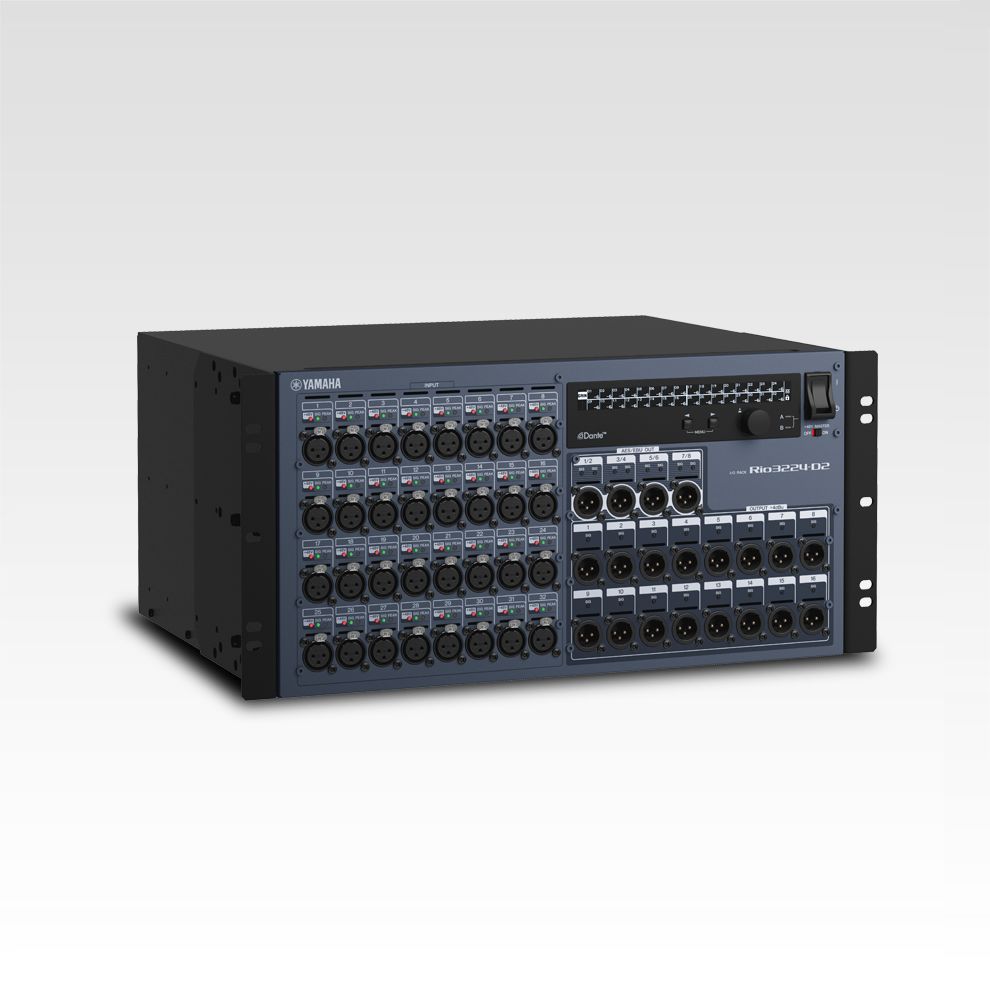
The Yamaha RIO3224-D2 has 32 analogue inputs, 16 analogue outputs and 8 extra AES/EBU digital outputs. It is the stagebox for a large band, a multi-act concert or a festival main stage. The AES/EBU outputs are handy when amplifiers or speaker processors accept a digital feed.
Do not forget the outputs: they carry signal back to the stage, for example to monitors, in-ear transmitters or speakers.
Which desks the RIO works with
The RIO is most convenient with Yamaha desks such as the QL1, DM7 or DM3. From them you control the stagebox preamp gain and phantom power straight from the console, as if the inputs were in the desk itself. The QL1 handles up to 48 inputs in total and the DM7 up to 120, so a large stage can take several RIO boxes.
Dante is an open standard, so another Dante device, such as a Behringer Wing Rack + Dante, can also receive RIO signals. Controlling the preamps from another maker's desk is not a given, though, so talk it through with us first and test before the event.
Dante networking in brief
Dante carries many audio channels over an ordinary Ethernet network. The stagebox and desk connect with a Cat5e or Cat6 cable. Under the Ethernet standard a single cable run is limited to about 100 metres; longer distances need a switch or fibre.
Channel routing is done on the desk or in Audinate's free Dante Controller software. At important events a second cable on a secondary network serves as backup, so the audio keeps running if one cable fails. Do not connect Dante gear to a random office or hotel network: use your own cable or switch.
- Cable: Cat5e or Cat6, ideally a rugged touring cable
- Run length up to about 100 m
- Redundancy: a secondary network on a second cable
- A separate network, not the building's Wi-Fi or office LAN
Recording with the RME Digiface Dante
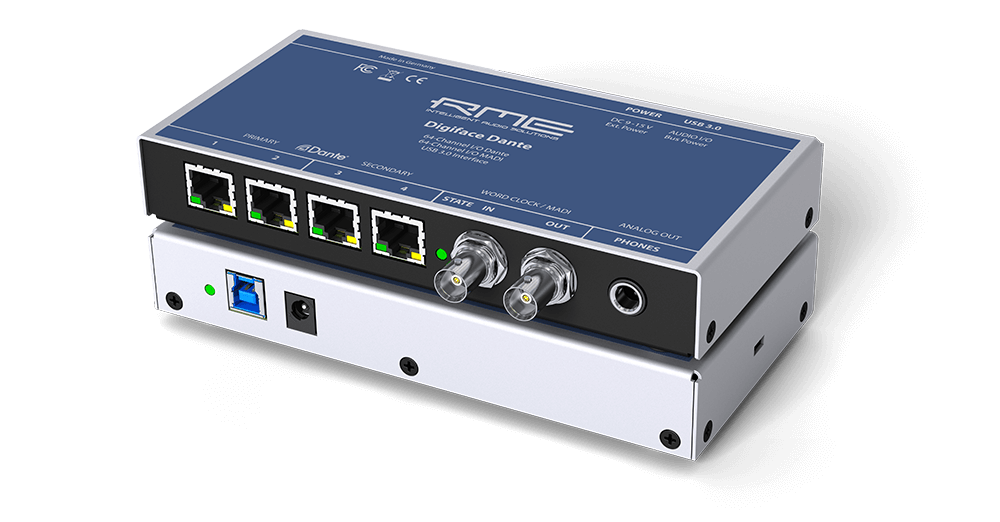
The RME Digiface Dante is a USB audio interface that brings up to 256 channels from a Dante network into a laptop and supports sample rates up to 192 kHz. Connect it to the same Dante network as the stagebox and desk, and record every mic on its own track in any recording software.
A multitrack recording lets you remix the concert later or run a virtual sound check: last night's tracks play back into the desk channels and the engineer can set the mix without the band. Our guide on recording an event compares a stereo pair with multitrack.
When you need a stagebox, and typical mistakes
A stagebox pays off when the run from stage to desk is long, when there are more than about ten inputs, or when the same signals are needed in several places: house desk, monitor desk, recording and broadcast. At a small event with the desk beside the stage you can do without.
Typical mistakes: nobody wrote an input list, so on stage no one knows what goes into which channel; the network cable lies underfoot at the front of the stage and gets yanked out; the stagebox stands in the rain unprotected. Send the technician an input list and a stage plot beforehand so the stagebox can be labelled in the right order.