Speaker placement indoors and outdoors: height, aiming and safety
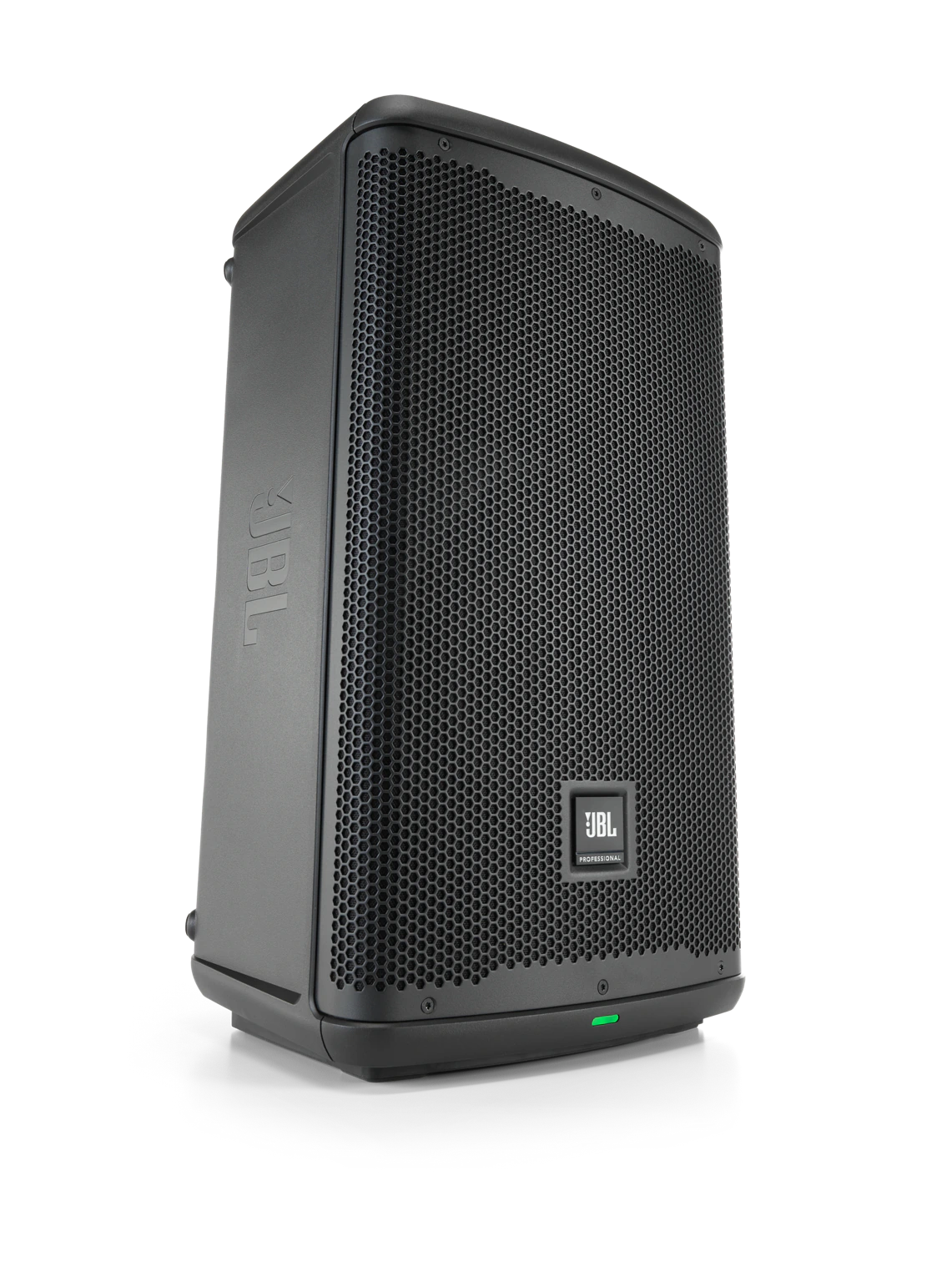
The same speakers can sound good in one room and poor in another, and the difference is often just where they were put and how high. These are the rules our technicians follow at every setup. They apply to a speech kit with two JBL EON710 as much as to a party kit with subwoofers, and they cost nothing but five minutes of thought before the stand goes up.
Height: ear level or above
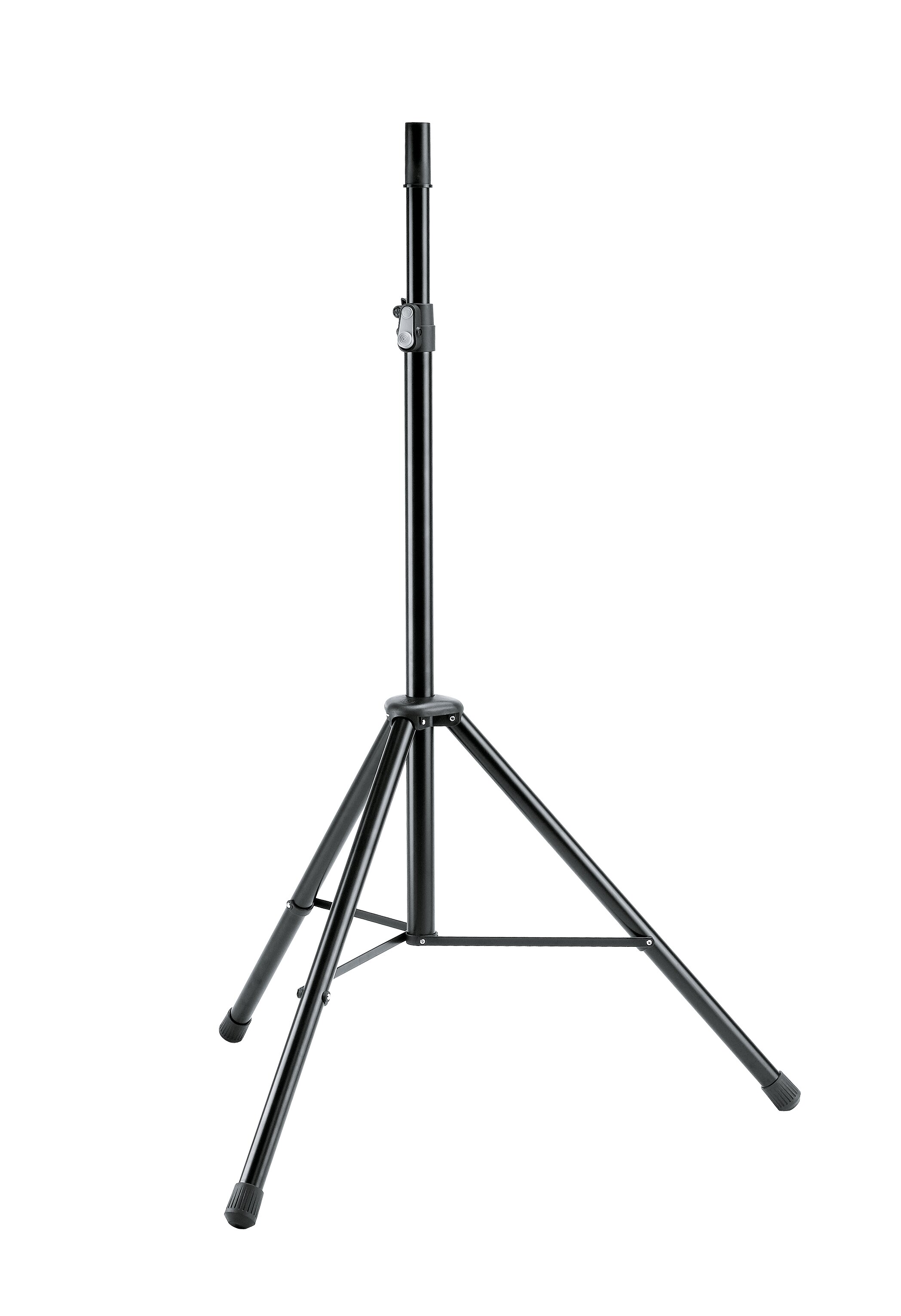
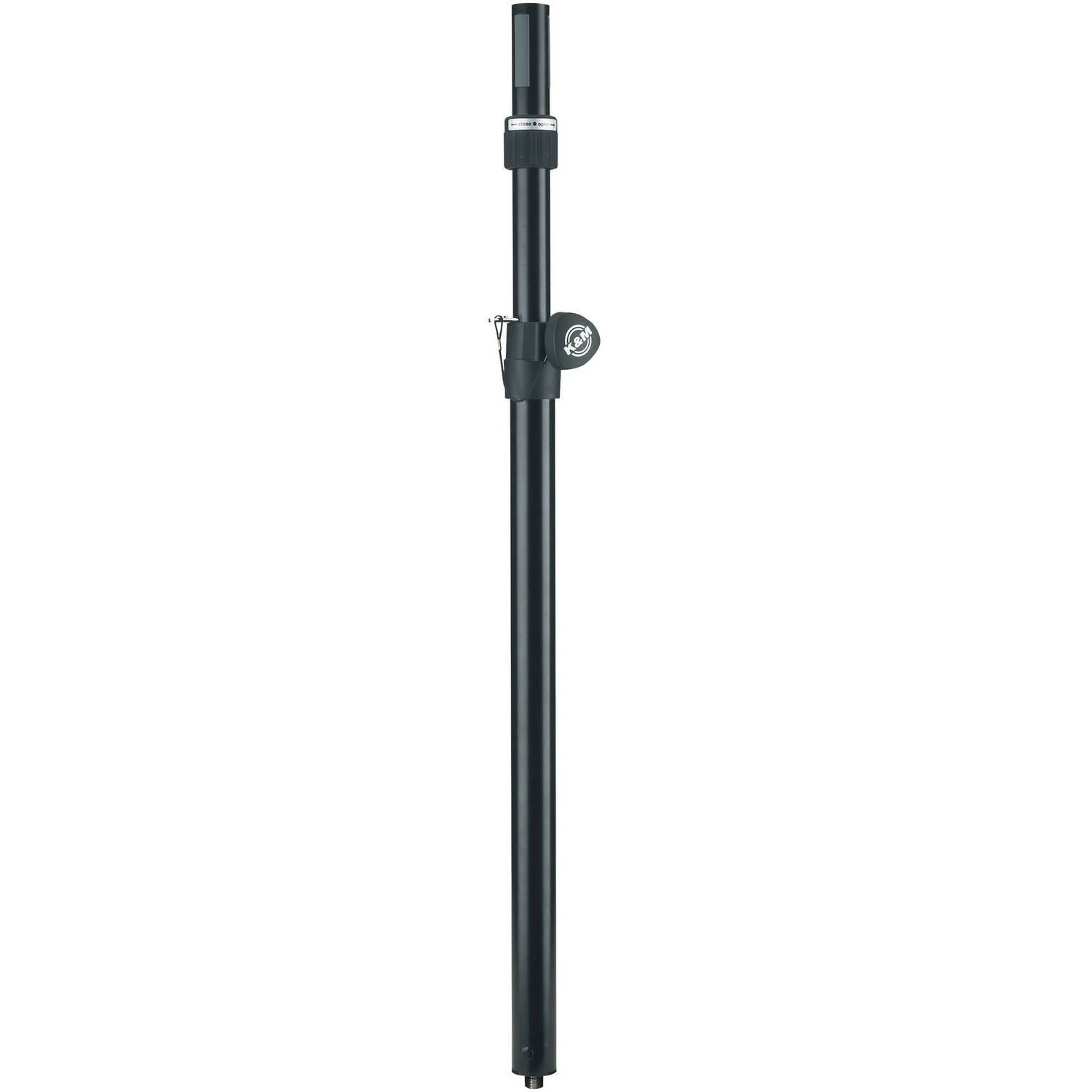
The speaker's high-frequency driver has to be above the listeners' ears, otherwise the first row absorbs the sound meant for everyone behind them. For a standing audience that means the top edge of the speaker at roughly two metres; for a seated audience a little lower. A speaker stand, or a distance pole on top of a subwoofer, gives you that height; a top speaker sitting on the floor sounds good only to the first row.
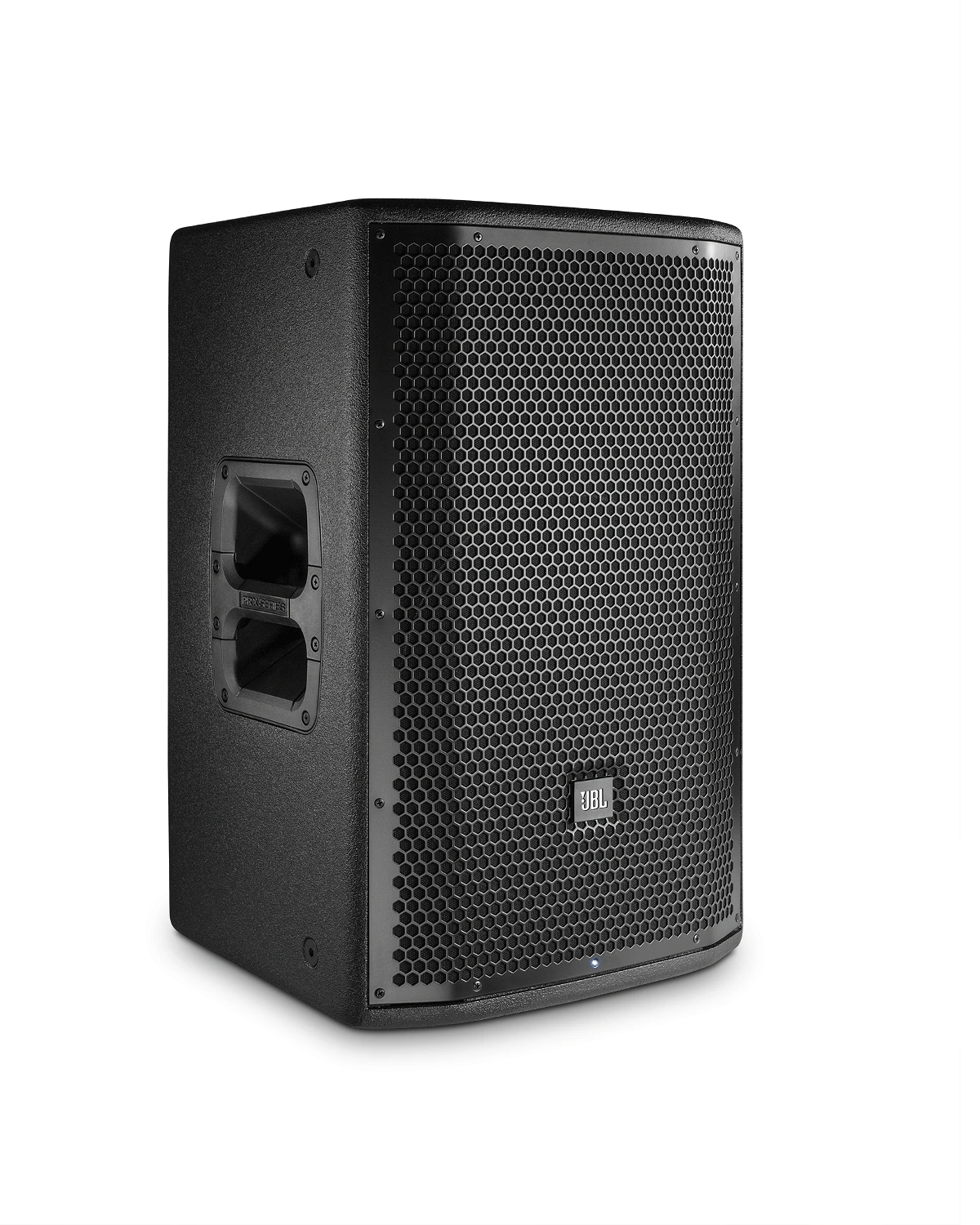
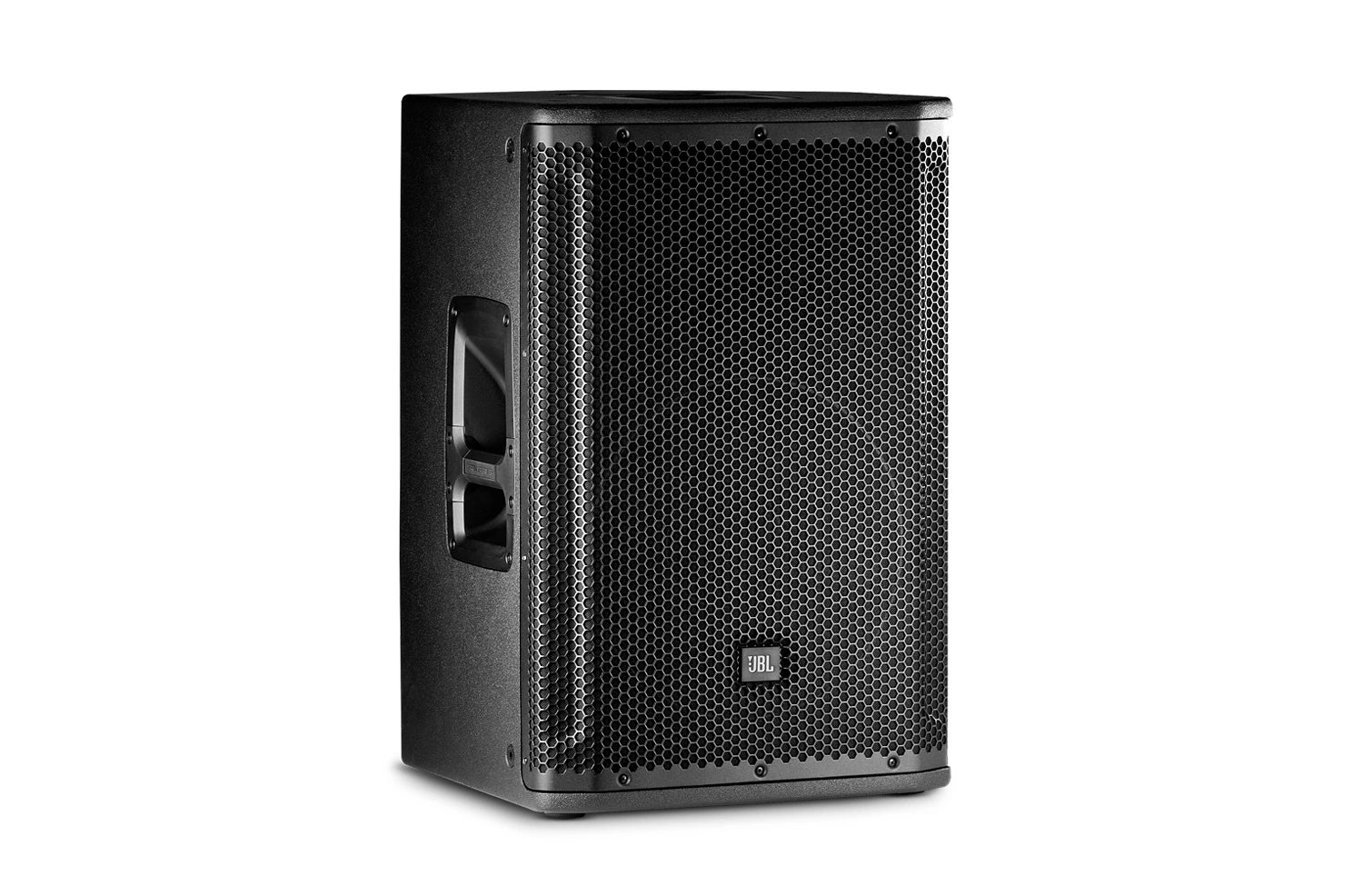
Do not go too high either. A speaker at three metres pointed straight ahead throws the sound over the heads onto the back wall, and it comes back as an echo. In that case tilt the speaker slightly downward so it aims at the back third of the room. Many speakers, including the JBL PRX812 and SRX812P, have an angled pole socket for exactly this.
Aiming and distance to the first row
Aim the speakers at the audience, not parallel to the walls. A common mistake is to put the speakers at the stage edges pointing straight ahead; the middle of the room ends up weak and the sides too loud. Turn both speakers slightly inward so that their axes cross in the rear part of the room.
The first row should not be closer than a couple of metres to a speaker, or it will be uncomfortably loud there and too quiet at the back. If the room is narrow and long, spread the speakers to the stage edges and raise them rather than squeezing them together in the centre. If the room is wide and low, a third speaker in the middle helps more than turning up the two at the sides.
The microphone line and feedback
The most important rule for speeches and singing: the speakers must be in front of the microphones. If the speaker stands in front of or between the loudspeakers, the mic hears the loudspeaker and the result is a squeal. Draw an imaginary line through the front faces of the loudspeakers; microphones and performers stay behind that line.
The person with a handheld mic who walks out into the room in front of the speakers is the most frequent cause of feedback. Agree beforehand where they will move, or use a separate microphone for audience questions that someone carries around the room. A stage monitor goes in front of the performer, directly behind the microphone, because a handheld mic hears least from directly behind itself.
Corners, walls and the long room
A speaker in a corner gives more bass but also more boom. For top speakers keep half a metre to a metre from corners and walls, so the low frequencies do not build up. In a room of glass, concrete and bare walls, turning the speakers up does not help; the echo just gets louder. Help instead with a lower level, with tilting the speakers into the audience and with getting the speakers as close to the audience as possible.
If the room is so long that the back rows cannot hear properly, it is better to add a second pair of speakers halfway down the room than to turn the main speakers up. The extra speakers have to play slightly later than the mains, because sound travels more slowly through air than through cable; otherwise the back of the room hears everything twice. Digital mixers such as the Soundcraft Ui24R or Yamaha DM3 can set a delay on an output. For a setup like this we recommend booking a technician.
Outdoors with no walls
Outdoors there are no walls to reflect the sound back, so the same system sounds quieter than indoors and there is less bass. Plan on one size up outside: where a JBL PRX812 is enough in a hall, take a JBL SRX812P and a subwoofer outdoors. Put the speakers higher and closer to the audience and aim them at the people; wind carries sound to one side and the only remedy is proximity.
Keep the mixer and the backs of the speakers covered against rain. Plastic over a speaker is acceptable only if it does not block the vents and the amplifier cooling. See also the outdoor kit for up to 300 people and the battery-powered kit for a smaller outdoor event where there is no mains power.
Stand safety
A fallen speaker is the most expensive and most dangerous thing that can happen with hired sound equipment. These rules prevent it:
- Spread the stand legs fully and tighten every clamp before the speaker goes on.
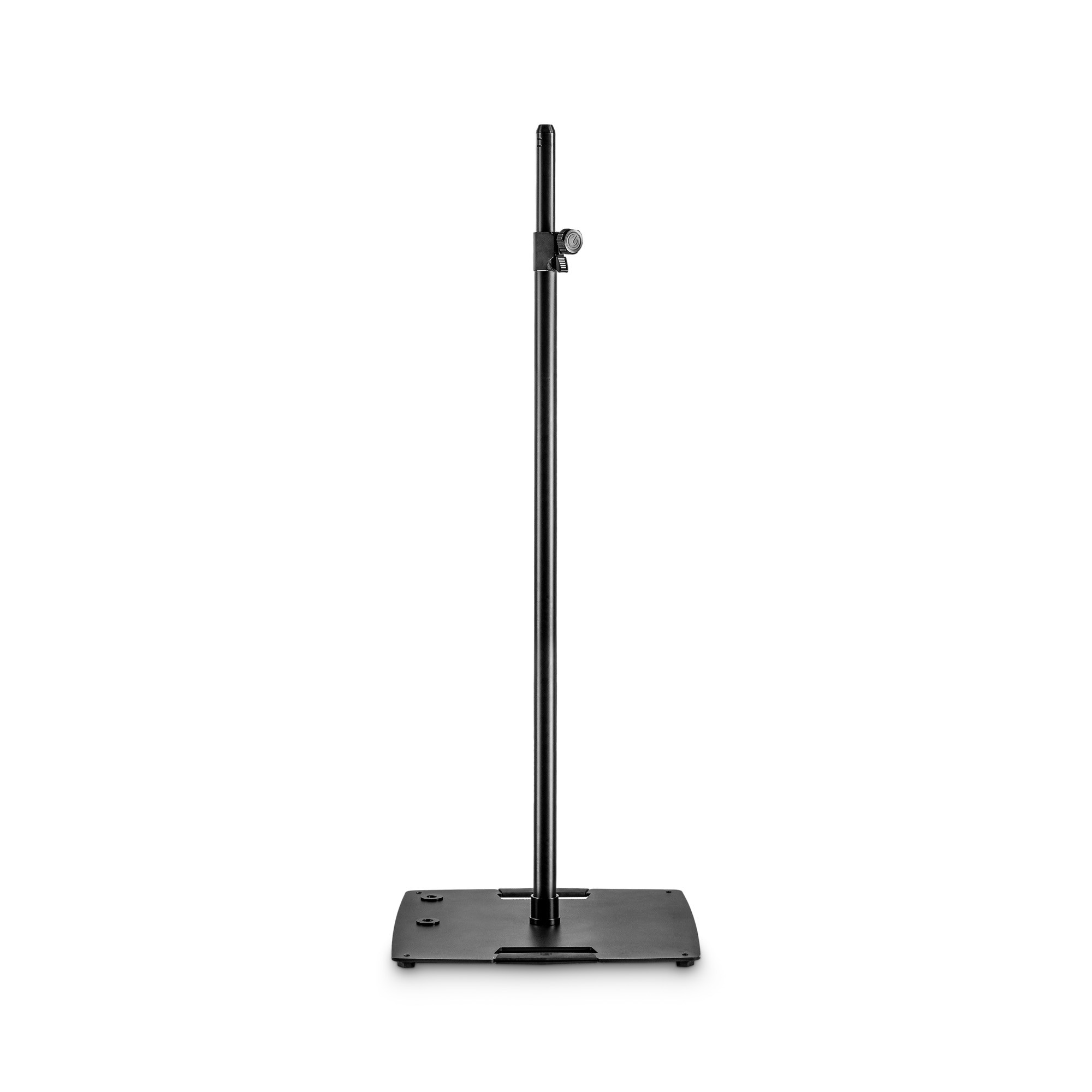
- Outdoors, and anywhere children run around, weigh down each stand leg with a sandbag or a water canister. The Gravity TLS 431 B with its steel base stands more firmly on its own than a tripod.
- Run the speaker cable down along a stand leg and then along the wall on the floor; where it crosses a walkway, cover it with a mat or tape.
- Do not lift a heavy speaker onto a stand alone. Two people and a speaker is a safe combination; one person and a fallen speaker is an expensive one.
- Do not leave a speaker on a stand in a crowded room without weights, or away from a wall where someone can run into it.