A conference or gala for 300
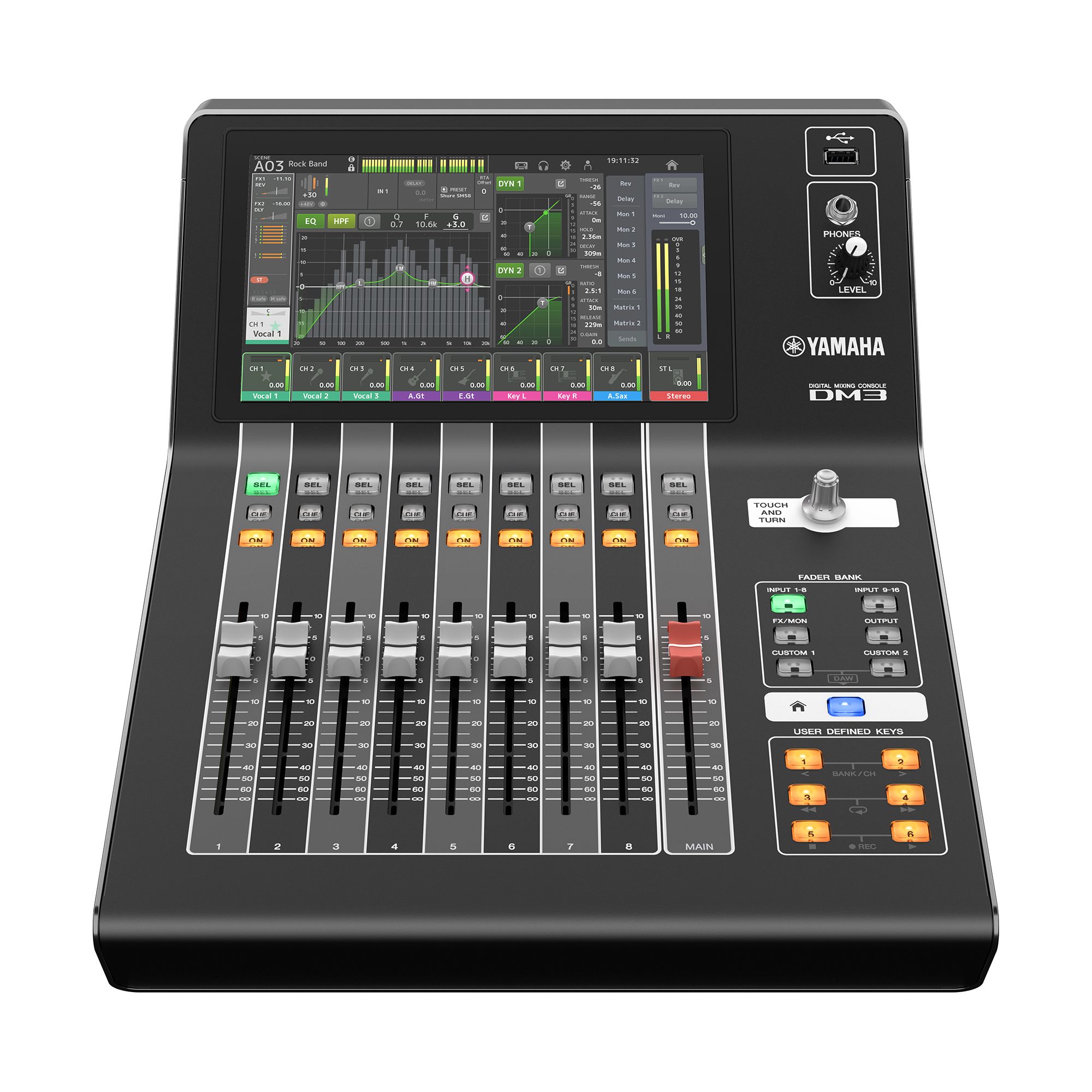
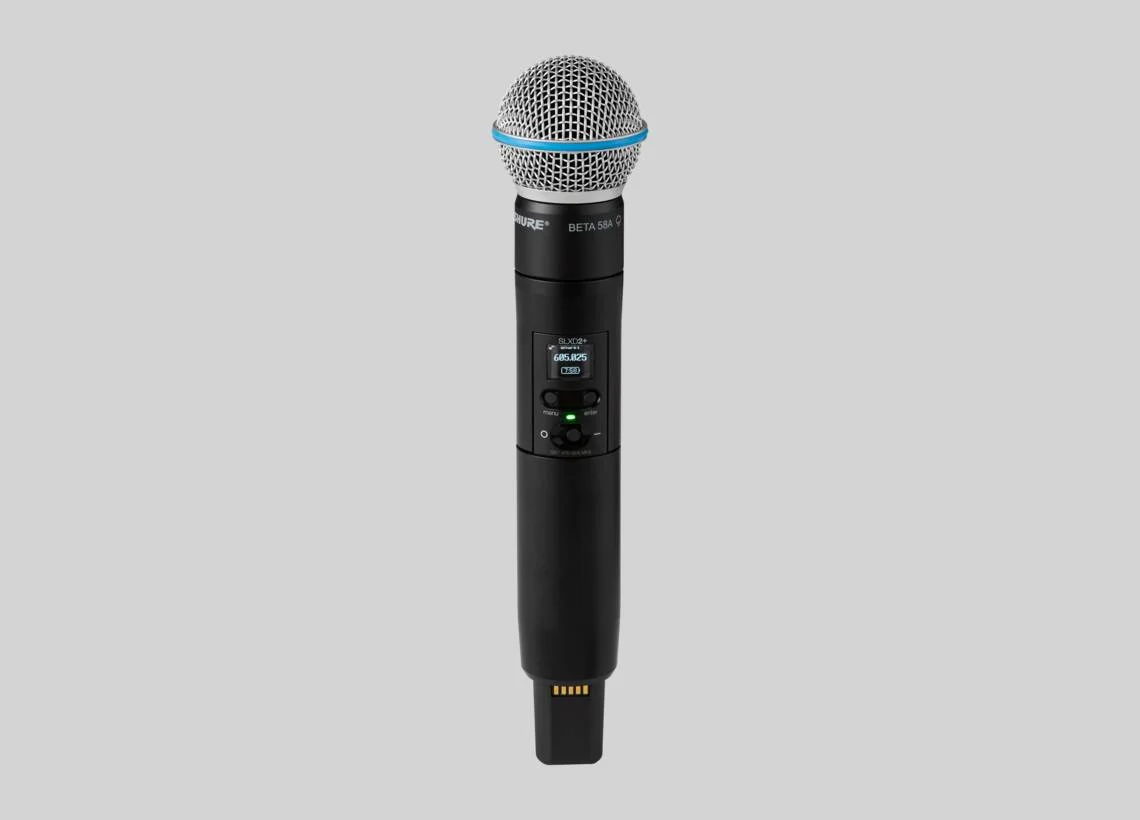
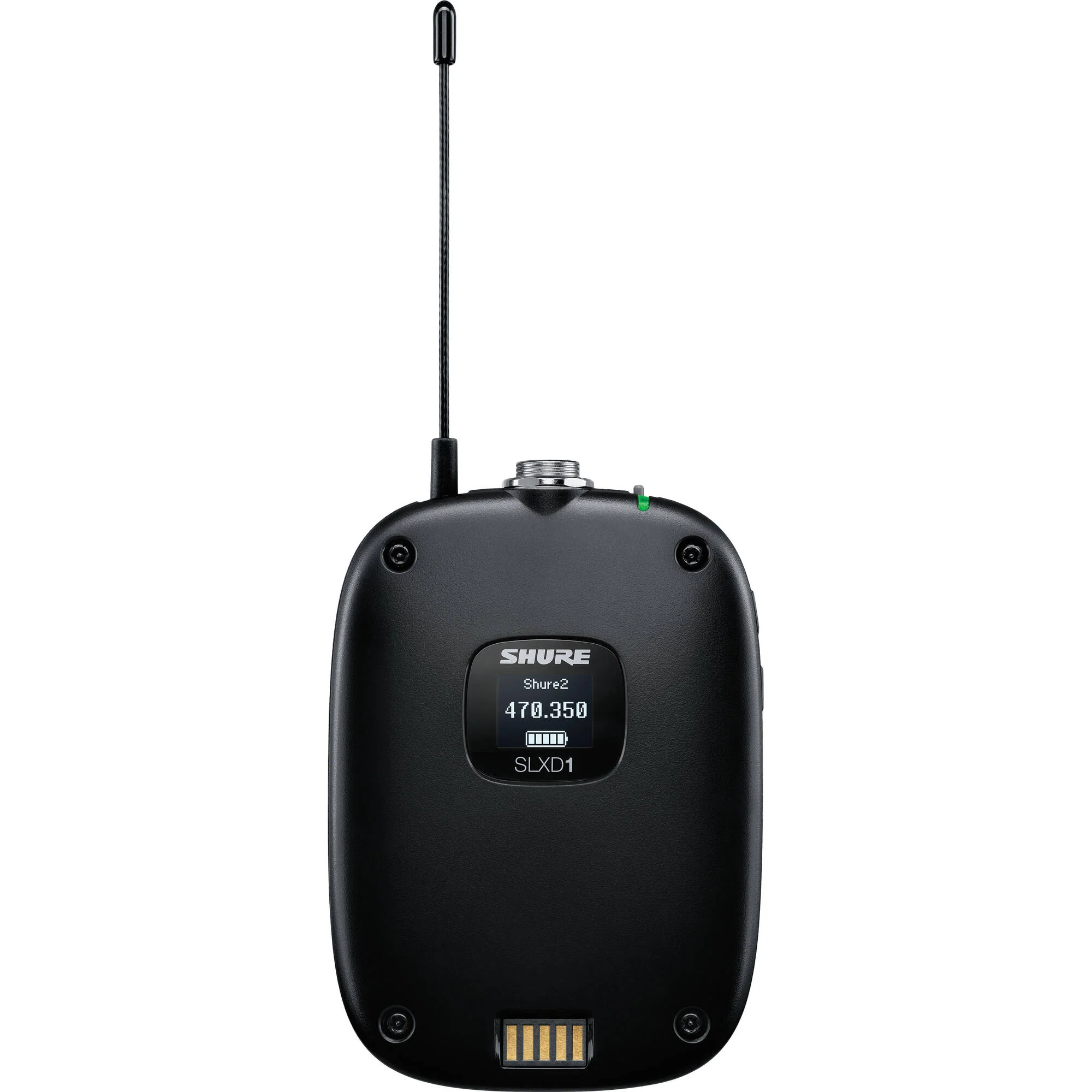
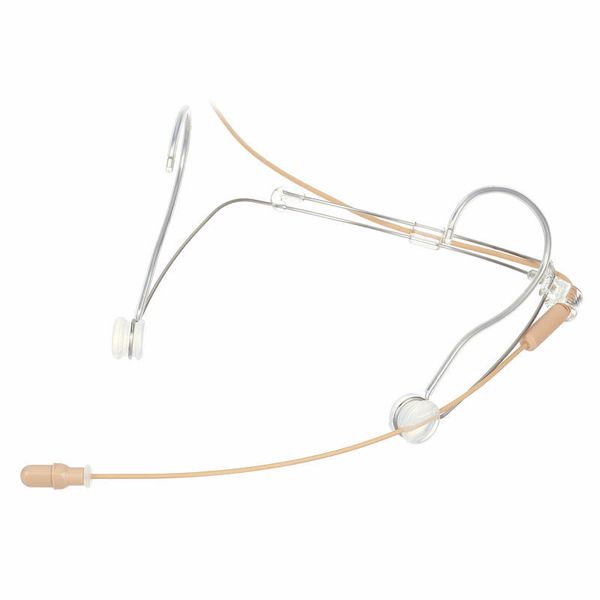
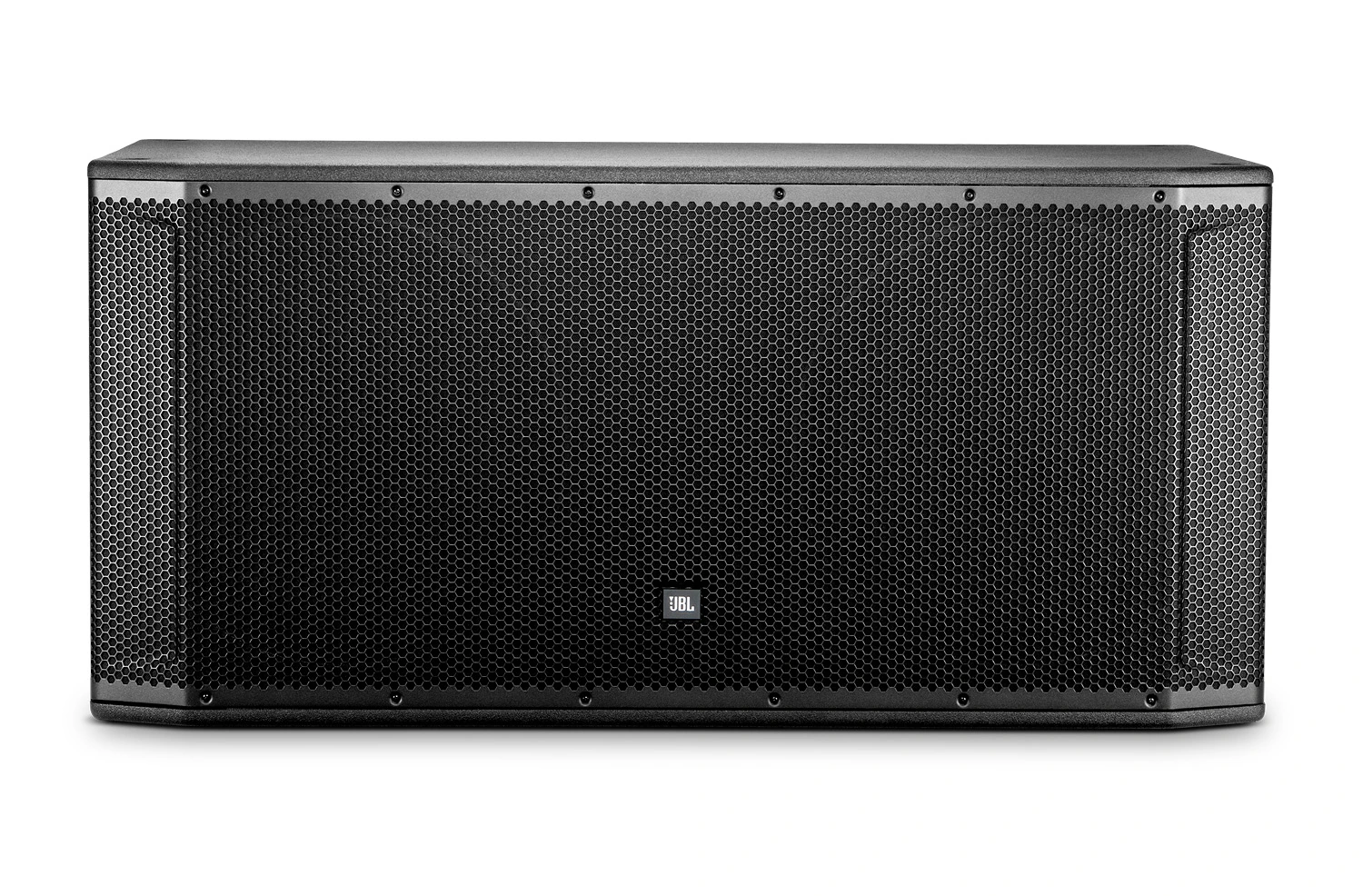
The Conference kit for up to 300 people has two JBL SRX812P speakers on stands, a Yamaha DM3 digital mixer, a Shure SLXD4QDAN four-channel receiver, two SLXD2/B58 handheld mics and two SLXD1 bodypacks with Shure DH5T headsets. Laptop sound goes through a Radial USB-PRO, and a second source through a Palmer PLI-04 passive stereo DI.
The Yamaha DM3 has 16 inputs and scene memory: settings for the morning panel, the afternoon talks and the evening gala can be stored and recalled with one button. The SLXD4QDAN receiver has a Dante output, so all four mics reach the mixer over a single network cable when the mixer sits at the back of the room.
Wireless mics and antennas in a large hall
An event for three hundred rarely has fewer than four microphones. Each wireless mic needs its own frequency, and if the hotel's own system, the presenters' own mics or a video crew's transmitters are working in the room too, the frequencies must be coordinated. Digital Shure SLXD systems find a free frequency themselves, but a technician should still check before the event.
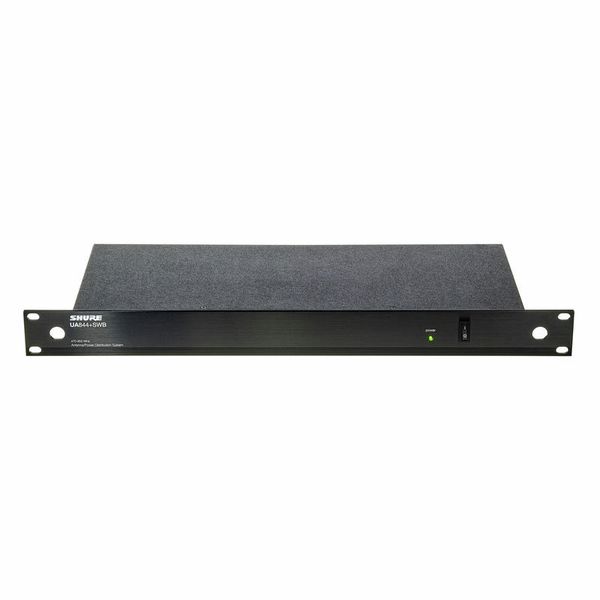
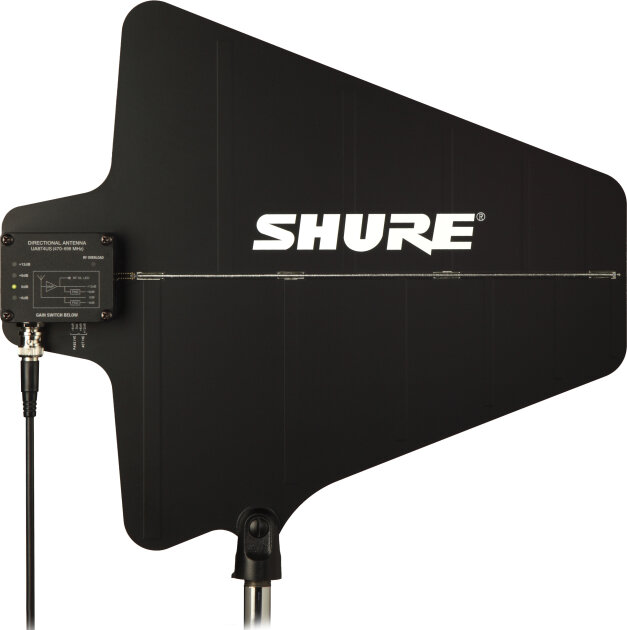
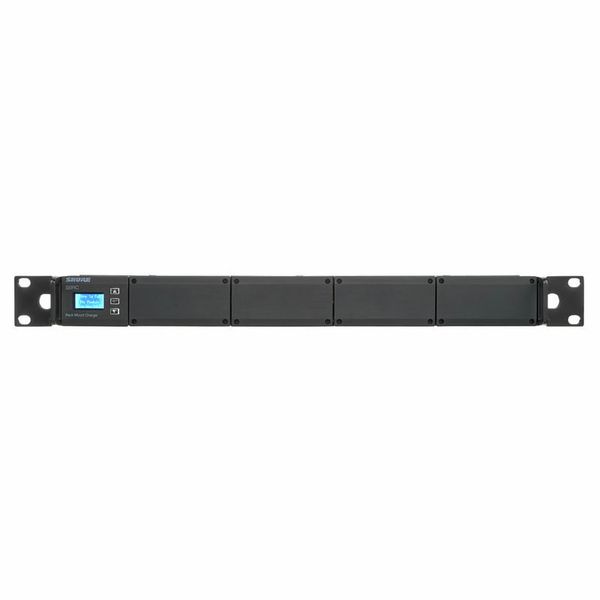
When the receiver stands at the back and the presenters are on stage, the distance is long and people absorb the radio signal. Two Shure UA874WB directional antennas aimed at the stage help, with a Shure UA844+ antenna distribution system sharing their signal among several receivers. On a long day use rechargeable batteries and the Shure SBRC charger, swapping them at every break.
A long hall and delay speakers
In a deep hall, speakers in front of the stage are too loud for the front rows and too quiet for the back. Turning them up only makes it worse for the front. The fix is a second pair of speakers about halfway down, playing more quietly to the back half.
The second pair must sound slightly later than the first, because sound travels about 3 ms per metre. Without delay, the back rows hear every sentence twice and speech turns muddy. The Yamaha DM3 can delay an output. If the main speakers are far apart, the front rows sometimes also need a small front-fill speaker at the edge of the stage.
A party or concert for 300
A dance party for three hundred needs more bass than the 200-person party kit. The Outdoor event kit for up to 300 people works indoors too: two SRX812P, two dual 18-inch JBL SRX828SP subwoofers, a Soundcraft Ui24R and two wireless mics. For a band, build on the Live band kit for up to 200 people and add speakers or monitors.
If the room is wide and deep and speech must be clear alongside the music, consider a small line array such as JBL VTX A6 elements on a base plate. A line array keeps the level more even from front to back. There is a separate guide comparing line arrays with conventional speakers.
300 people outdoors
Outdoors, three hundred is the upper limit for the Outdoor event kit for up to 300 people. If the audience stands deep or the sound must carry across a wide field, take the next size or add delay speakers. All four active boxes need power, so cables must run to both sides of the stage and be protected from rain and foot traffic.
At a summer event, keep in mind that warm air in the day and cool air in the evening change how sound travels, and wind carries high frequencies further in one direction. Check the sound again in the evening once the audience is there.
The technician and the mixing position
For three hundred people a technician is always advisable. They watch four or more wireless mics, the batteries, the delay speakers and the balance between speech and music. At a conference it also means every presenter's mic is open on time and none is left on by mistake.
The mixer belongs in the room where the engineer hears what the audience hears, usually in the middle about two thirds back from the stage. Plan a table, power and cabling there that does not block doors or aisles. A stagebox or a Dante network carries the signals from stage to mixer.