Dante network audio
Dante is a technology that carries dozens of audio channels digitally over an ordinary network cable, so stage inputs reach the mixer without a heavy multicore snake.
What Dante is
Traditionally each microphone signal runs from the stage to the mixer on its own wire, bundled into a thick, heavy multicore. Dante works differently: the stagebox on stage converts the mic signals to digital and sends them all to the mixer over one network cable. Dante is a protocol developed by the Australian company Audinate and supported by many manufacturers, so equipment from different brands speaks the same language.
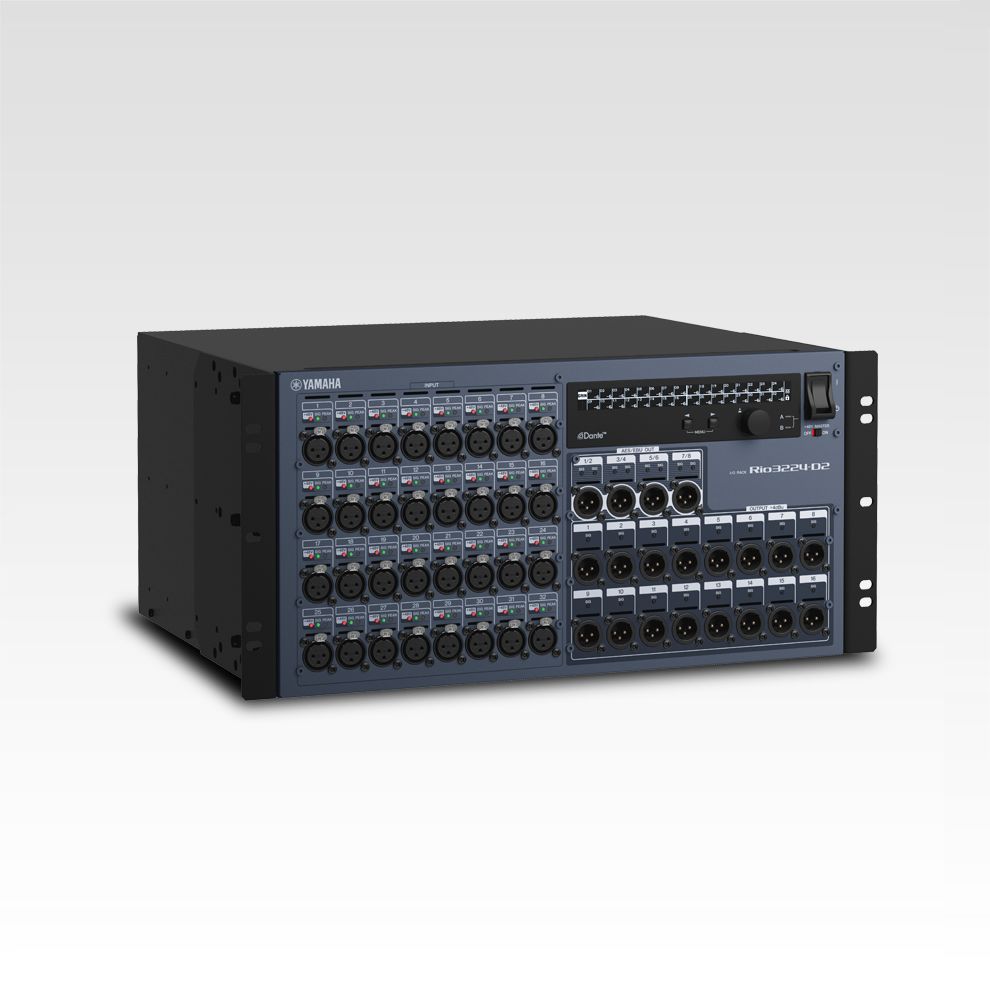
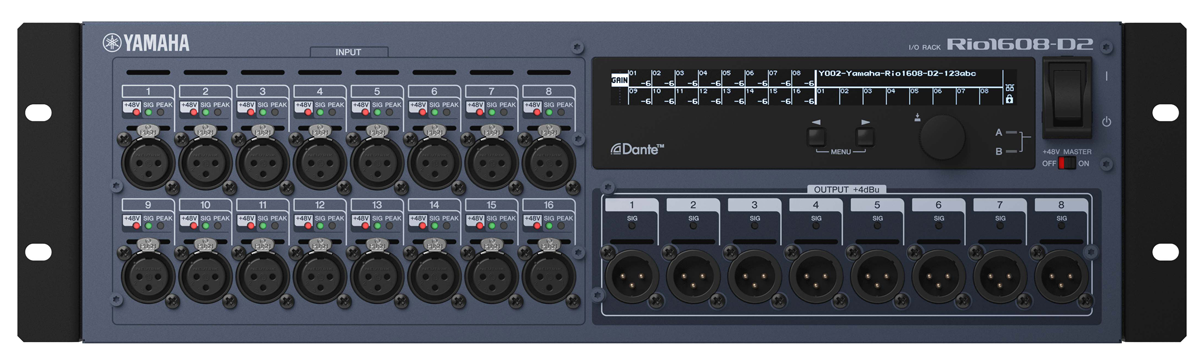
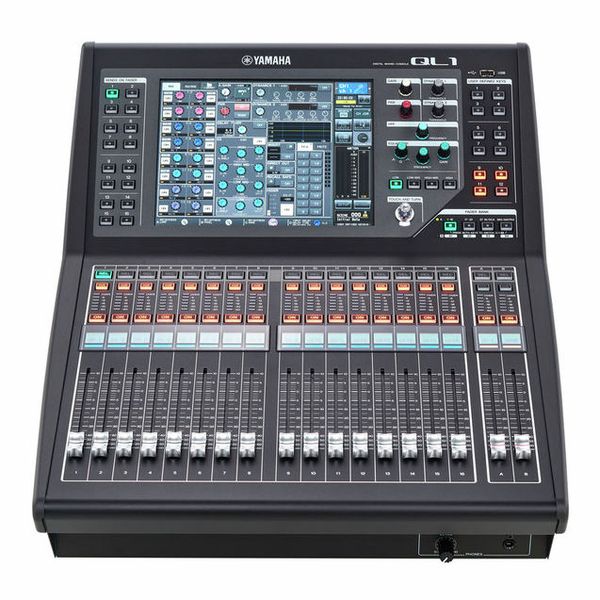
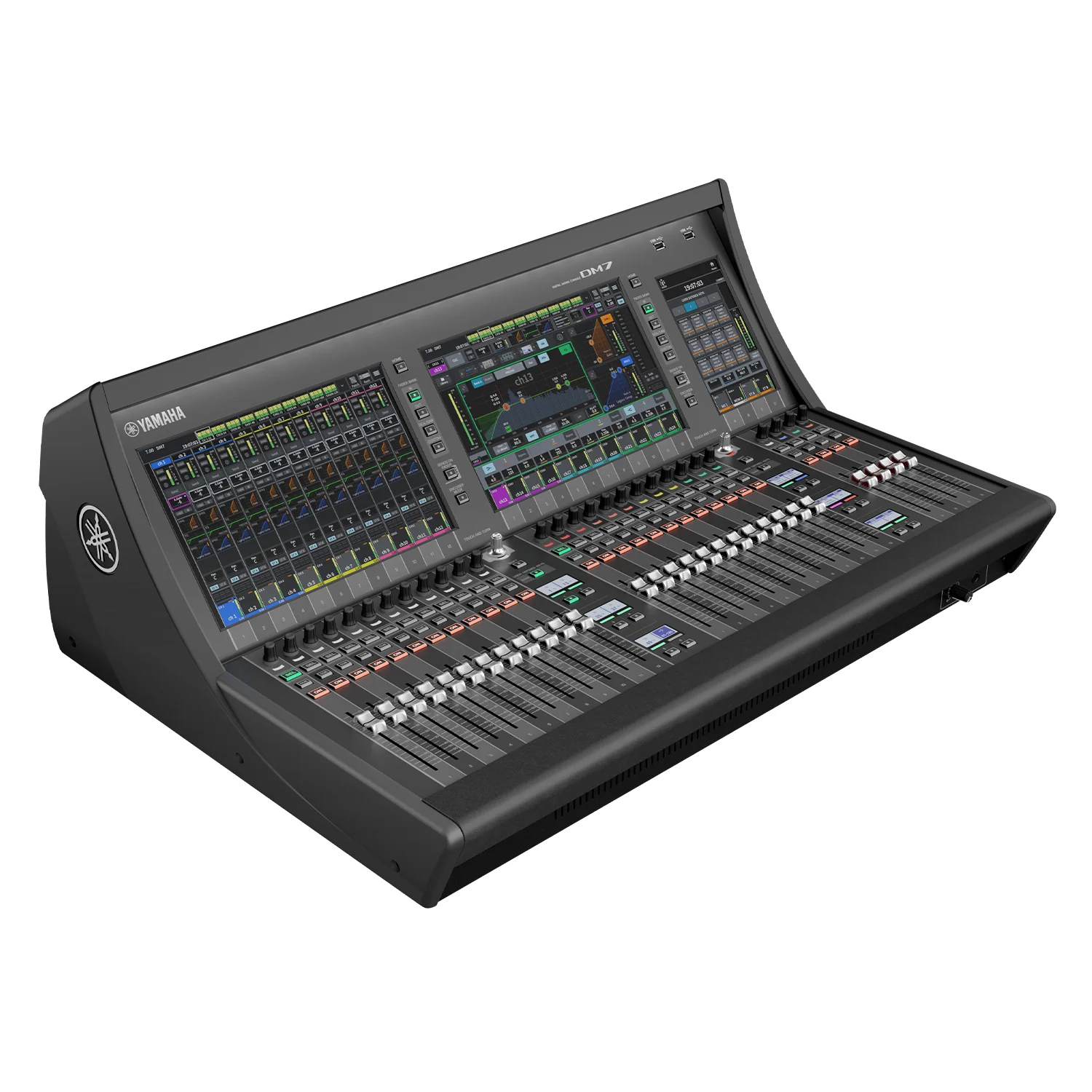
Yamaha Rio stageboxes are typical Dante devices. The RIO3224-D2 carries 32 inputs and 16 outputs, the RIO1608-D2 16 inputs and 8 outputs. They connect over a network cable to a Yamaha QL1 or DM7 console out in the room.
Why it matters at an event
A network cable is light, thin and cheap to replace; a multicore is heavy, and a long one also degrades the signal. With a long distance between stage and desk, as in a big hall or outdoors, the difference is especially large. A digital signal does not pick up hum on the way or lose high frequencies.
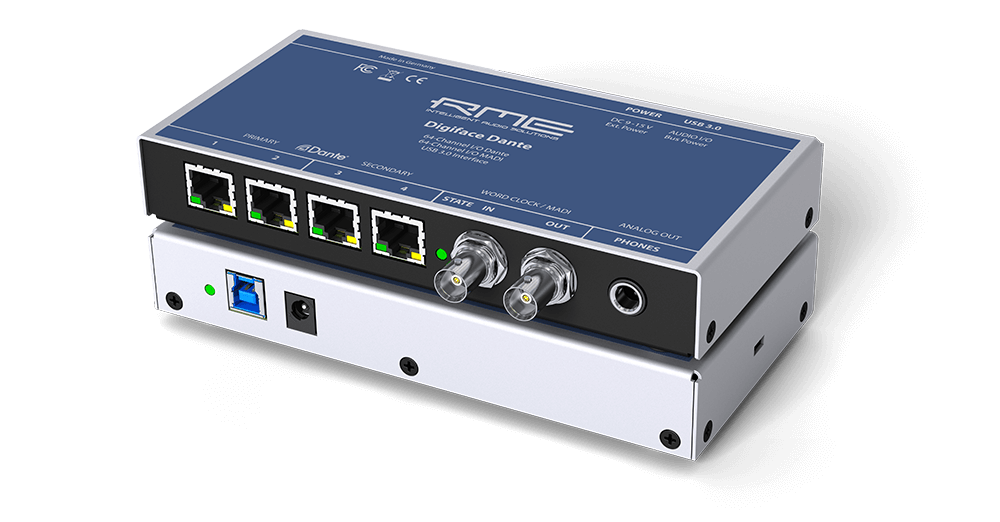
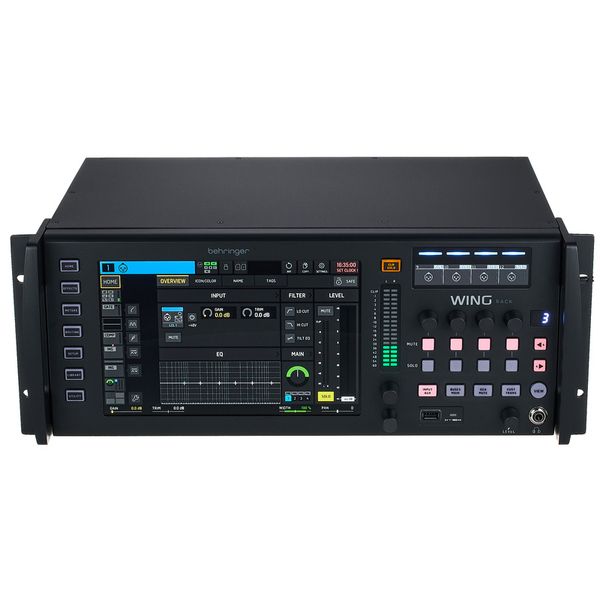
On a Dante network any device can send and receive audio channels. The Shure SLXD4QDAN wireless receiver sends four mics straight onto the Dante network. The RME Digiface Dante connects a computer to the network over USB so every channel can be multitrack recorded. A Behringer Wing Rack + Dante fits into such a network too.
How a Dante network is built
In a small system the stagebox and mixer connect directly with one cable. For several devices you need a network switch, which should be gigabit and managed. Routing is done in the Dante Controller software, which shows every device and which channels go where.
- Primary and secondary networks: many devices have two Dante ports so a second cable takes over if the first fails.
- A single copper network cable is limited to about a hundred metres by the network standard; longer runs need a switch in between or fibre.
- All devices must run at the same sample rate, with one device acting as clock master.
- A cable with a locking connector will not get pulled out on stage by accident.
Common mistakes
Dante is reliable when the network is built properly. Problems usually come from the network, not the audio gear.
- A home network switch is used and its energy-saving mode drops the audio.
- The Dante network is connected to the venue's general network or Wi-Fi and the traffic disturbs the audio.
- Primary and secondary cables go into the same switch, so the backup does nothing.
- A network cable runs across a doorway unprotected and gets trampled.