

When you need extra antennas
External antennas are worth considering when at least one of these applies. The more of them stack up, the surer it is that whip antennas will not be enough.
- Four or more channels: two antennas per receiver in one rack interfere with each other and the rack turns into a tangle of cables.
- The receiver is far away, backstage, in a side room or at the back of the hall, with a wall or the stage in between.
- Metal around the stage: trusses, LED screens, metal rack cases. They block and reflect the radio signal.
- A full hall. The human body absorbs radio signal, so a test in an empty room can behave very differently with the audience in.
Mic side: Shure UA844+ and UA874WB
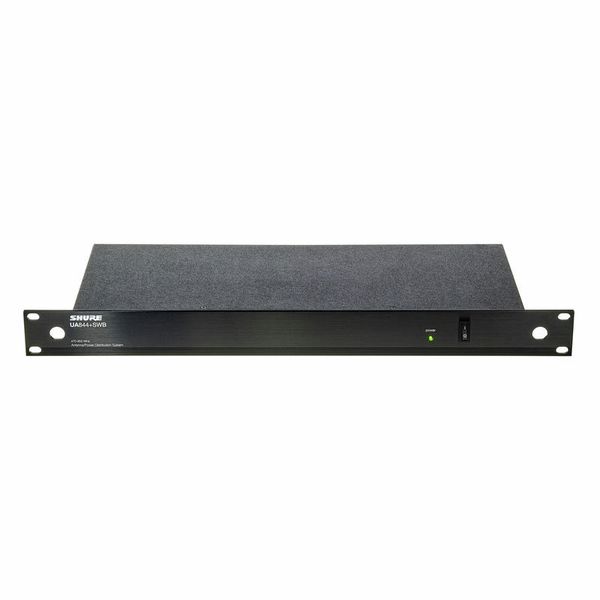
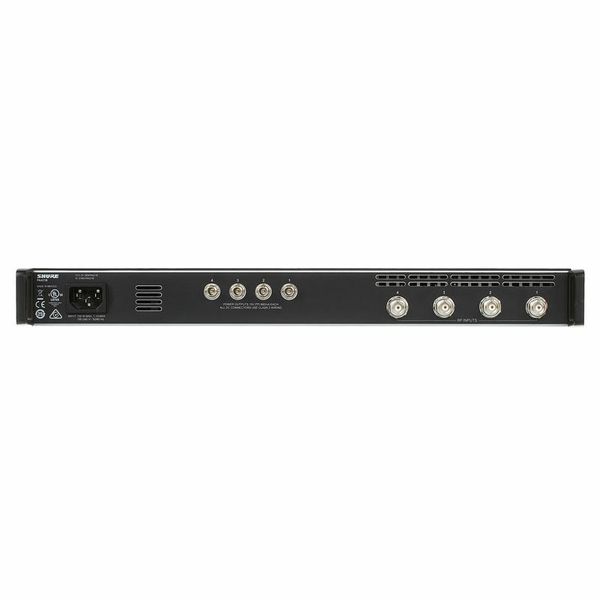
The Shure UA844+ is an antenna distribution unit. The signal from one antenna pair is shared between several receivers, so you do not have to fit each receiver's own antennas in the rack. That cuts interfering antennas and keeps the install tidy.
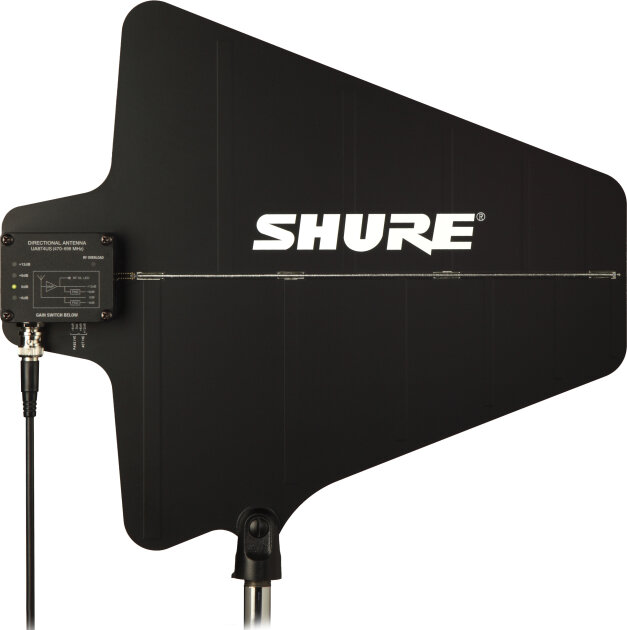
The Shure UA874WB is an active directional antenna: a flat paddle that listens mainly in one direction, with a built-in amplifier to make up for losses on a long antenna cable. Two UA874WB go on stands above the audience's heads, pointed at the stage, with cable running back to the UA844+.
You will find this combination in the ‘Four wireless handheld microphone kit’ and the theatre headset kit, where four SLX-D channels must hold up for a whole performance.
In-ear side: PA421B, HA-8091 and AD221
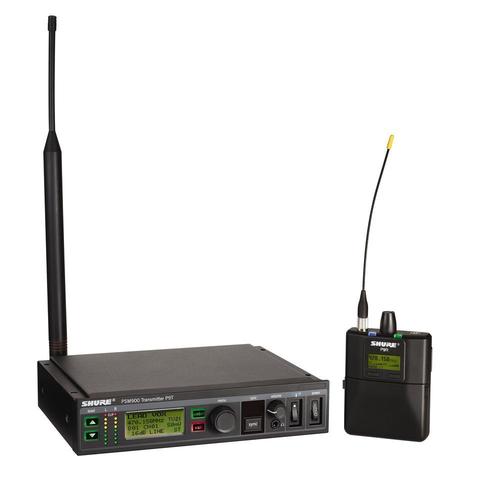
With in-ear monitors the direction is reversed: the transmitters sit in the rack and the musicians wear the receivers. Several transmitters in one place, each with its own antenna, interfere with each other. The Shure PA421B combiner merges the signal of several PSM transmitters into one antenna. The in-ear kit for four musicians has a PA421B with four PSM900.
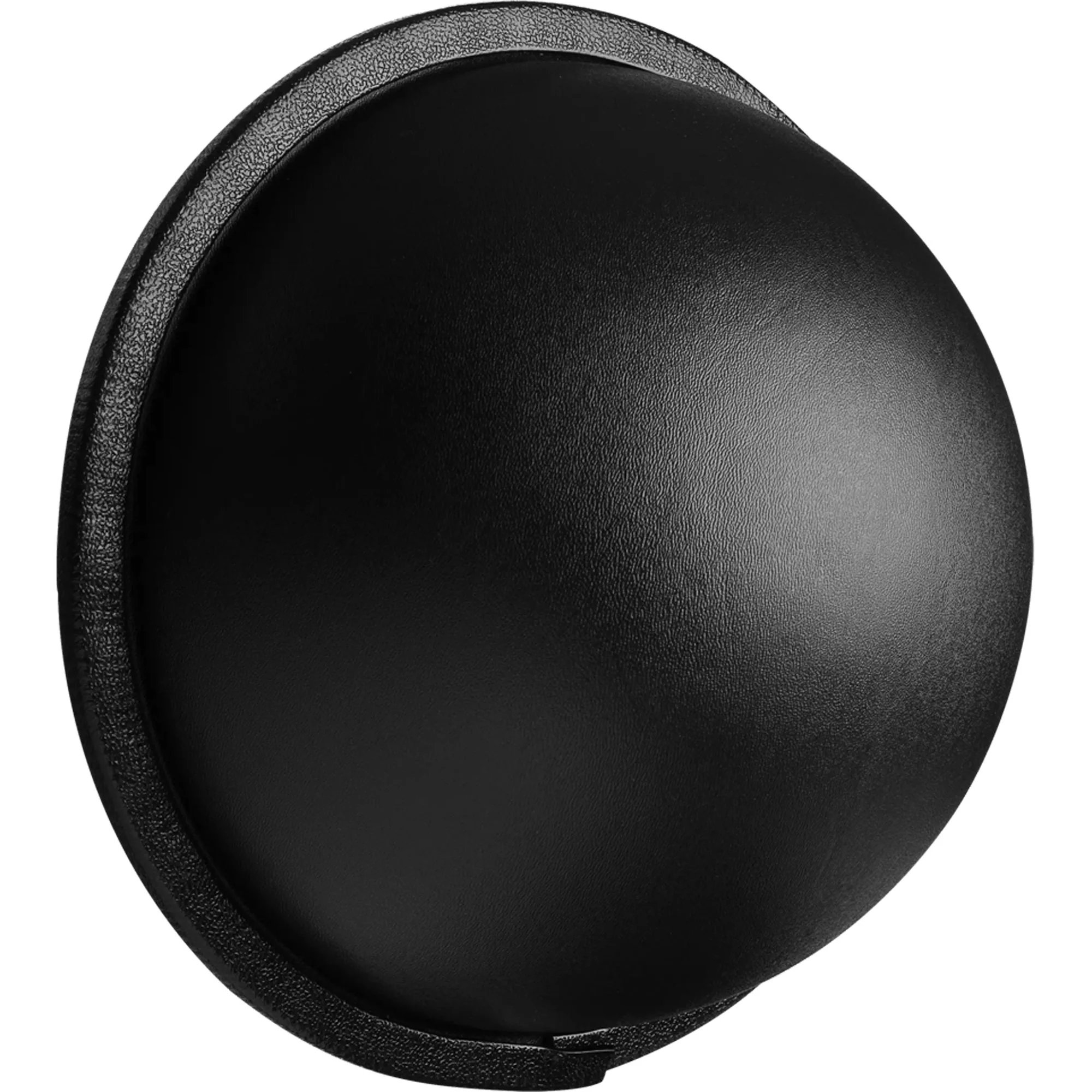
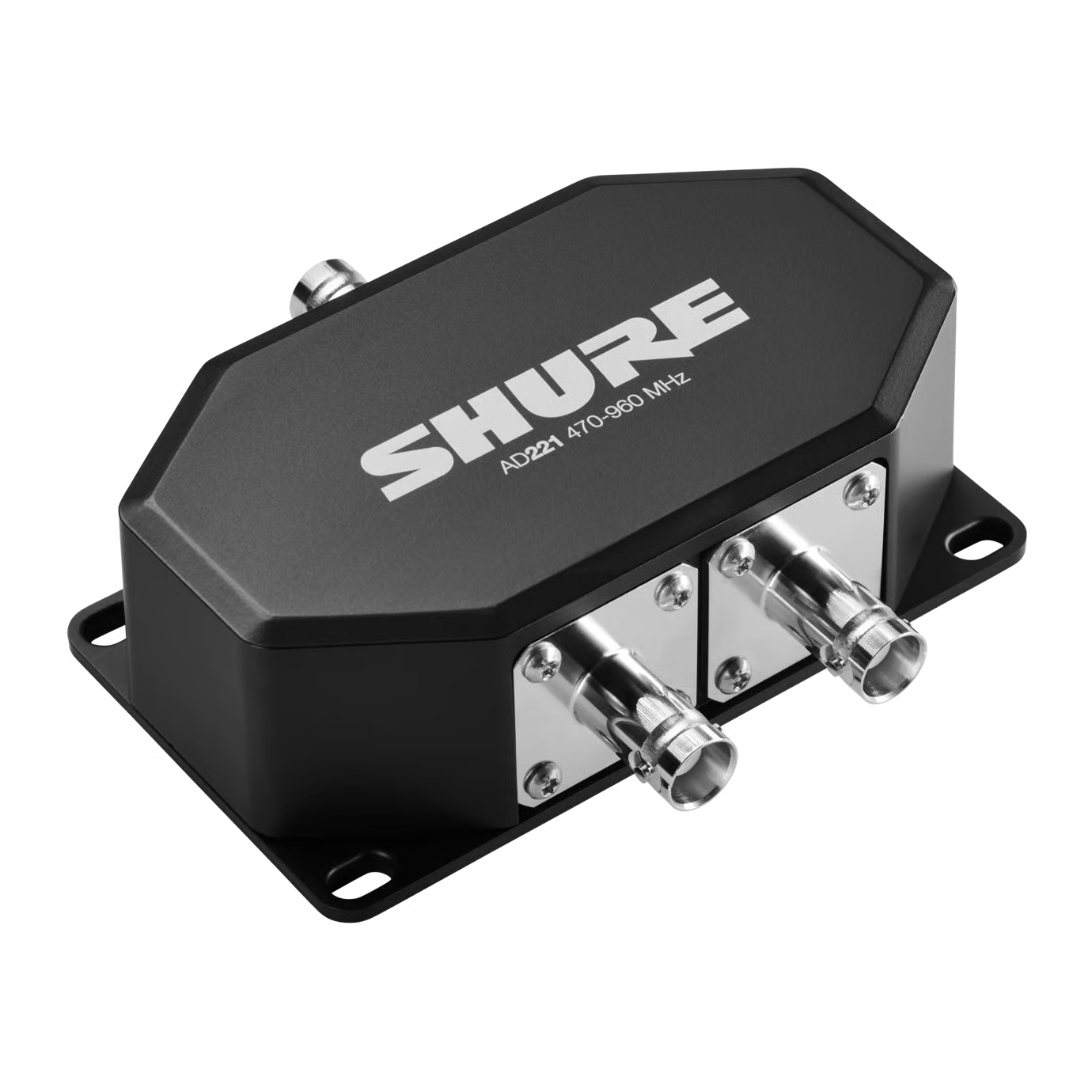
The Shure HA-8091 is a domed helical antenna that sends the signal in a directed beam towards the stage, and sits on the PA421B output in the same kit. The Shure AD221 is a passive two-way combiner and splitter for the Axient Digital PSM system, for connecting two devices to one antenna.
Shure UA860: an omnidirectional antenna
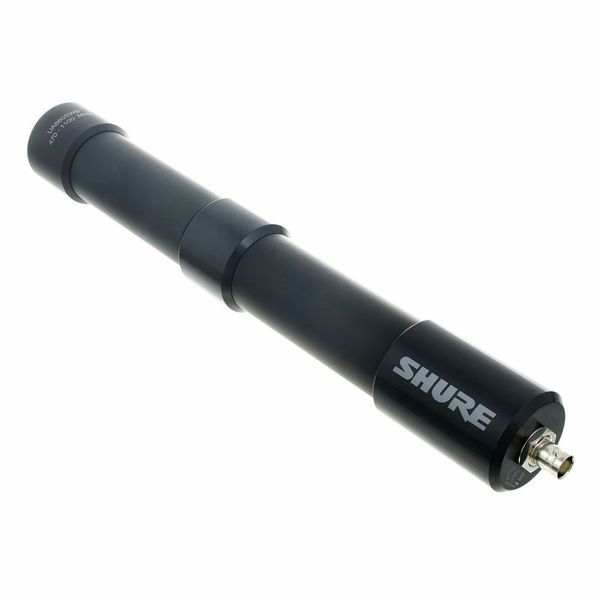
The Shure UA860 is a passive omnidirectional antenna. It is used when the antenna has to be lifted away from the rack and up high but there is no single direction to aim at, for example on a central stage surrounded by the audience, or a small stage where performers move every way.
Because it is passive, keep its cable shorter than you would with an active directional antenna, since a long cable weakens the signal.
Placement and the frequency plan
An antenna has to see the performer. Raise it above the audience's heads, keep it clear of metal trusses and out from behind LED screens, and point a directional antenna at the middle of the stage. Keep mic receive antennas and in-ear transmit antennas apart, because a strong transmitter signal drowns out a nearby receiver.
Antennas do not replace frequency planning. The more channels, the more it matters that mics and in-ears are on separate frequencies and that these fit the local rules. For a large Axient Digital system the catalog also has the Shure AD600 spectrum manager. Test with every channel on at once and walk the whole stage and hall with a mic.