Supercardioid
Supercardioid is a narrower pattern than cardioid: the mic rejects sound from the sides more strongly, but it also hears a small area directly behind it.
How a supercardioid differs from a cardioid
A supercardioid's sensitive area at the front is narrower than a cardioid's. Sound arriving from the sides is much quieter, so the mic separates a singer better from the guitar amp or drums next to them. The price is a small rear lobe: sound from directly behind the mic does not disappear completely.
So the quietest directions are not dead behind but diagonally behind, on both sides. That decides where the stage monitor should go.
When to pick a supercardioid
A supercardioid is good where monitors are loud and instruments are close together: a band's lead singer, backing vocals, a host at a party with loud music. The narrower pattern gives the engineer more headroom before the system starts to feed back.
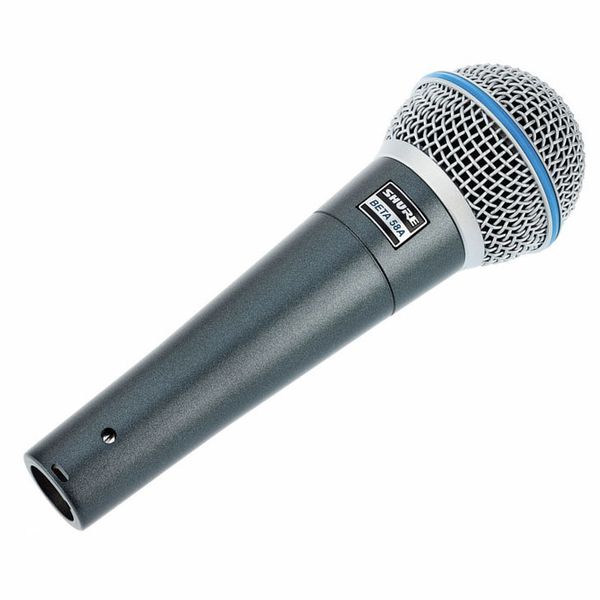
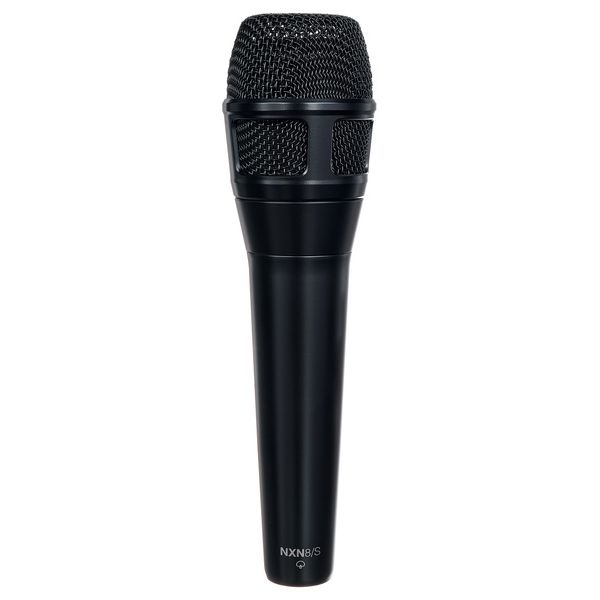
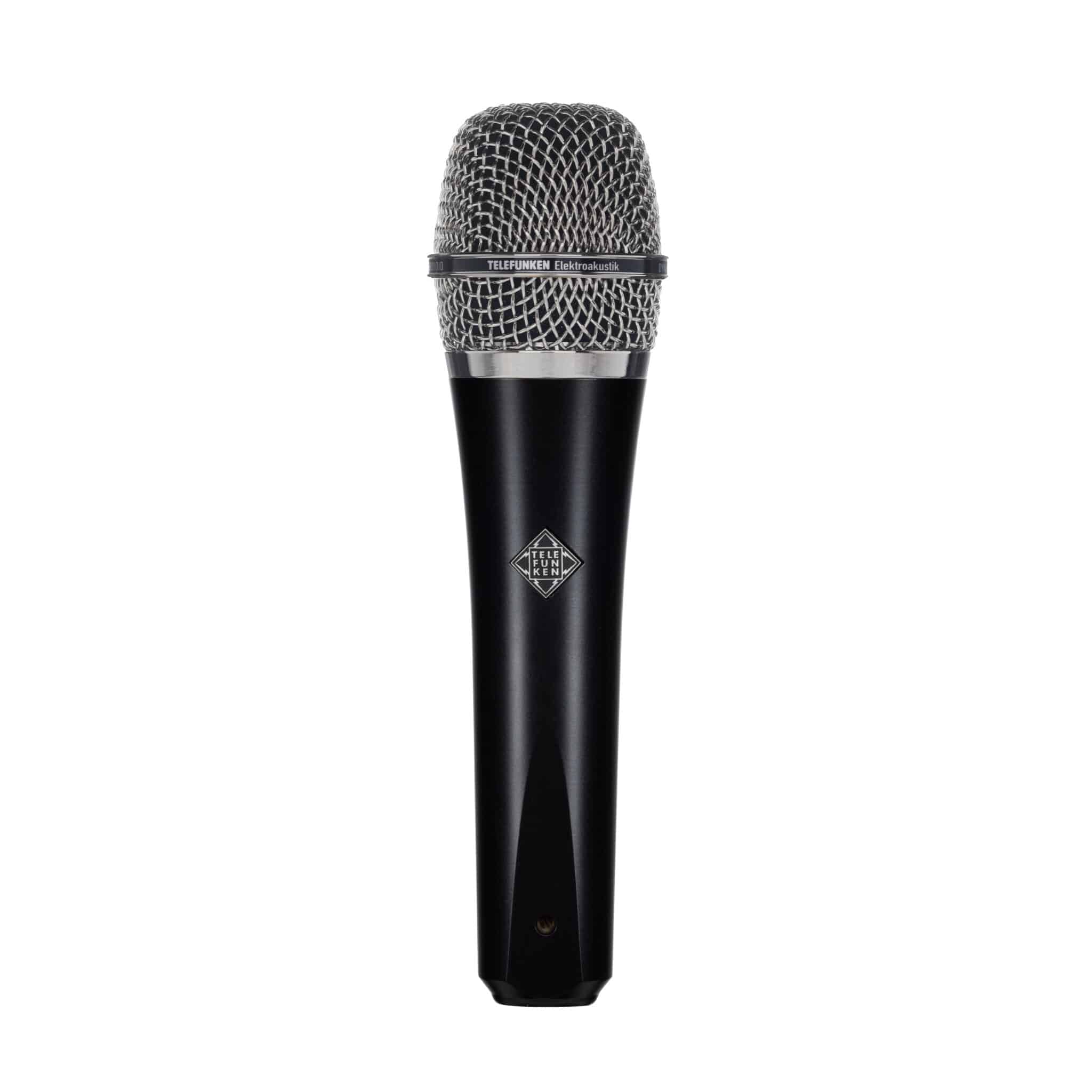
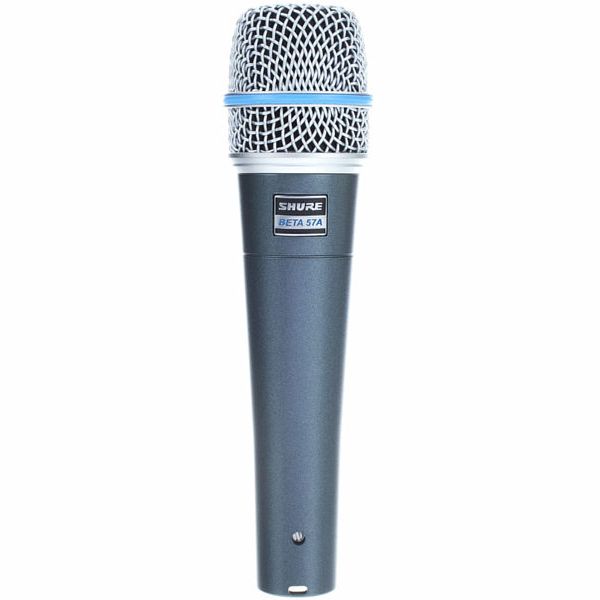
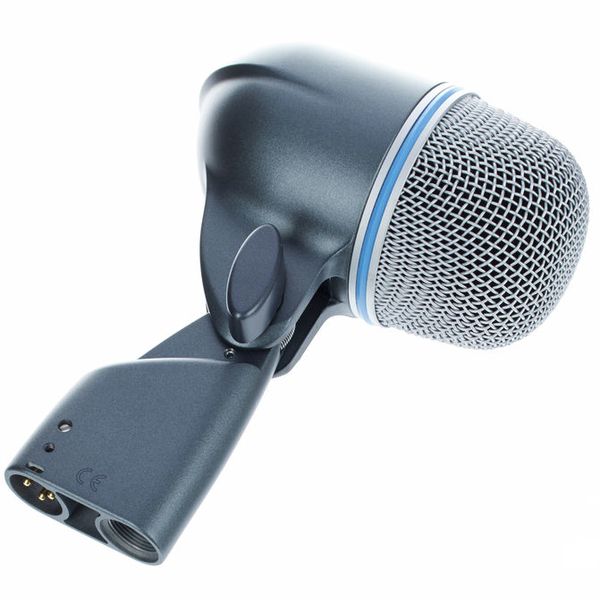
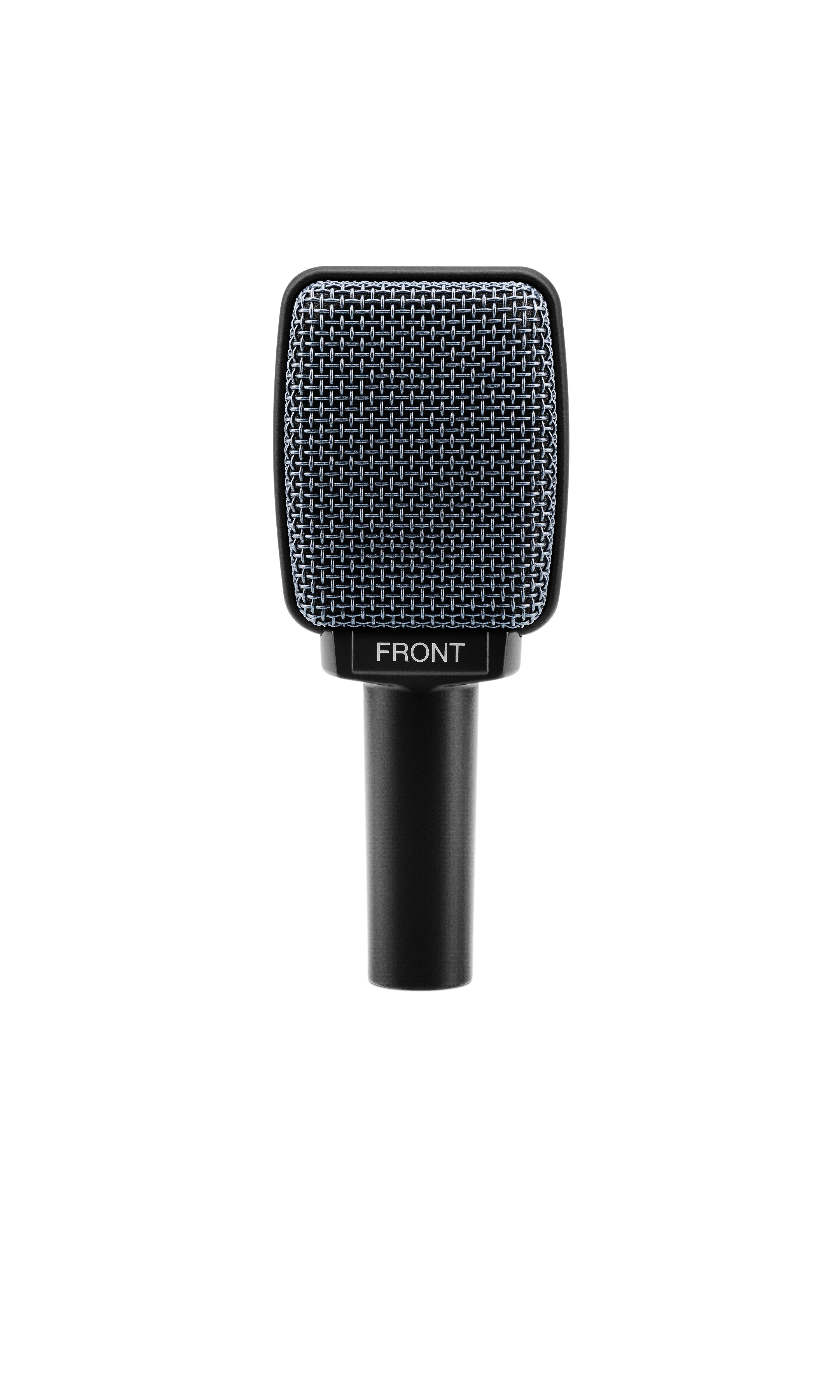
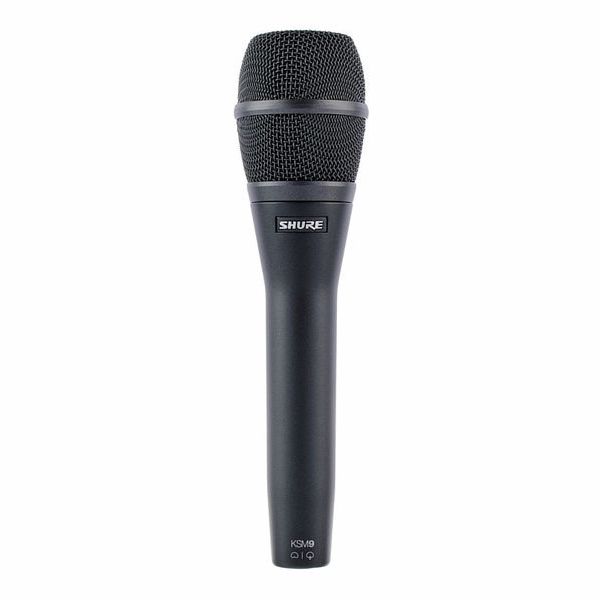
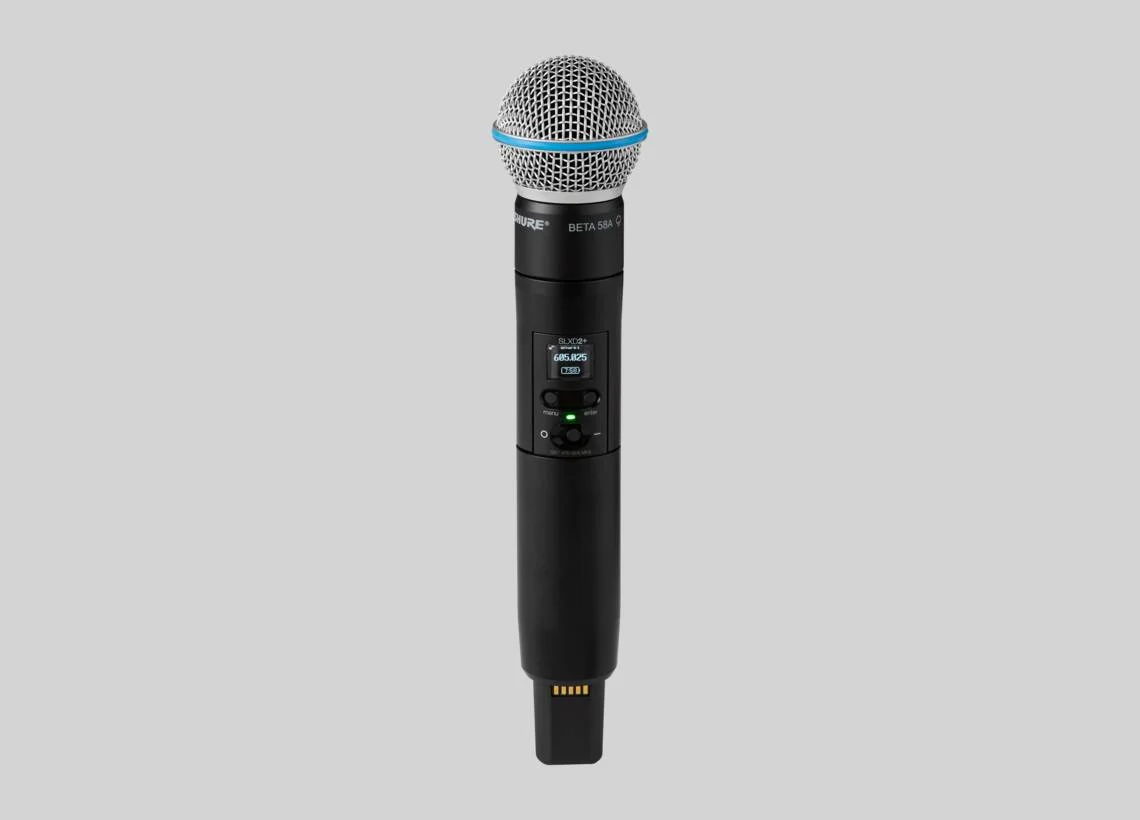
Supercardioids in our catalog include the Shure Beta 58A, Nexadyne 8/S and Telefunken M80 for vocals, and the Beta 57A, Beta 52A, Beta 91A and Sennheiser e906 for instruments. The Shure KSM9 condenser has a switch for cardioid or supercardioid. The Beta 58A capsule is very common on radio mics, for example the SLXD2/B58 and QLXD24/B58.
Monitor placement and common mistakes
With a cardioid the wedge goes straight in front of the singer. With a supercardioid that wedge lands in the rear lobe. Better to use two wedges angled in from either side, or one wedge moved a little off centre, so it lands in the mic's null.
- Mistake: handing a supercardioid to a presenter who waves it around and talks past it. The voice drops in and out; a cardioid or a headset suits them better.
- Mistake: holding the mic off to the side of the mouth. A supercardioid needs the capsule pointed straight at the mouth.
- Mistake: thinking a narrow mic fixes every squeal. If a speaker is in front of the mic and aimed at it, no pattern helps.
- Tip: during the sound check, let the singer move the way they will in the show and check the monitor angle.