Dynamic microphone
A dynamic microphone turns sound into an electrical signal with a moving diaphragm, coil and magnet; it needs no power and copes with loud sound, moisture and drops.
How a dynamic microphone works
Inside a dynamic microphone there is a thin diaphragm with a small coil of wire attached to it. The coil sits in the field of a permanent magnet. When a voice moves the diaphragm, the coil moves too and a weak voltage appears in it. It is a loudspeaker in reverse: a speaker turns electricity into sound, a microphone turns sound into electricity.
Because the signal comes from movement, a dynamic microphone needs no battery and no phantom power. It works with any mic input, from a small Soundcraft Notepad to a large digital console. The diaphragm and coil are relatively heavy, so the mic responds less to fine detail and distant sound than a condenser does. On stage that is usually an advantage: the voice close to it comes through strongly, room noise and the PA much less.
Why events use them so much
A dynamic microphone is tough. It survives drops, sweaty hands, damp air at an outdoor event and very loud sources such as a guitar amp or a kick drum. That makes it the standard tool for speeches, toasts, karaoke and band vocals.
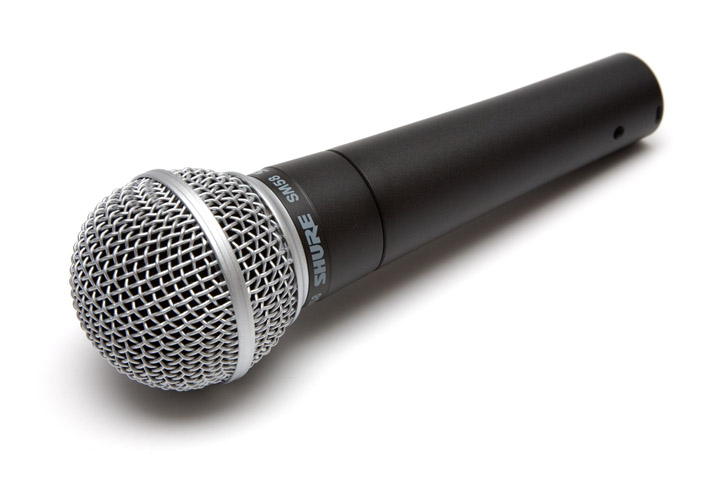
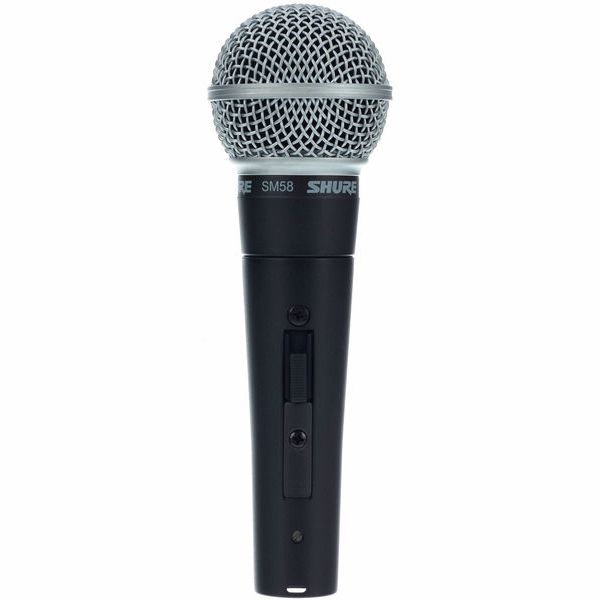
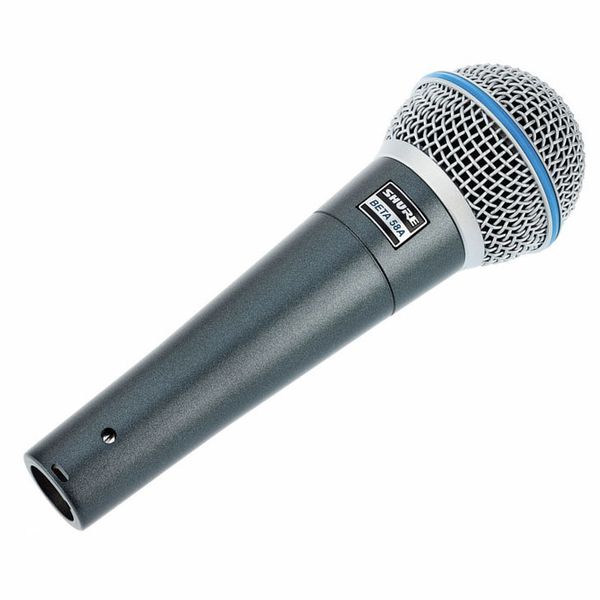
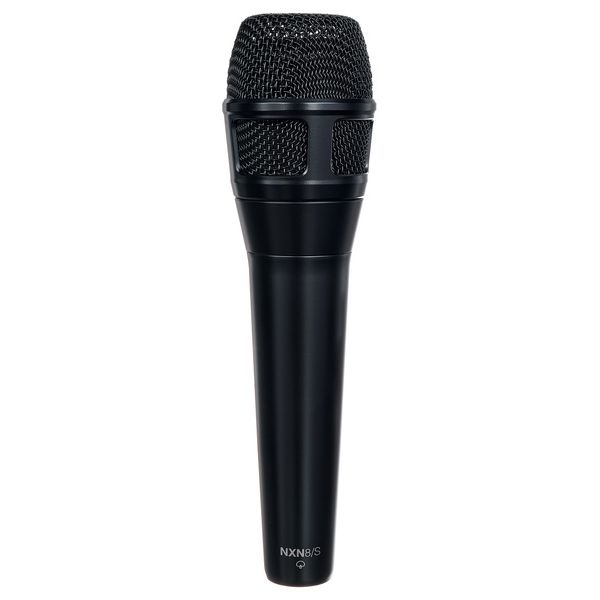
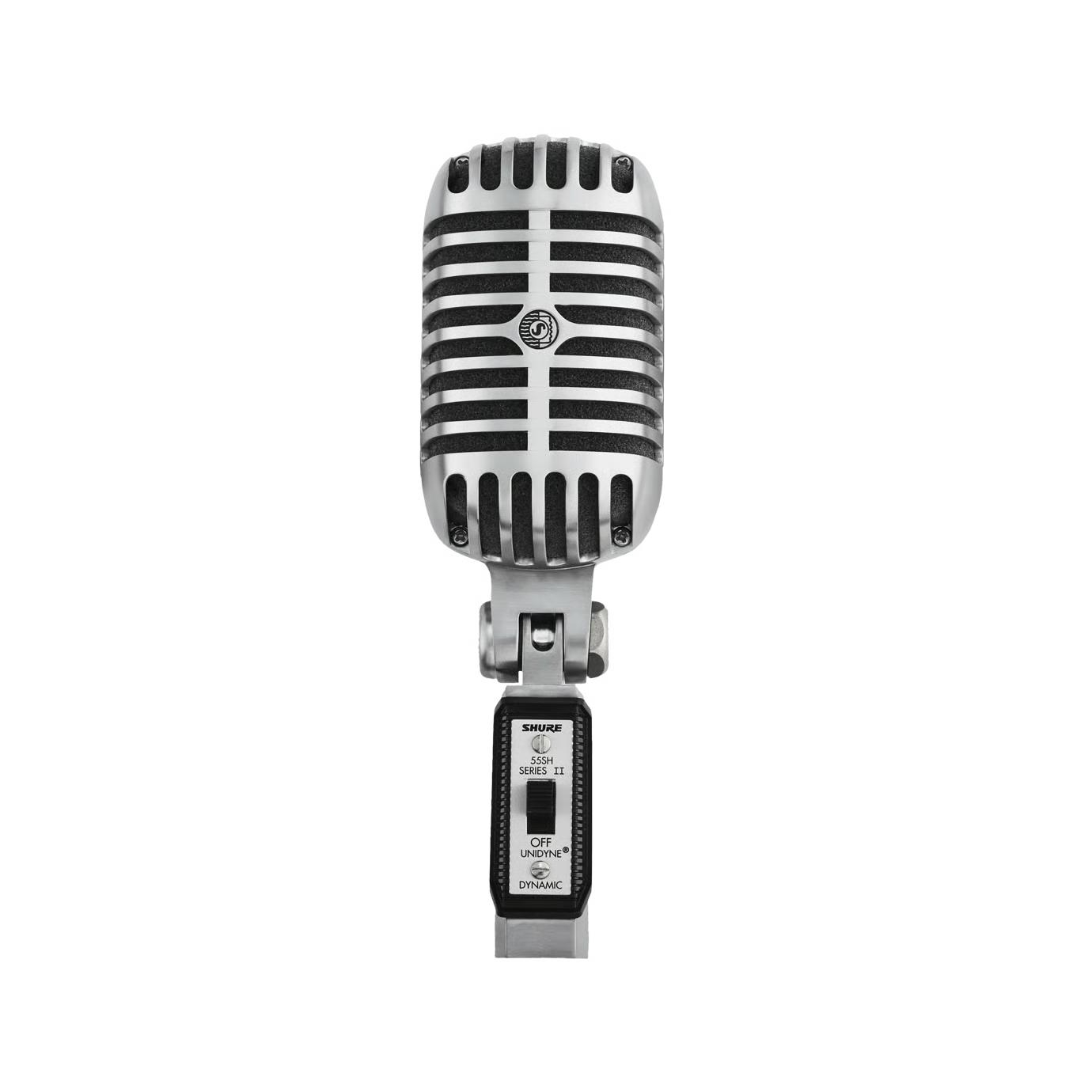
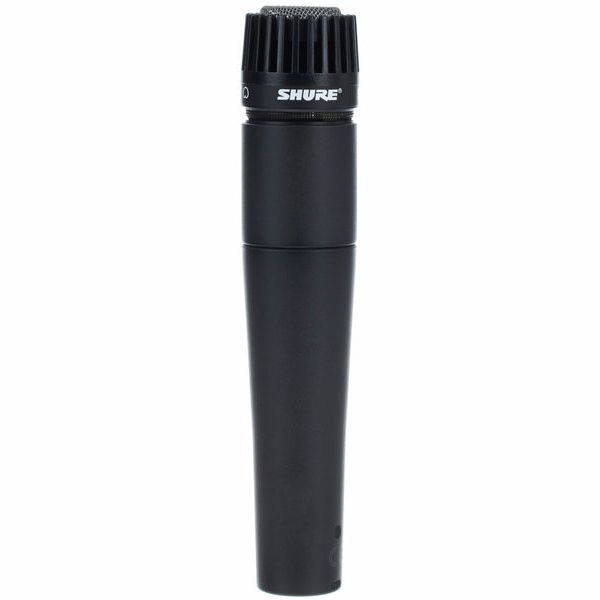
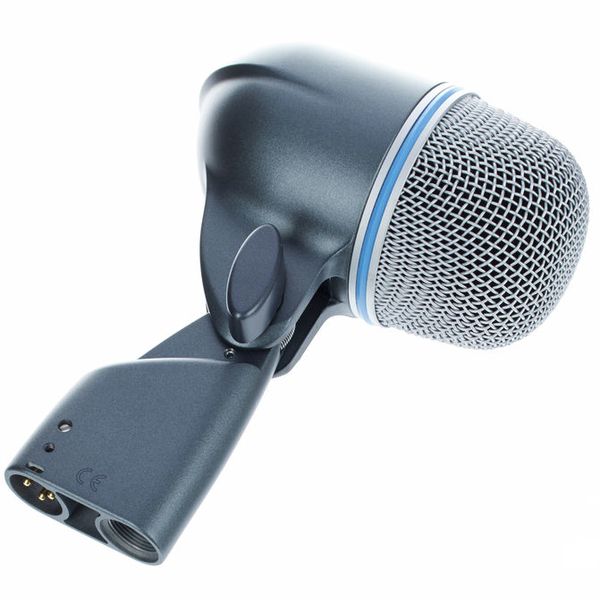
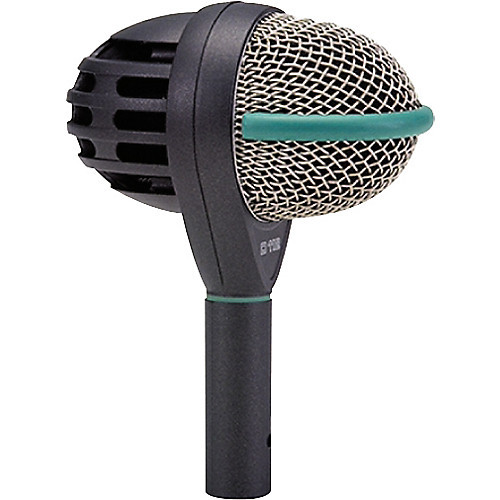
Dynamic models in our catalog include the Shure SM58 (cardioid), the SM58SE with an on/off switch, the Beta 58A and Nexadyne 8/S (both supercardioid) and the retro-styled 55SH. For instruments there are the SM57, Beta 52A and AKG D112 MKII. The same capsule can sit on a radio mic too: the Shure AD2/SM58 and SLXD2/B58 are wireless transmitters with a dynamic head.
Practical advice and common mistakes
A dynamic mic wants to be close to the mouth. If the speaker holds it at chest height the voice sounds thin, the engineer has to add gain and the system starts to squeal more easily. A good rule is to keep it about a palm's width from the mouth, pointing straight at it.
- Do not grip the grille: a hand around the capsule changes the pickup pattern and causes feedback.
- Do not tap or blow into the mic to test it; just say a couple of sentences.
- For a soft-spoken presenter a headset mic may work better, because it stays at the mouth even when they forget to raise their hand.
- A dynamic mic is the wrong choice for a choir, an acoustic ensemble or room sound; those need a condenser.