Analogue or digital mixer: how many channels do you actually need
The mixer is the one piece of equipment someone sits at for the whole event, so choosing it is as much a question about the person as about the gear. The wrong choice rarely means bad sound; it means a missing input or a button nobody can find. Below is a simple procedure: count the inputs, check whether you need to store settings and control them remotely, and decide who stands behind the mixer.
Step one: count the inputs
Write down every sound source that reaches the mixer. Each microphone is one mono input, wireless included: the Shure SLXD24D/B58 dual handheld receiver has two XLR outputs, so two channels. A laptop or phone is stereo, so two channels or one stereo channel. A keyboard is stereo; bass and acoustic guitar through a DI box are mono. A drum kit alone is four to eight channels depending on how thoroughly you mic it.
Add two spare channels to the total. At every event someone turns up with one more microphone or one more instrument, and unused inputs cost nothing while missing ones cost nerves. Look separately at how many microphone inputs (XLR with phantom power) and how many line inputs you need, because on small mixers those numbers differ.
Analogue mixer: a knob for everything
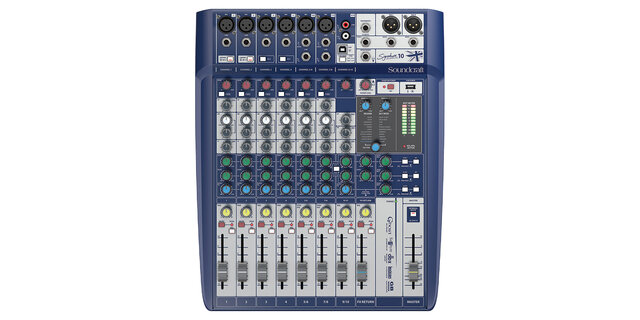
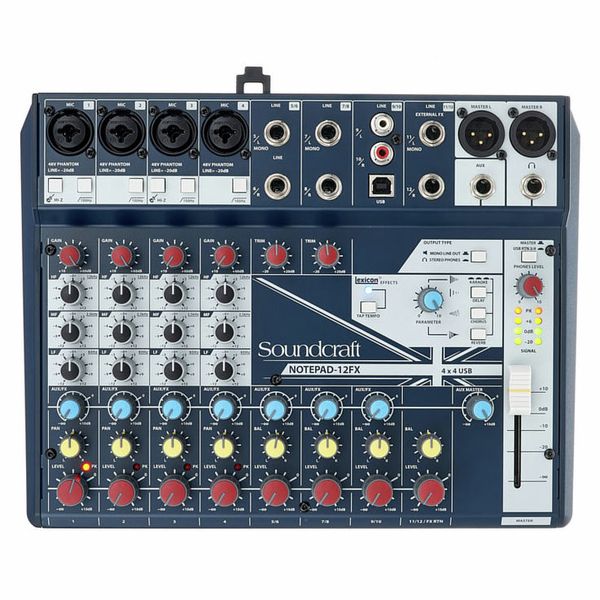
On an analogue mixer every function is a physical control on the desk. That is its biggest advantage: a person who has never seen a mixer finds the volume in five seconds. The Soundcraft Notepad 12FX is a small desk with four mono and four stereo inputs, suited to a speech event or background music. The Soundcraft EFX8 is an eight-channel desk with built-in effects, good for an acoustic duo or a small seminar. The Soundcraft Signature 10 with ten inputs and six microphone preamps covers most parties and weddings and is the standard mixer in our party and wedding kits.
The limits of an analogue mixer are memory (the next day starts from zero), the scarcity of effects and processing, and the fact that it can only be operated while standing next to it.
Digital mixer: it stores, processes and can be controlled remotely
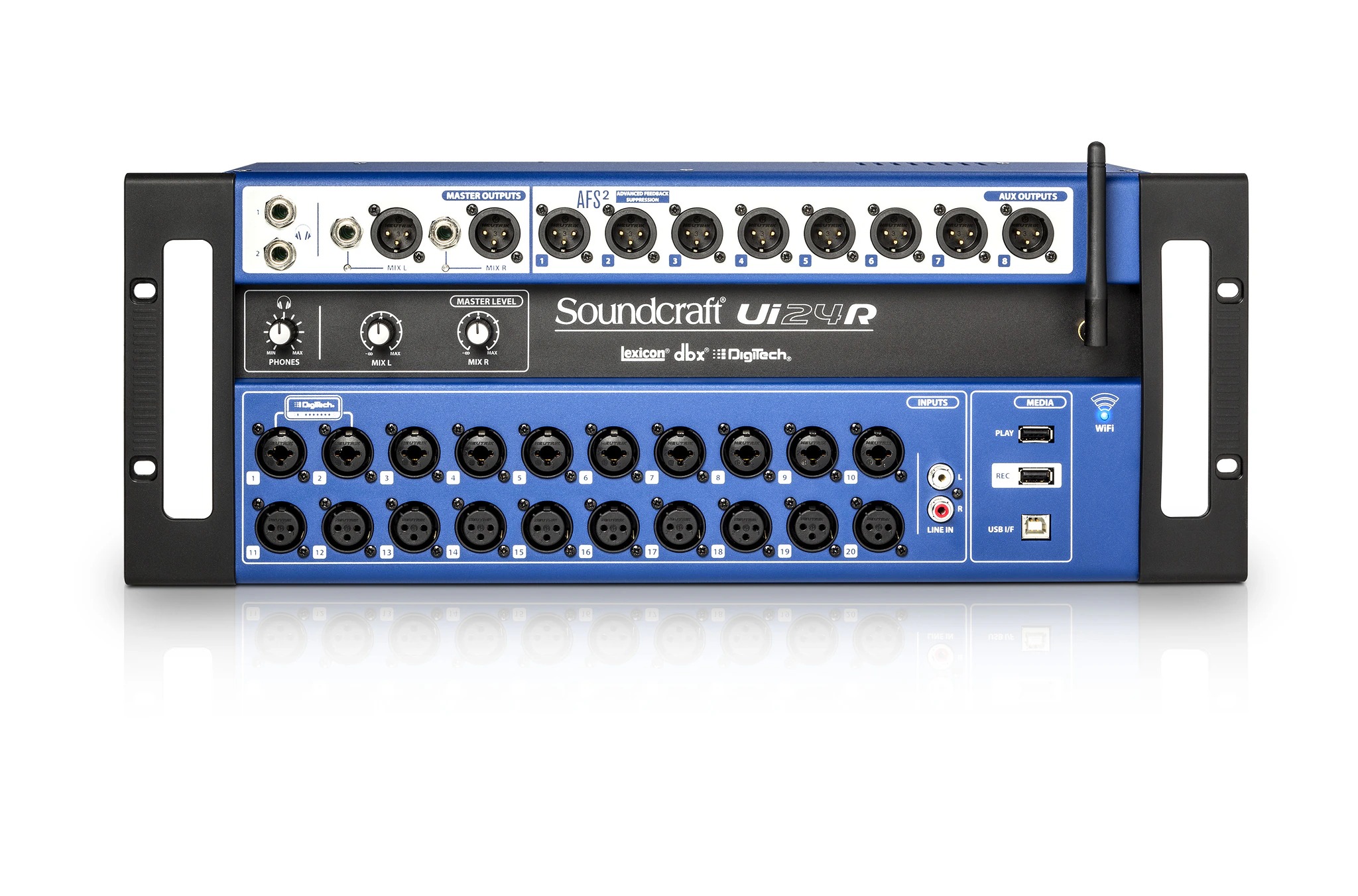
A digital mixer keeps an equaliser, compressor and gate for every channel inside itself and remembers the whole setup. The Soundcraft Ui24R is twenty-four channels without a single physical fader: all control happens from a tablet or phone over wifi. That means the technician can stand in the middle of the room and hear what the audience hears, and a band member can adjust their own monitor mix from a phone. Our band kit for up to 200 people and the outdoor event kit use exactly this desk.
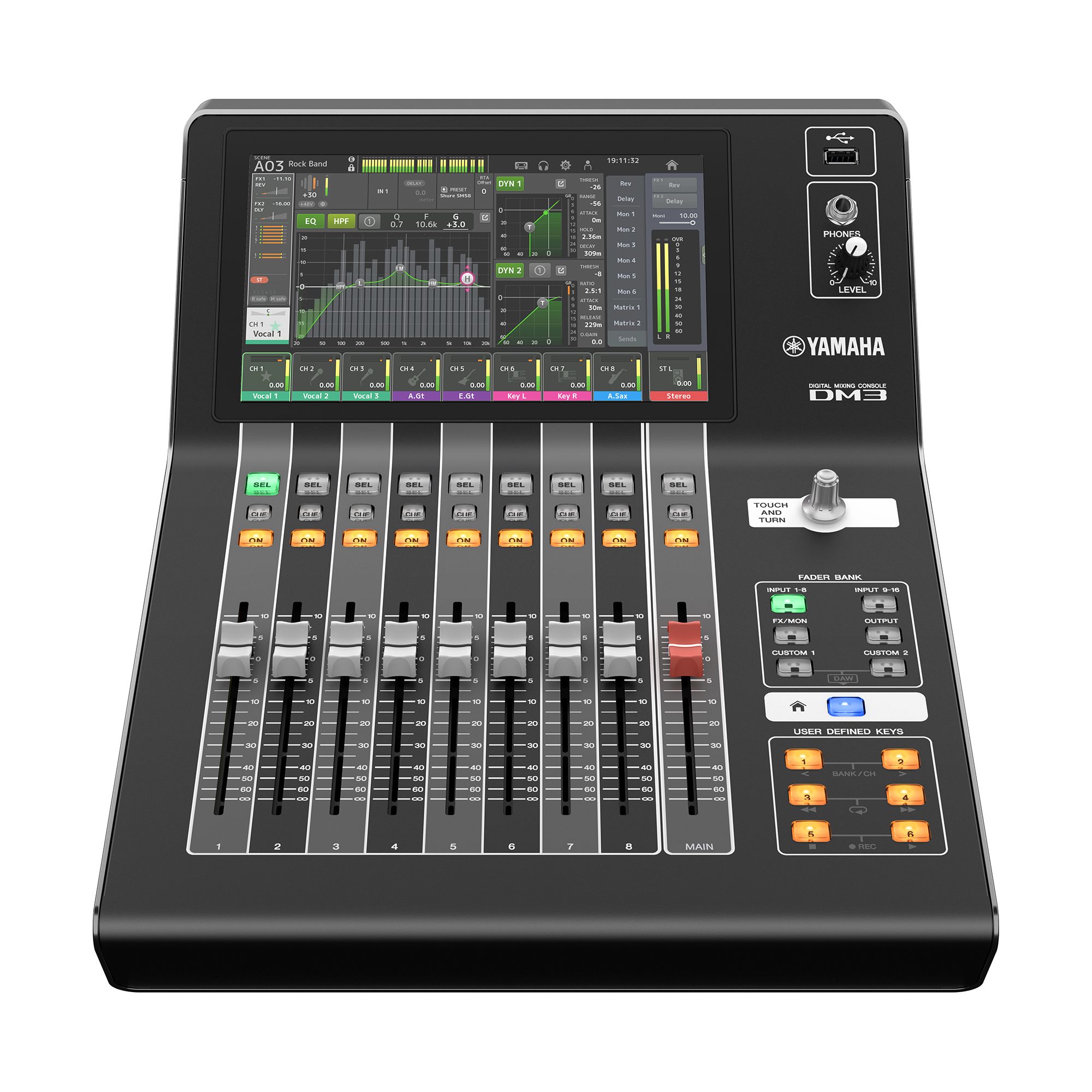
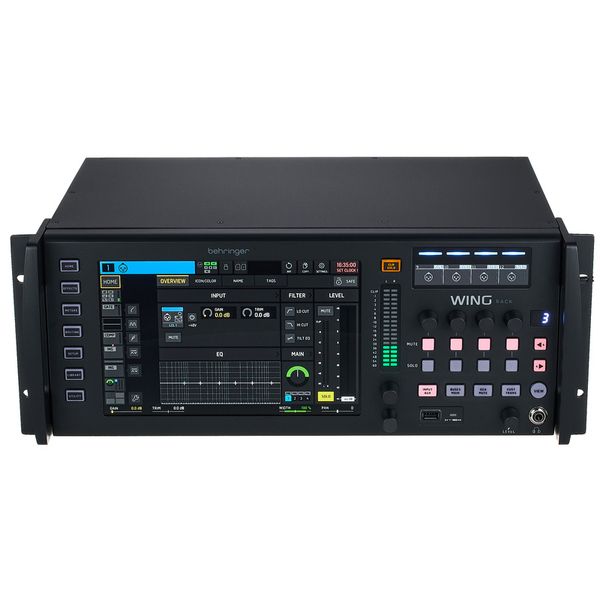
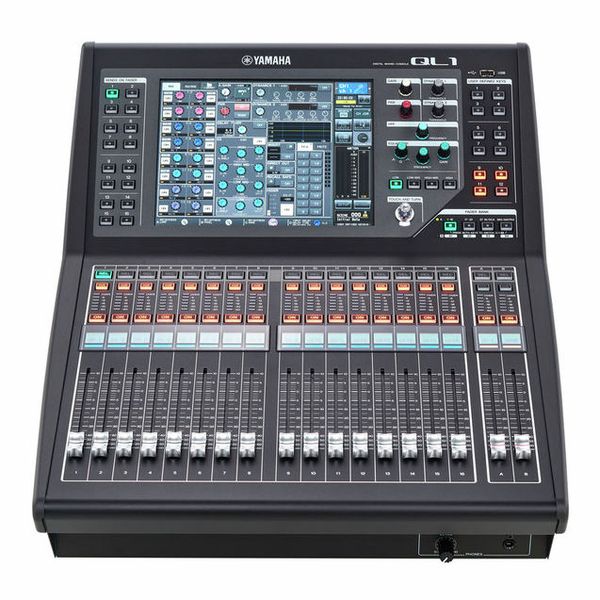
The Yamaha DM3 is a compact sixteen-input desk with physical faders and a Dante network, to which a Shure SLXD4QDAN wireless receiver can be connected without analogue cables; it is the main mixer in the conference kit for up to 300 people. The Behringer Wing Rack fits 48 channels and 24 Midas preamps into a rack and suits events with many channels and little stage space. The Yamaha QL1 with a Yamaha RIO1608-D2 stage box is the concert kit's choice: the stage box sits on stage, the desk at the back of the room, and a single network cable runs between them instead of many XLR cables.
Memory and presets: when it really matters
When the same event repeats (a weekly service, a three-day conference, a festival with several bands), stored settings are the biggest time saver. The technician does one sound check, saves the scene, and the next day starts with one button press. At a festival each band's setup can be saved separately and loaded during the changeover. For a one-off party that advantage does not exist and an analogue mixer is just as good.
Who operates the mixer
This is the deciding question. If the toastmaster, a friend or the company's marketing person runs the desk, take an analogue mixer: the controls are visible and nothing can get lost in a menu. If a technician or someone already familiar with the tablet app runs it, a digital mixer gives more control and fewer cables. The Ui24R sits between the two: the app is simple, but if the wifi drops or the tablet battery dies, there is not one knob on the desk to grab. Keep the tablet on its charger and do not share the wifi network with the guests.
A quick choice by situation
Speeches and background music with up to six inputs: Notepad 12FX or EFX8. A party or wedding with a playlist and microphones: Signature 10. A band with up to twenty inputs, monitor mixes and an operator with a tablet: Ui24R. A conference with wireless microphones and a Dante receiver: DM3. A concert with a line array and a stage box: QL1 with the RIO stage box. If you hesitate between two, take the larger one; spare channels bother nobody.