Handheld, headset or lavalier: which wireless microphone to choose
When people rent a wireless microphone they usually pick by transmitter and receiver, but the result is decided by what sits in the speaker's hand, behind the ear or on the chest. The three basic types, handheld, headset and lavalier, give completely different sound and comfort from the same bodypack transmitter. Here is how we choose.
Handheld: the safe choice for speeches and singing
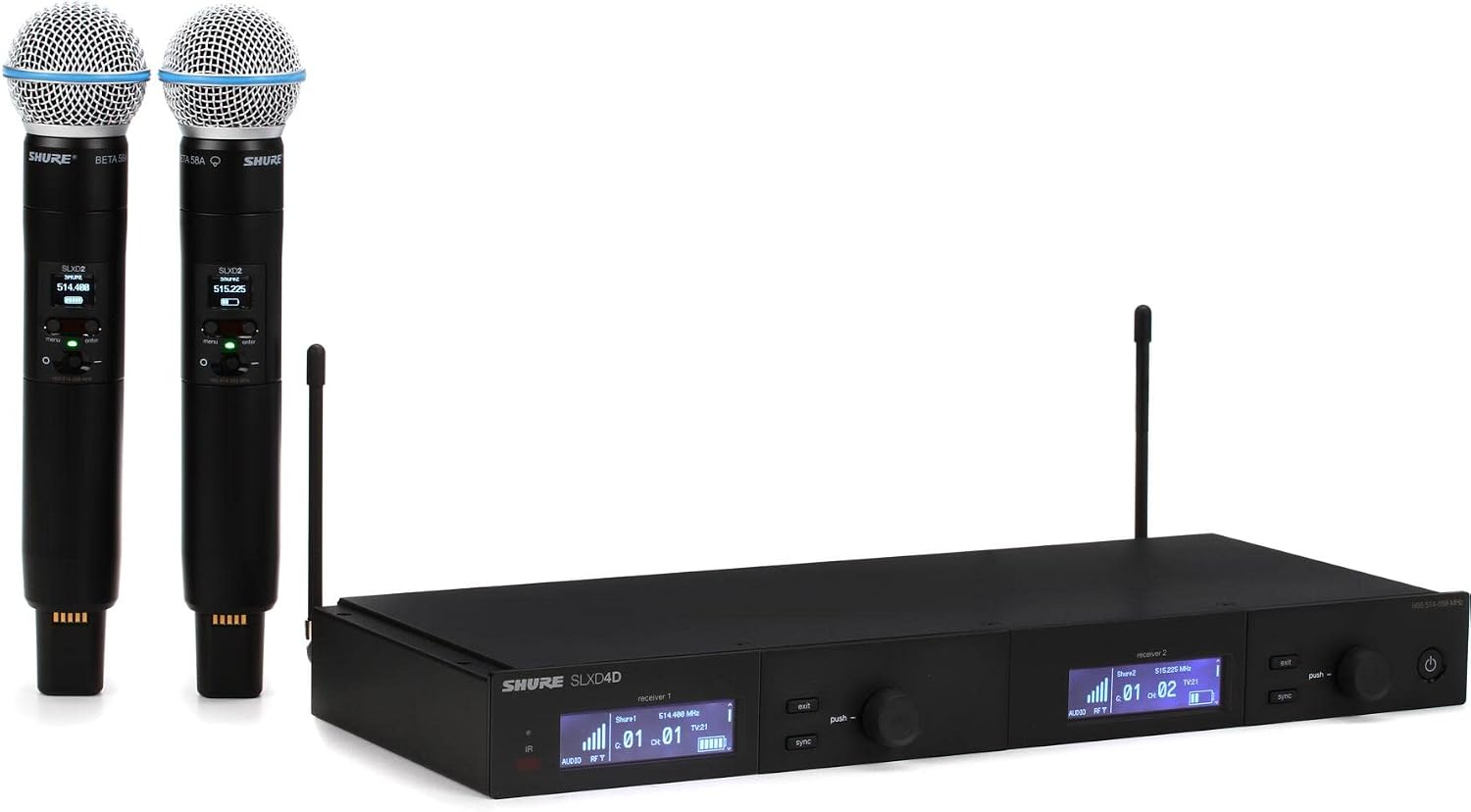
The handheld, in our kits usually a Shure SLXD24D/B58 or QLXD24/B58 with the BETA 58A capsule, is the most forgiving option. The directional capsule picks up sound from the front and pushes the speakers' sound into the background, so the feedback risk stays low even when the presenter wanders close to a speaker. It can be passed from hand to hand, put on a table stand and carried into the audience.
The downside is the hand. A presenter who needs both hands, to drive slides, write on a flipchart or demonstrate something, lets the microphone drift down without noticing and the voice disappears. For speeches, thank-yous, quizzes, karaoke and audience questions the handheld is still the first choice.
Headset: hands free and an even voice
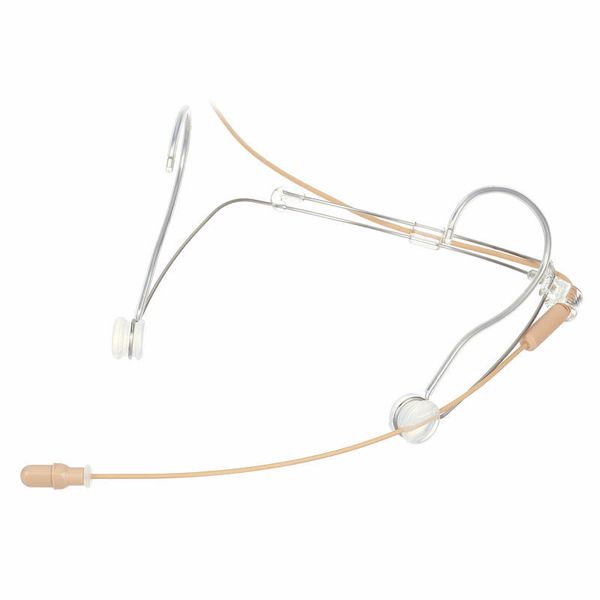
A headset sits behind the ear and the capsule stays at the same distance from the mouth wherever the presenter turns. That makes it the tool of the conference speaker, the fitness instructor, the actor and also the wedding officiant. The voice stays even and the listener forgets the microphone.
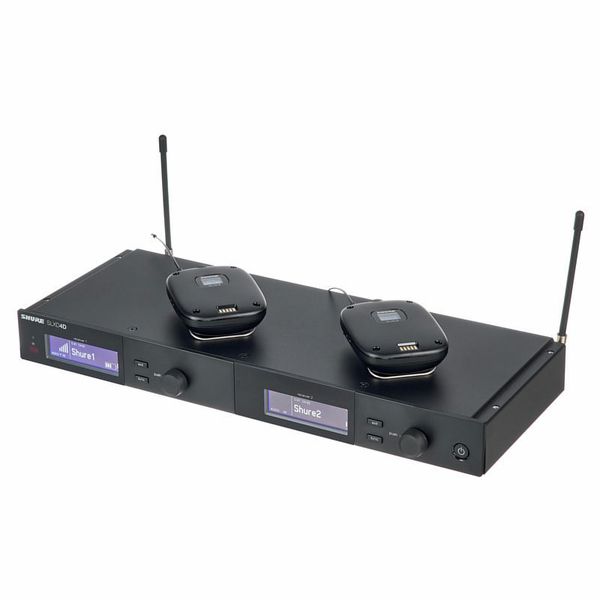
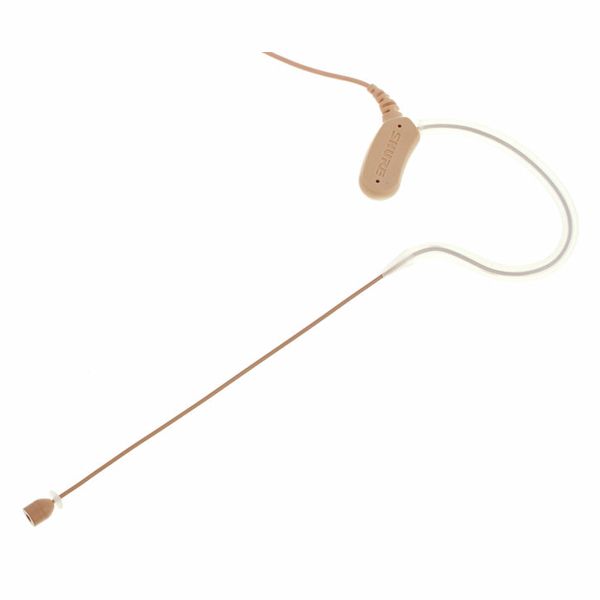
We carry two directions. The Shure MX153T/O-TQG is a thin earset with an omnidirectional capsule that we use in the presentation and wedding kits. The Shure DH5T/O-MTQG is moisture-resistant and very small, which suits theatre, musicals and a sweaty gym. Both connect to a bodypack transmitter such as the Shure SLXD1 or QLXD1.
An omni capsule sounds natural and is not fussy about exact placement, but it picks up sound from every direction, so it wants careful speaker placement and a sensible level. For a singer or instructor standing in front of the speakers, a directional headset such as the Shure SM35-TQG is the safer pick.
Lavalier: invisible, but demands attention
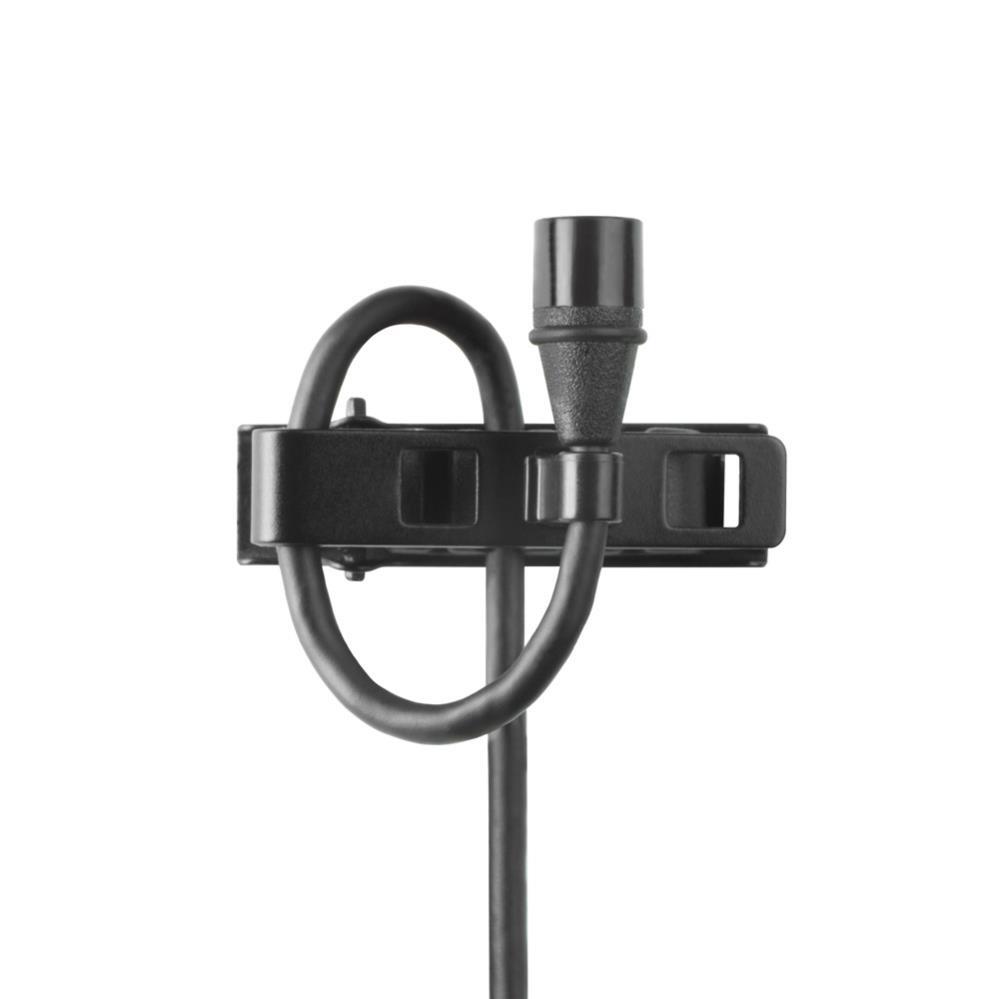
A lavalier clips to a collar or tie. It is the most discreet option and suits video recording, interviews and panels where the presenter sits and the speakers are far away. We stock the Shure MX150B/O-TQG for bodypack transmitters, as well as the DPA 4061 Core and RØDE Lavalier II.
The problem with a lavalier is distance from the mouth and position. When the presenter turns their head sideways the level drops, and when they walk towards the speakers feedback starts earlier than with a headset. That is why we recommend a headset for anyone presenting in a hall and keep the lavalier for panels, interviews and camera work.
Which microphone for which event
A short list, the same one we use when assembling kits.
- Speeches and thank-yous: handheld.
- Conference talk with slides: headset, with a handheld on the table as a spare.
- Seated panel discussion: handhelds on stands, or lavaliers if the speakers hang above the audience.
- Theatre and musicals: moisture-resistant headsets, as in the Theatre and musical headset kit (4 actors).
- Fitness and aerobics: directional headset with a sweat-proof fit.
- Church and ceremonies: headset for the officiant, handheld for readings.
- Audience questions: handhelds carried around the room.
Shure SLX-D, QLX-D and Axient Digital: what the series means for a renter
All three are digital wireless systems and all take the same capsules and headsets. The difference lies in reliability in a crowded radio environment, the number of channels in one unit and the extra features.
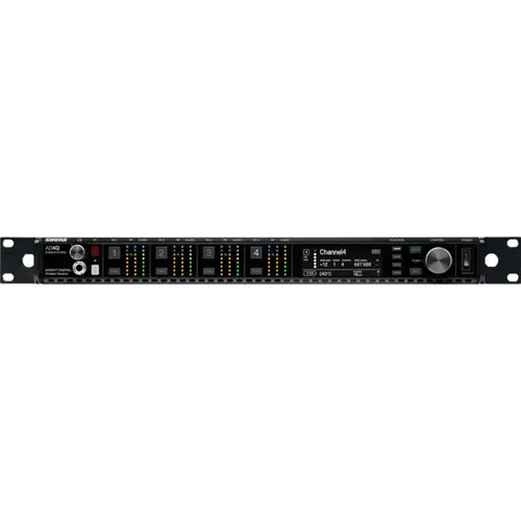
SLX-D is our core series for speech and parties: two-channel receivers such as the SLXD24D and the four-channel SLXD4QDAN, simple to set up and sufficient for most halls. QLX-D is a step up: the better choice when many other radio systems share the building or when the microphone has to work far from the receiver, as for the MC in the DJ kit. Axient Digital, our AD4D and AD4Q receivers and ADX transmitters, is meant for large stages and broadcast, where a dropout is not acceptable and many channels run at once. The price class rises in the same order; the price per 24h is shown on each product page.
The good news for a renter is that you do not need to know the exact contents of the kit when ordering. Tell us how many people speak at once, how big the hall is and whether other radio systems run in the building, and we choose the series and antennas.