DJ equipment hire: what a party or club night actually needs
The first thing a DJ asks when you book them is what equipment will be at the venue. This guide walks through what a DJ setup consists of, which parts the DJ usually brings and what the organiser or venue has to provide. The list works for a company party as well as a club night; the main difference is the size of the speaker system.
Players and mixer: the heart of the booth
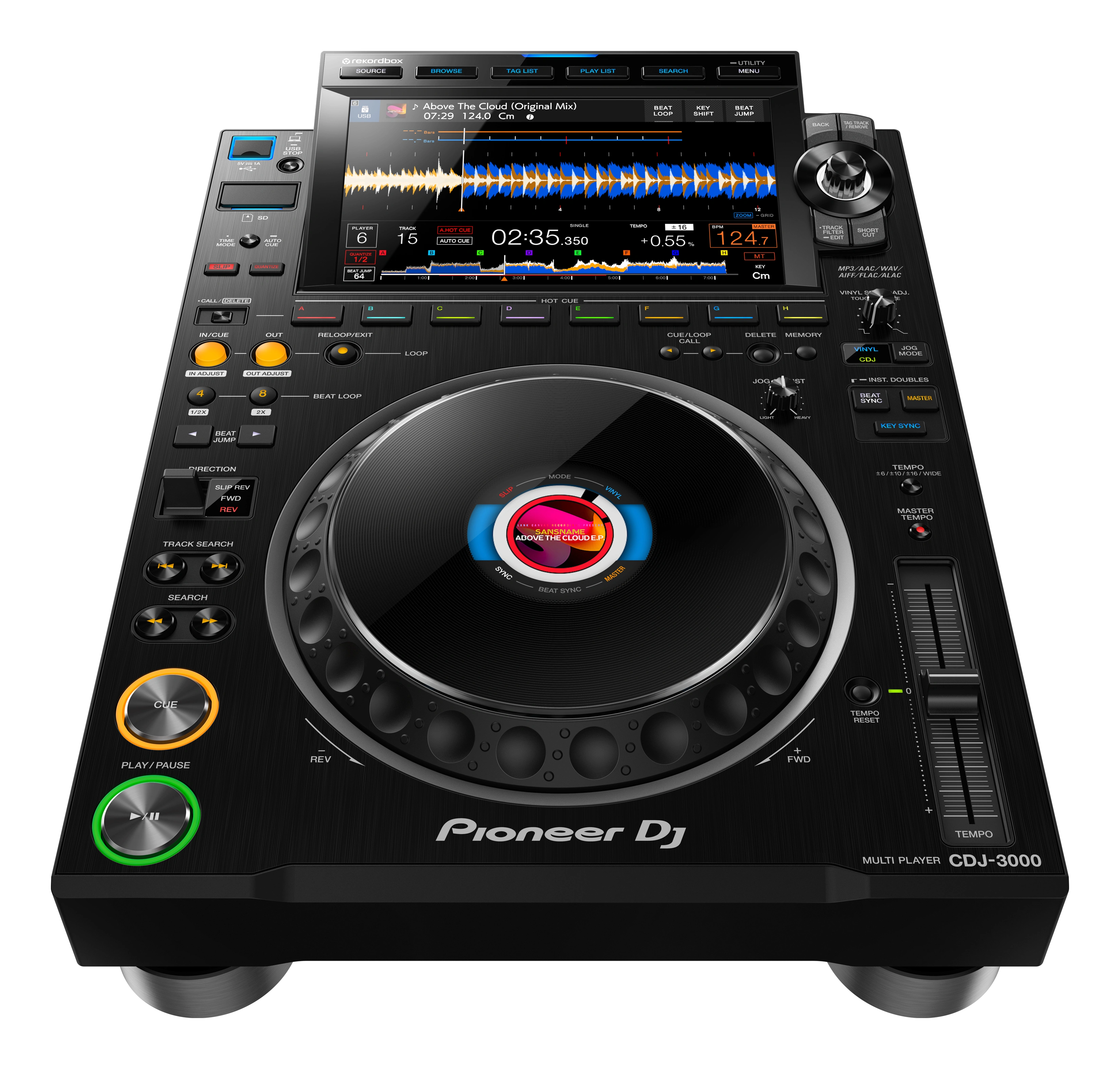
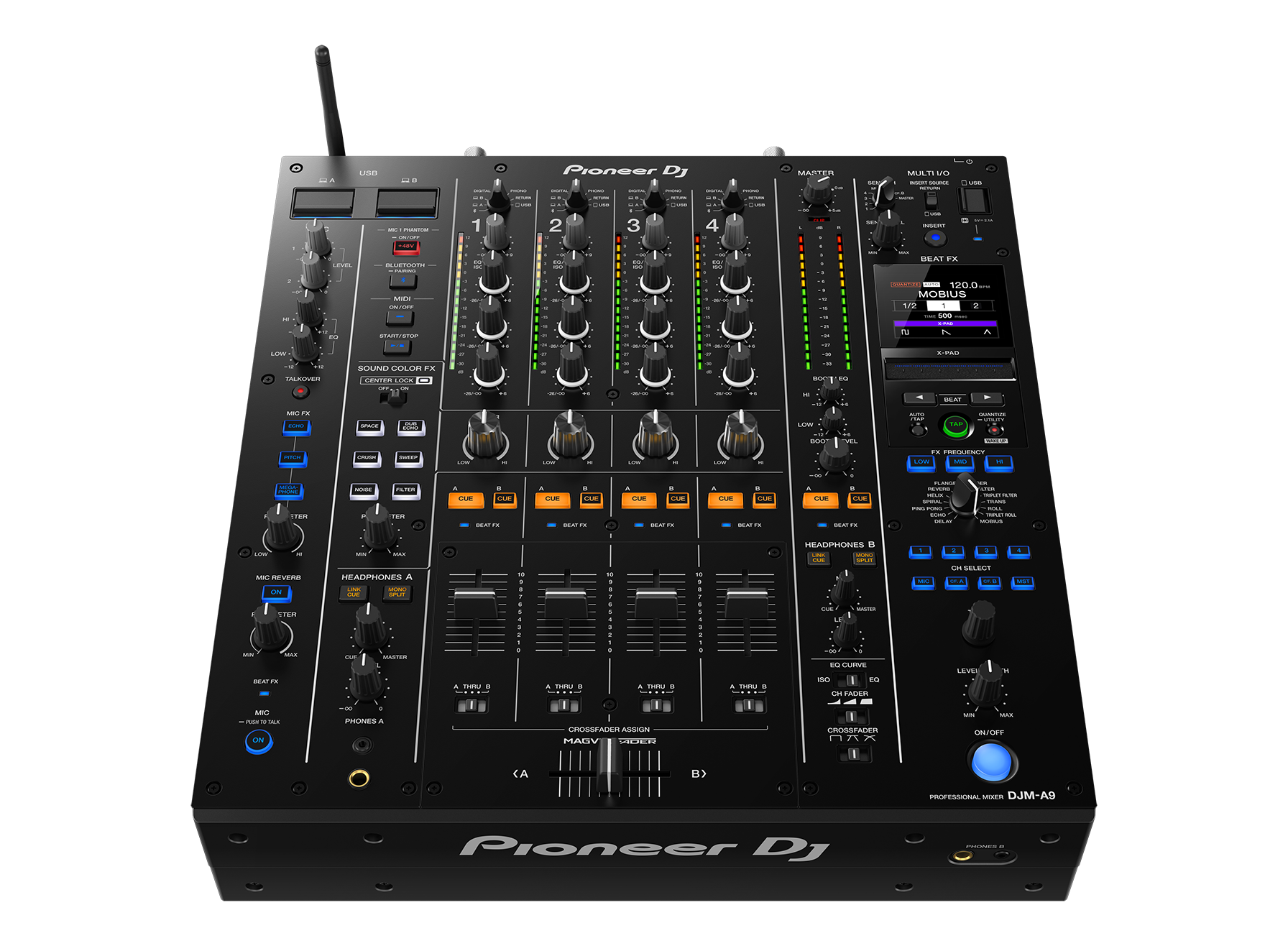
Most DJs today play from USB sticks. The usual booth is two Pioneer CDJ-3000 players with a Pioneer DJM-A9 mixer between them. The players are linked with a network cable, so the DJ sees the same music library on both screens and can play from one stick in both players. The mixer has four channels, which leaves room for a laptop or a guest DJ's device next to the two players.
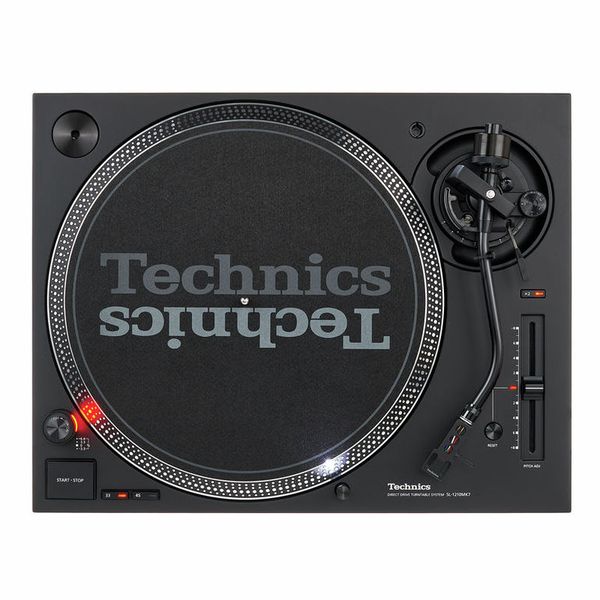
If the DJ plays vinyl, swap the players for two Technics SL-1210MK7 turntables fitted with Ortofon Concorde Club MKII cartridges. A turntable puts out a weak phono-level signal, which goes into the mixer's phono input rather than a line input, and the ground wire must be fastened to the mixer or you will hear a hum. Our DJ vinyl kit has these parts together.
Table, laptop stand and booth monitor
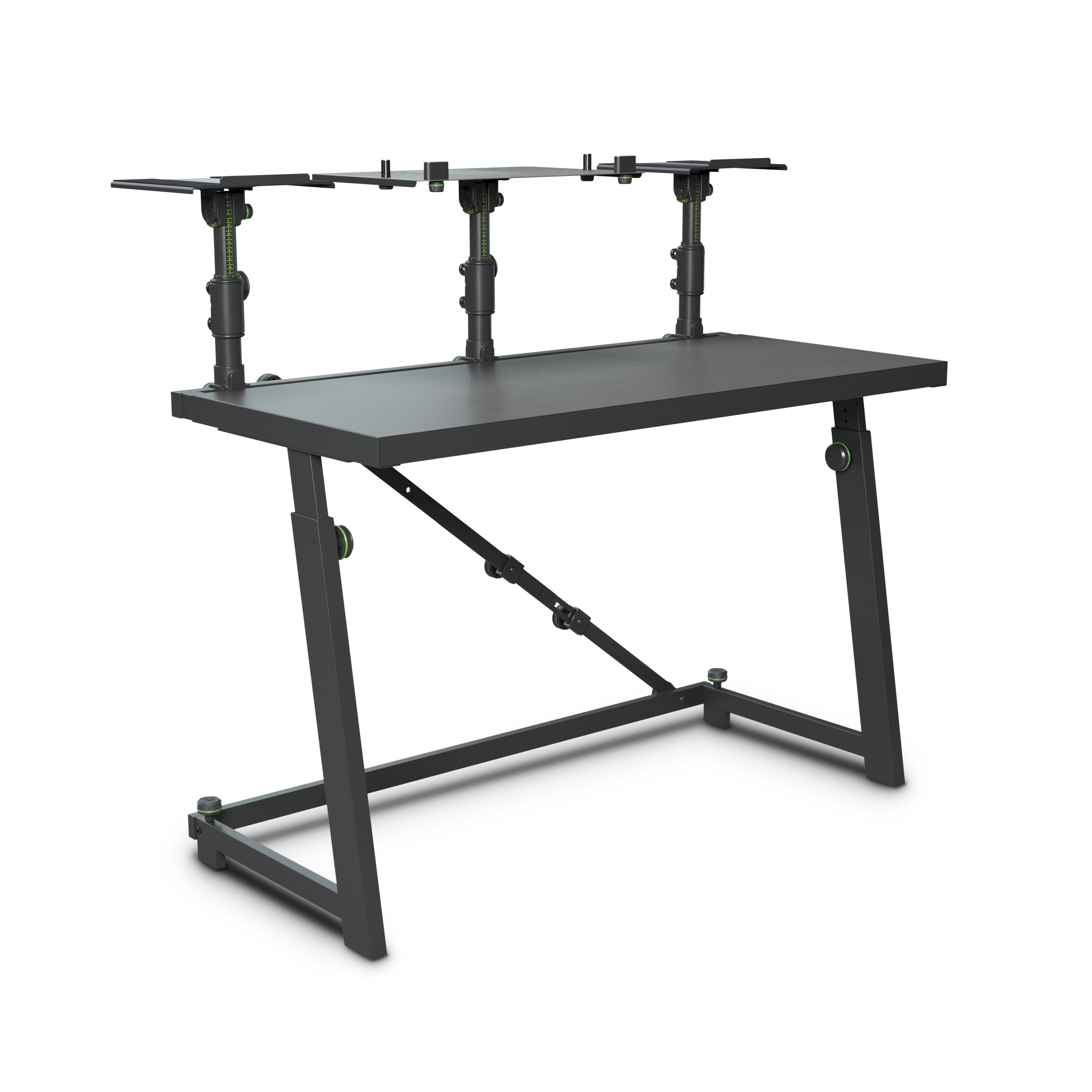
A DJ booth needs a sturdy and wide enough table. An ordinary banquet table wobbles, and with turntables every knock means a skipping needle. The Gravity FDJT 01 is built for this: two players and a mixer fit side by side, and the laptop and a small speaker go on separate trays. If the venue already has a solid table, a Gravity LTS 01 B laptop stand is enough.
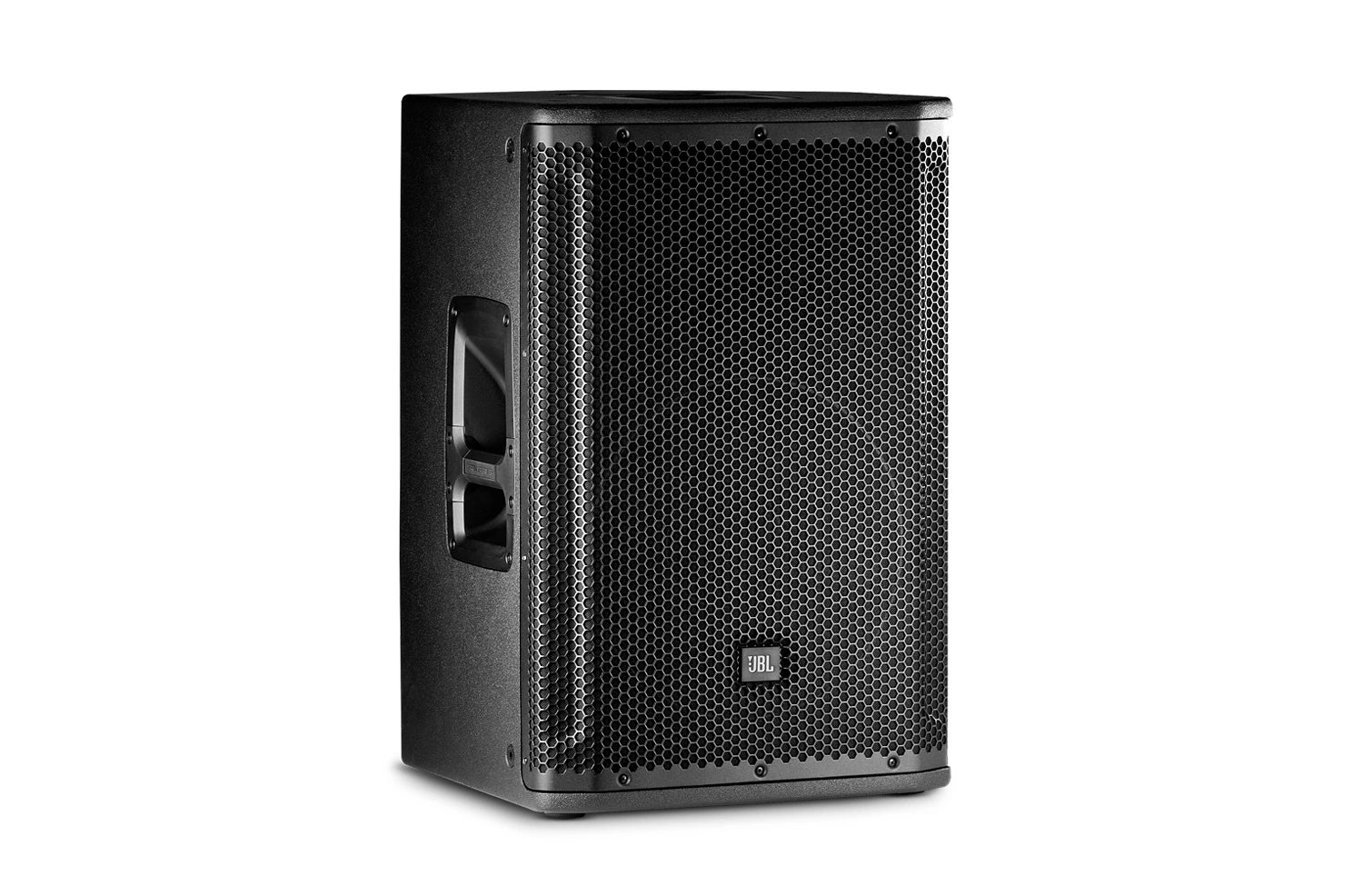
The booth monitor is a speaker next to the DJ that plays the same thing the room hears, but without the room's delay and reflections. Without one, the DJ hears the music bouncing back off the far wall and the transitions drift out of time. One JBL PRX812 or JBL EON710 on a stand next to the booth is sufficient. It is fed from the mixer's booth output, so the DJ can set its level independently of the room.
Speakers for the room
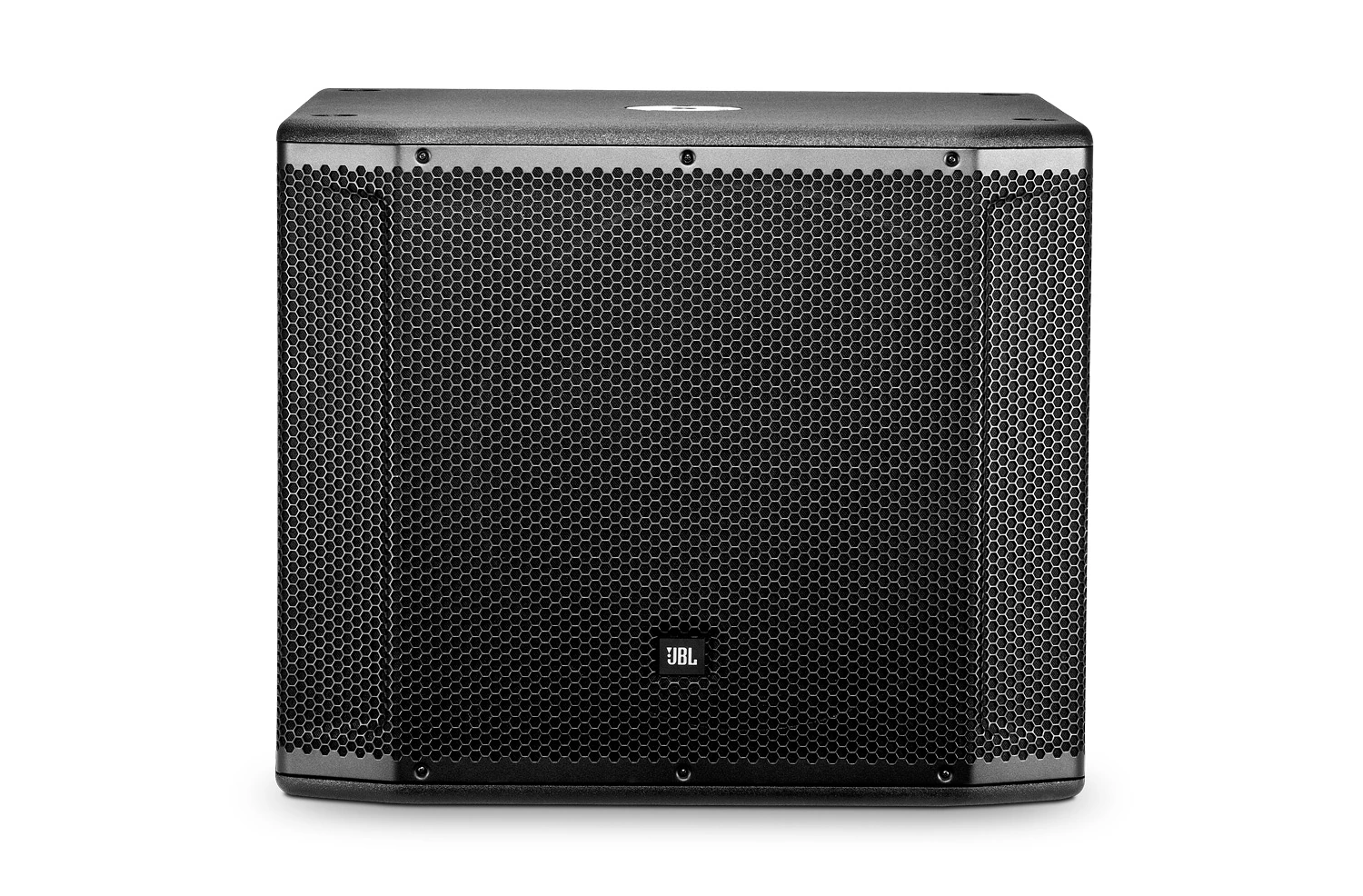
Dance music needs subwoofers. Two top speakers alone will not do it, however powerful they are, because the bass is what gets people dancing. For a party of up to 200 we have put together a DJ kit where two JBL SRX812P speakers sit on distance poles above two JBL SRX818SP subwoofers. The sub stays on the floor, the top is at head height or a little above.
In a smaller room, or on an evening where the music is more of a backdrop, two JBL PRX815 speakers and one subwoofer are enough, as in the vinyl kit. If the room is long, ask about extra speakers for the back half. We have separate guides on speaker placement and on choosing a subwoofer.
Microphone and cabling
At almost every party someone wants to say something: the host, the birthday person, the organiser. A DJ mixer has a mic input, but a wired handheld on the DJ table is awkward. A wireless Shure QLXD24/B58 is included in the DJ kit and its receiver connects to the mixer with one XLR cable.
Cabling is simple if you think it through beforehand:
- Players to mixer: RCA cables, one player per channel.
- Turntables to mixer: RCA into the phono inputs, plus the ground wire.
- Mixer to speakers: XLR cables, length to suit the room and preferably with some spare.
- Mixer to booth monitor: from the booth output, usually on a TRS or XLR cable.
- Power: booth, monitor and speakers each on their own extension lead, not one power strip for everything.
What the DJ brings and what the venue must provide
The DJ normally brings the music on USB sticks (plus a backup stick), headphones and a laptop if needed. Ask before the event whether they want players or turntables and whether they have a preference on the mixer. If the DJ brings their own controller, they still need speakers, a monitor and a table.
The organiser or venue has to provide:
- Mains power near the booth and at the speakers, from separate sockets where possible.
- A spot for the booth where the DJ can see the dance floor and the gear is not in a walkway.
- A clear idea of when the music has to come down; quiet hours apply to events too.
- Access: where a car can pull up to unload and whether there is a lift or stairs.