A band in a small room: how not to play too loud
In a small room a band's main problem is rarely too little sound. Usually there is too much. A drum kit acoustically is already so loud that in a bar, restaurant or party room for thirty to a hundred people it needs no amplification. Guitar and bass amps add their own volume, the singer cannot hear themselves and asks for more monitor, and by the end of the evening guests have either fled outside or stopped talking to each other. This guide covers how a band can sound good and moderate in a small room: stage volume, amp direction, monitors and a PA that carries only what the room itself cannot. An acoustic duo or trio has its own guide on acoustic gigs.
In a small room, volume starts on stage
On a big stage almost all the sound the audience hears comes from the speakers and the engineer controls the balance from the mixer. In a small room the sound of the drums, amps and monitors reaches the audience directly too. If the stage is already too loud, the engineer cannot turn anything down. They can only add.
So the first step in a small room is agreeing on stage volume. At sound check the band plays one song without the PA while someone listens in the middle of the room. If that is already loud enough, the PA should add only the vocals and the instruments that get lost. If the stage is too loud, it has to come down, rather than the vocals being pushed over it.
Drums: the loudest instrument in the room
Drums have no volume knob, so a lot depends on the drummer. For a small room it pays to bring lighter sticks or rods (hot rods) and brushes, and to play the cymbals softer. Some drummers also use damping rings or gels to cut the overtones.
In a room for thirty to a hundred people the drums usually need no mics. If the room is longer or the band plays for dancing, one mic on the kick, such as a Shure BETA 52A, adds a little low end for the dance floor. Full drum miking, covered in our drum mic guide, is for a bigger hall.
If possible, put the kit on a rug and not right against a hard wall. The wall reflects the drums back into the audience and the room gets louder still.
Guitar and bass amps: direction and height
A guitar amp on the floor pointing straight at the audience is painful in the front row and inaudible on stage. The guitarist cannot hear themselves, because the speaker is at knee height, and turns up. The fix is to raise the amp on a stand or tilt it back so the speaker points at the player's ears. The guitarist then hears themselves at lower volume and the audience gets a more even sound.
Another option is to turn the amp sideways, across the stage, so it points at the other musicians rather than the audience. For a bass amp, keep it out of a corner, because a corner boosts the bass and makes it muddy.
In a small room bass and keys can go straight into the PA through a DI box, with no amp of their own. An active BSS AR-133 DI for bass and a stereo Palmer PAN-04A for keys give the engineer full control, and the stage loses one source of volume.
- Guitar amp on a stand or tilted back, aimed at the player.
- Amp sideways, across the stage, not straight at the audience.
- Bass and keys through a DI box into the PA, no stage amp.
Monitors: less is more
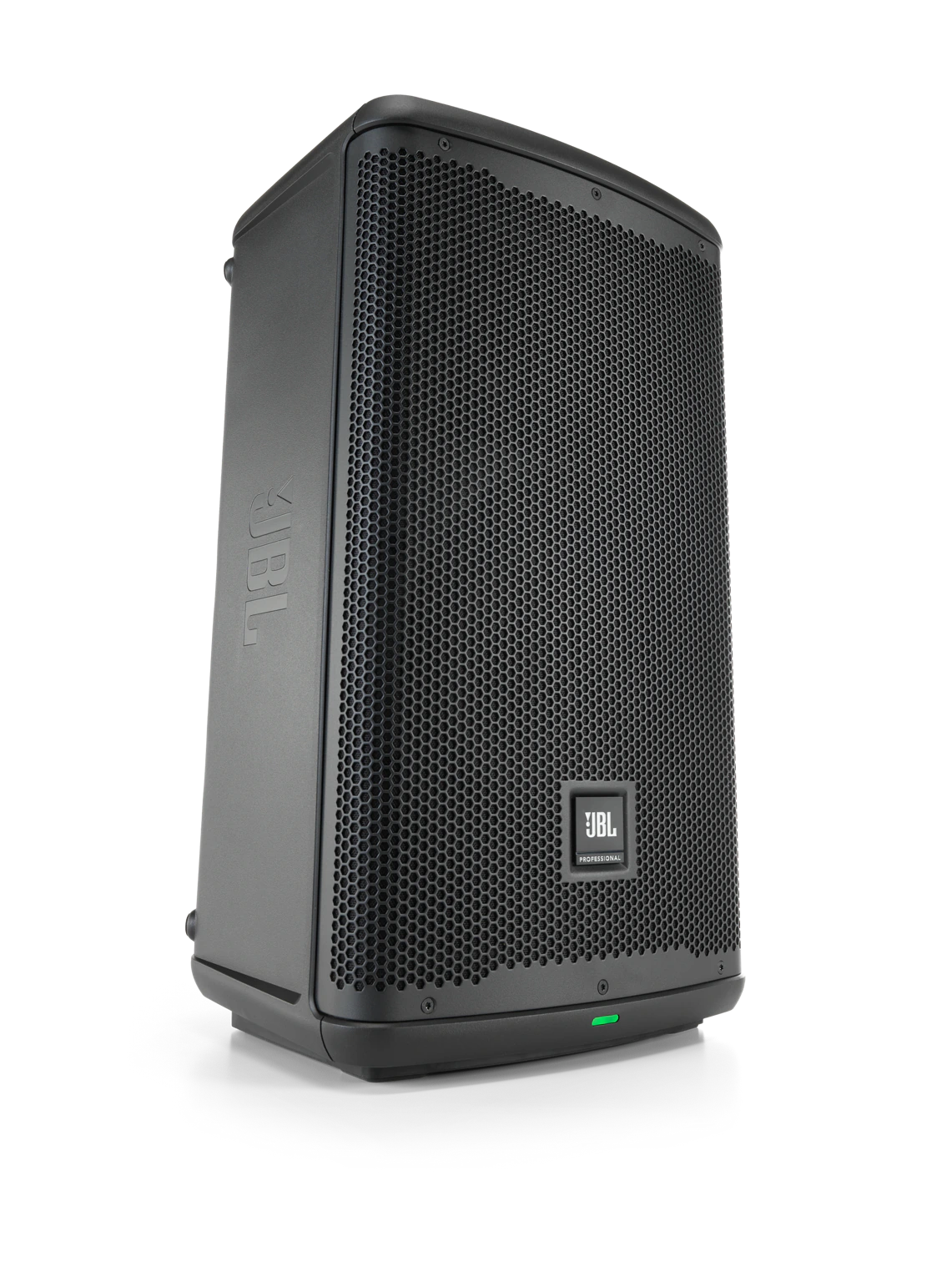
Every stage monitor cuts both ways: the musician hears themselves better, but the monitor sound also goes into the audience and into the vocal mic. In a small room every extra monitor means a louder room. Often one compact monitor such as a JBL EON710 in front of the singer, carrying mostly vocals and a little keys, is enough.
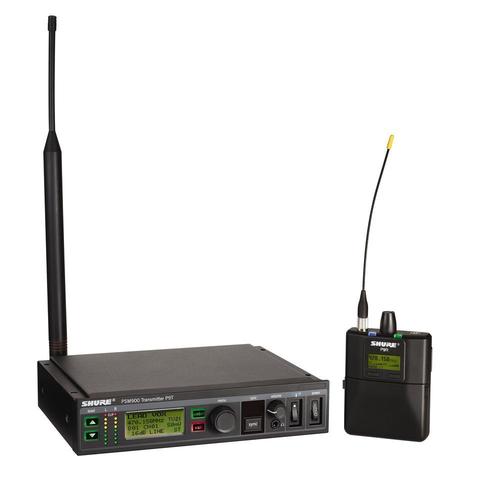
In-ear monitors give the quietest stage. When the musicians hear themselves through earphones, no wedges are needed and the amps can be much quieter. The In-ear monitor kit for four musicians has four Shure PSM900 systems and SE215CL earphones. It takes the band some getting used to and a longer sound check. Our guide comparing in-ear monitors and wedges covers the choice.
The PA: vocals first
In a small room the PA's main job is the vocals. A voice cannot compete with drums unamplified. So choose speakers that carry the mids well, such as two JBL PRX812 on stands, and raise them above the audience's heads so the vocals reach the back tables. A small room often needs no subwoofer, since bass and kick are loud enough acoustically.
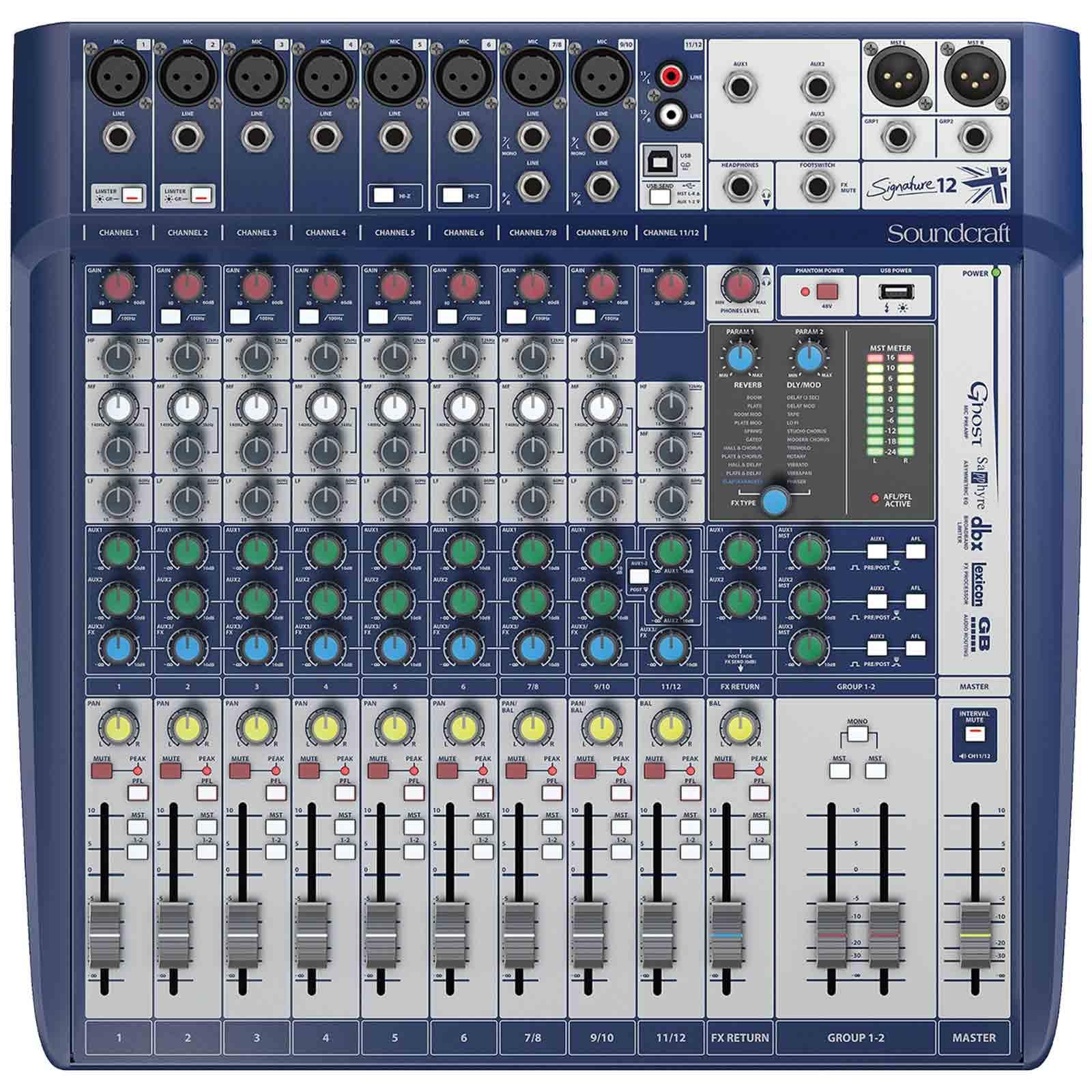
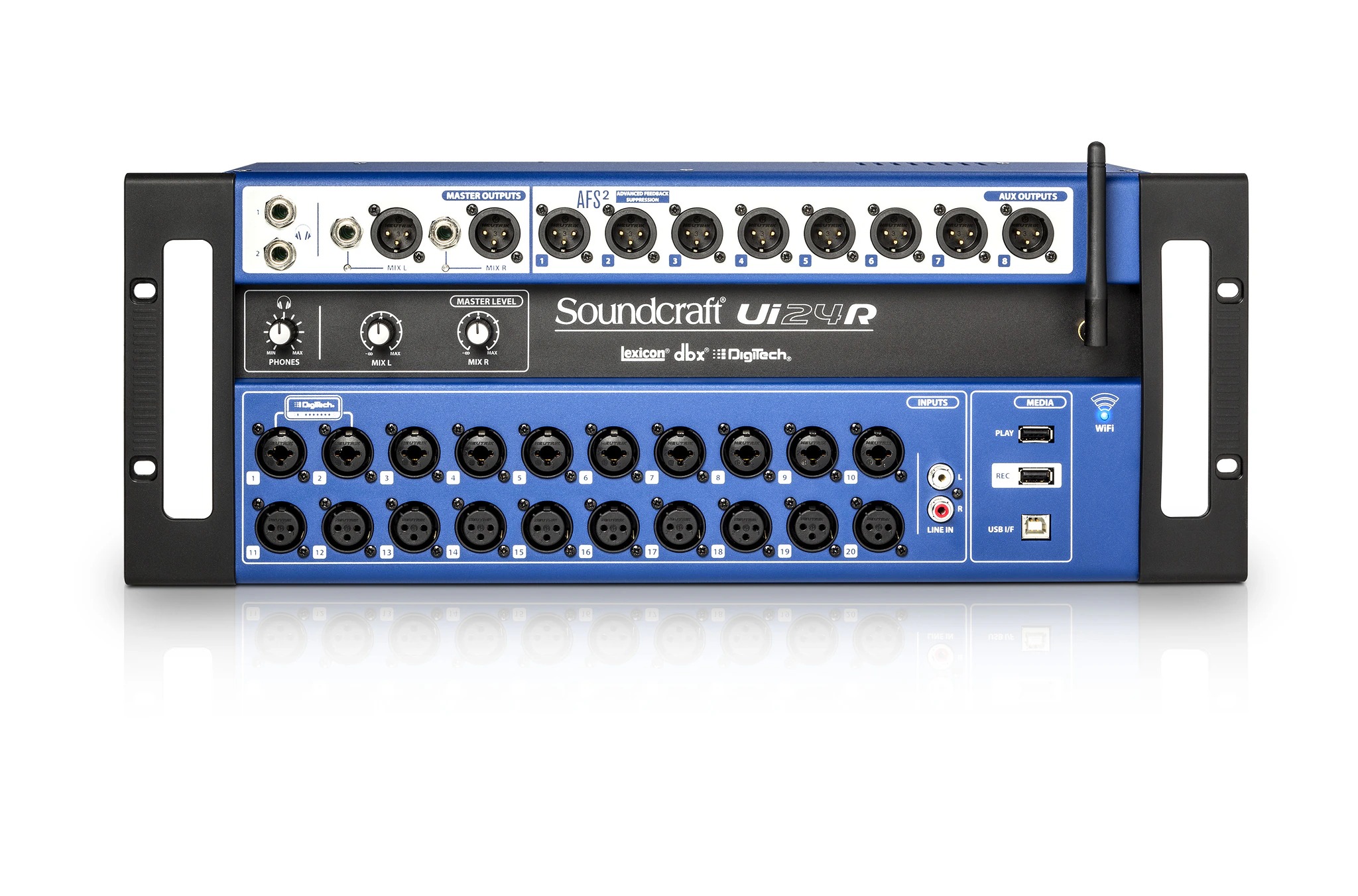
The mixer should be enough, not big. If the PA carries the vocals, bass and keys through DI and maybe the kick, that is fewer than ten channels. A Soundcraft Signature 10 fits, or a Soundcraft Ui24R, which lets the engineer run the mix from a tablet while listening in the middle of the audience.
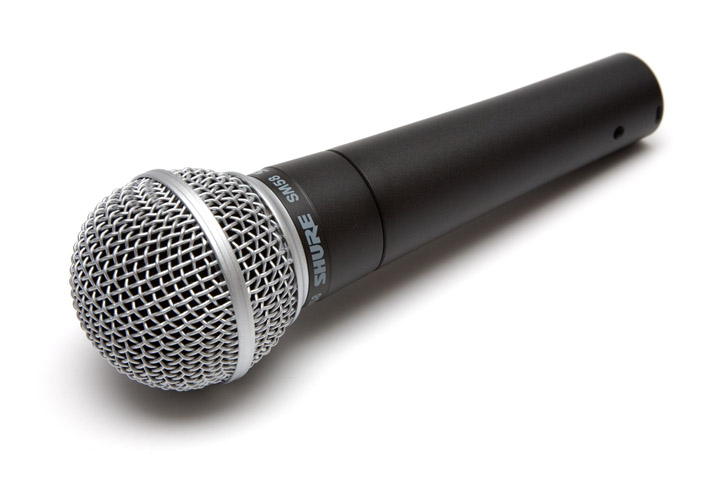
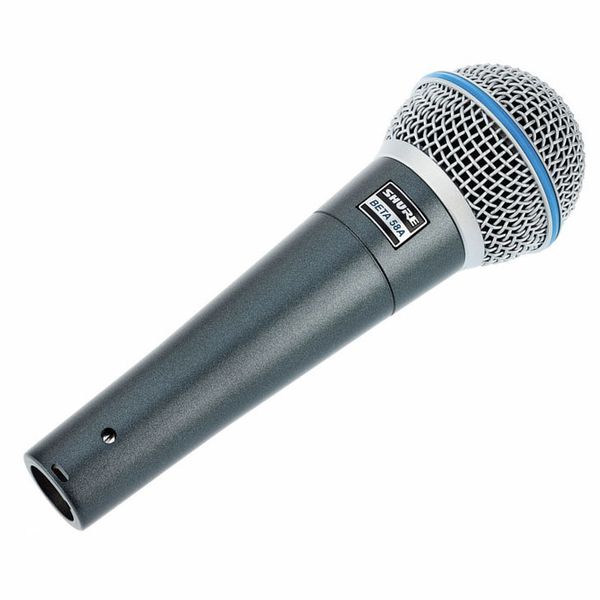
For vocals in a small room, a dynamic mic such as the Shure SM58 or BETA 58A is a good choice. It picks up less of the nearby drums and amps than a condenser.
The room, the guests and agreements
Before the event, agree with the venue owner and the organiser when the band plays and how loud it may be. In a restaurant during dinner the expectations are very different from a bar after midnight. Also check whether the building or the municipality has rules on noise and quiet hours, especially if the room is under flats.
Offer earplugs to the musicians and to guests seated near the stage. Loud sound in a small room tires people faster than at a big concert, because there is no getting away from it.
Think about table layout too. Leave a couple of metres between the stage and the first tables, and put the quieter tables, where people want to talk, at the other end of the room.
What to rent for a band in a small room
A simple setup for vocals and a couple of DI instruments is the Acoustic duo kit for up to 80 people: two JBL PRX812, one EON710 monitor, a Soundcraft Signature 10, two SM58 mics and two BSS AR-133 DI boxes. The Live band kit for up to 200 people is meant for a full band playing for dancing in a bigger room; for a small room it is often too much, and parts of it can be left out.
Send us the line-up and the room size, and we will put together the sound equipment rental with nothing superfluous. Call +372 5562 0282 or write to info@showgear.ee.