Power, cables and weather: sound equipment at an outdoor event
Indoors the power is in the wall and the roof is over your head. Outdoors you have to arrange both yourself, and those two things, more than the choice of speakers, decide whether an outdoor event works. Here is a practical list of what to think through about mains power, cables and weather before the day, and what to do when there is no mains at all.
Where the power comes from
The first question at any outdoor event: where is the nearest socket and what else hangs on it. Sound equipment is usually not a heavy consumer, but it is a sensitive one. If a coffee machine, a fridge or a fan heater shares the same circuit, the breaker can trip exactly when the bass kicks in. Ask the venue for a socket with nothing else on it, or have an electrician run a dedicated line.
Active speakers and a mixer can share one extension lead, but every lead used outdoors must be rated for outdoor use and protected by a residual current device. Always unwind a cable reel fully: a coiled lead heats up under load.
A generator when there is no mains
In a field or on a beach a generator is the only option for a larger system. For audio, an inverter type generator is the right choice because it delivers a cleaner voltage; an ordinary construction generator can put a hum into the speakers. Generator noise is its own problem: put it as far away as the cable allows, downwind of the audience and preferably behind some obstacle.
Think about fuel too. A generator stopped for refuelling means silence on stage, so fill up before the start and keep a spare can. For a long event it is worth renting the generator with an operator, because the sound technician cannot be at the mixer and watching the engine at the same time.
Cables: length, route and safety
Measure the distances before the day, not on the morning. A signal cable runs from the mixer to the speakers, a separate power lead runs to each speaker, and all those routes are usually longer than they look because cable follows edges rather than straight lines. Keep signal and power cables apart: where they must cross, cross them at a right angle rather than running side by side.
Every path people walk on needs a cable ramp or at least tape. Taped cable does not stay down on grass, so cover it with a mat or route it away from foot traffic. Microphone cables on stage should be long enough that a performer does not pull the plug out, but not so long that someone trips over them.
- Signal on XLR, not minijack, once the distance is more than a couple of metres
- Power and signal cables on separate routes
- Cable ramps or mats across walkways
- Plug connections off the ground and covered from rain
Rain, wind and temperature
An active speaker is not waterproof; the amplifier and its vents are on the back. Light drizzle under a roof is tolerable, direct rain is not. Keep the speakers under a canopy or a tent and turn them so rain does not fall on the rear panel. The mixer and the wireless receivers belong under cover in every case.
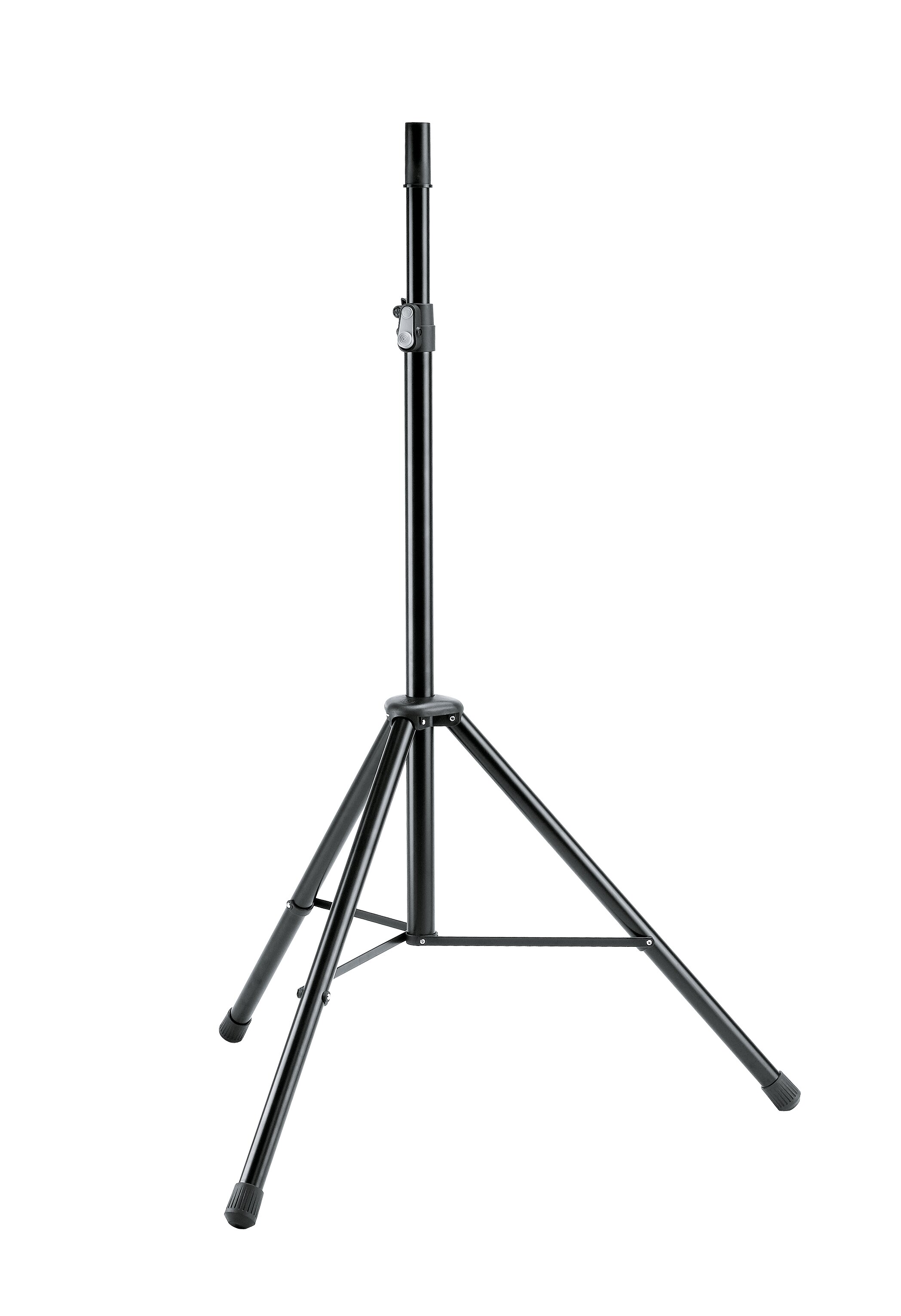
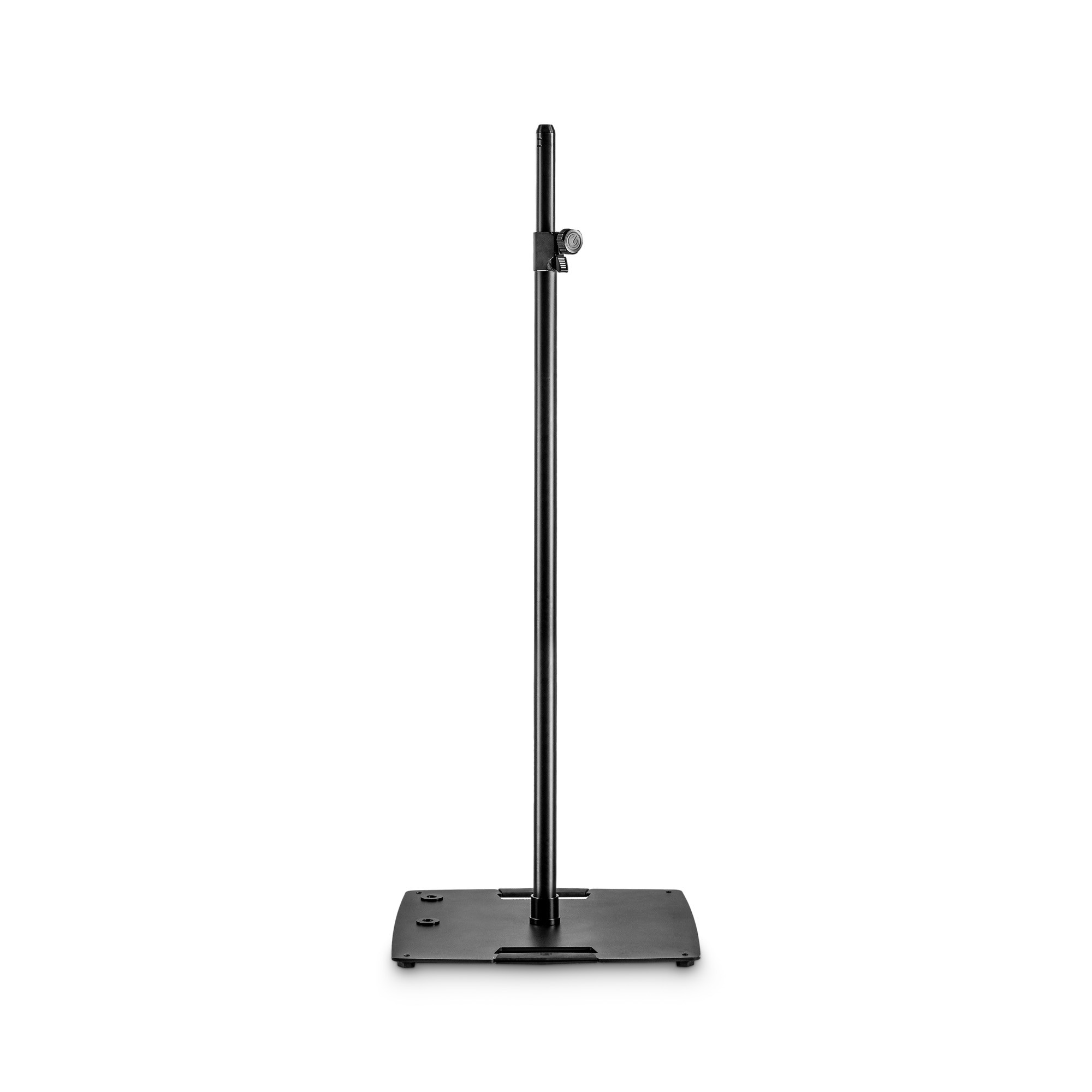
Wind is more dangerous than rain. A speaker on a stand is a tall object on narrow legs with a large side area. Weigh the stand legs with sandbags, do not hang banners on the stands, and if the wind picks up, lower the speakers. A stand with a wide steel base such as the Gravity TLS 431 B stands more firmly on grass than an ordinary tripod. In the cold, microphone and transmitter batteries drain faster; keep spares in a pocket, not in a case on the ground. Cold equipment brought into a warm room sweats, so let it stand for an hour before switching on.
No mains at all: the battery option
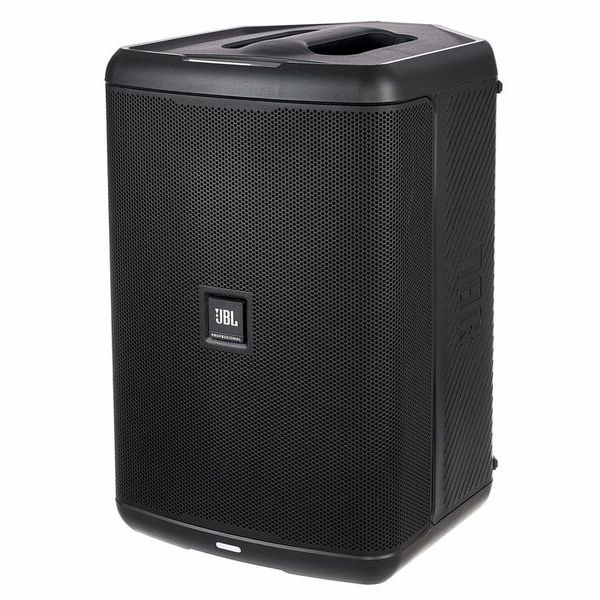
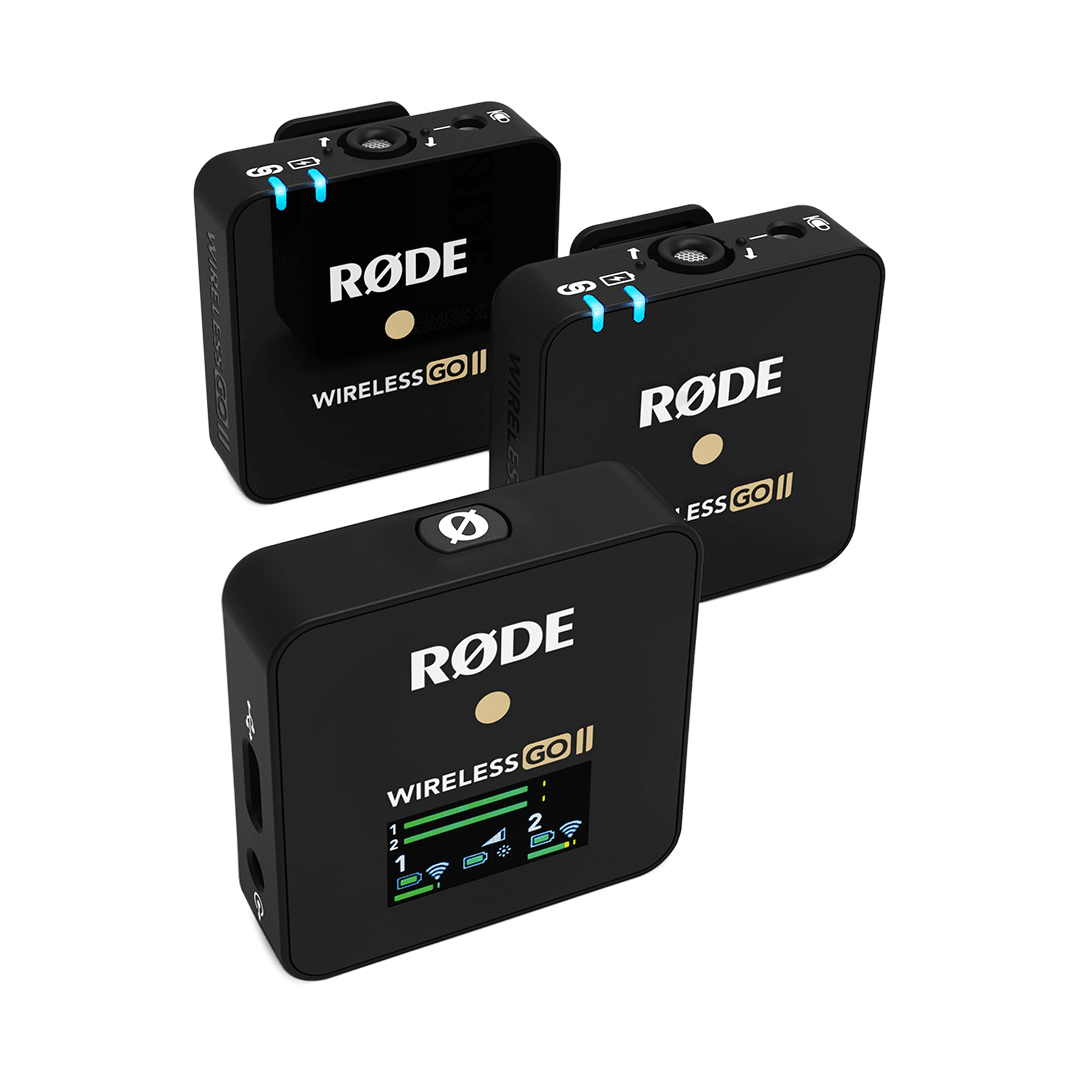
For a small outdoor event, a ceremony, the start of a sports day or a guided tour there are speakers that run on a battery. Our battery-powered speech kit for outdoor use consists of two JBL EON COMPACT ONE speakers, a RØDE WIRELESS GO II microphone system and stands, and it can be used without a single extension lead. According to the manufacturer the EON COMPACT ONE battery lasts around twelve hours, but charge it fully the evening before anyway.
A battery speaker is a solution for speech and background music for up to about fifty people. It is not for dancing or a band; for those, power still has to be brought in.
A weather plan on one page
Agree three things with the organiser in advance: where the canopy is that the equipment goes under if needed; who decides when the wind is too strong; and what the last moment is for moving the event indoors. Write those three answers on one sheet and give it to the technician and the organiser. With that in place, bad weather is an inconvenience rather than a disaster.