Feedback
Feedback is the howl or squeal you hear when a microphone picks up its own sound from a speaker, the system amplifies it again and the loop keeps growing.
What feedback is
Feedback is a signal chain that closes on itself. The microphone picks up a voice, the mixer and amplifier make it louder, the speaker plays it into the room and part of that sound reaches the same microphone again. Once the returning sound is louder than the original, the loop grows and within seconds you hear a squeal, a screech or a low roar.
Feedback usually starts at one particular frequency, the one the room, the speaker and the microphone together amplify most. That is why the same system sounds clean in one hall and starts to ring at the same level in another.
What raises the risk
The most important factor is where the microphone sits relative to the speaker. The closer the mic is to the speaker and the more directly the speaker points at it, the sooner feedback starts. Main speakers should stand in front of the stage, ahead of the microphones, and aim at the audience, not at the stage.
The second factor is the distance between the mic and the mouth. A quiet speaker holding a handheld at chest height forces the engineer to add gain, and every step of gain brings the loop closer to its limit. Lavalier and headset microphones are more sensitive for the same reason than a handheld held at the lips. Hard walls, glass and a low ceiling reflect sound back and add to the risk.
Feedback on stage and in monitors
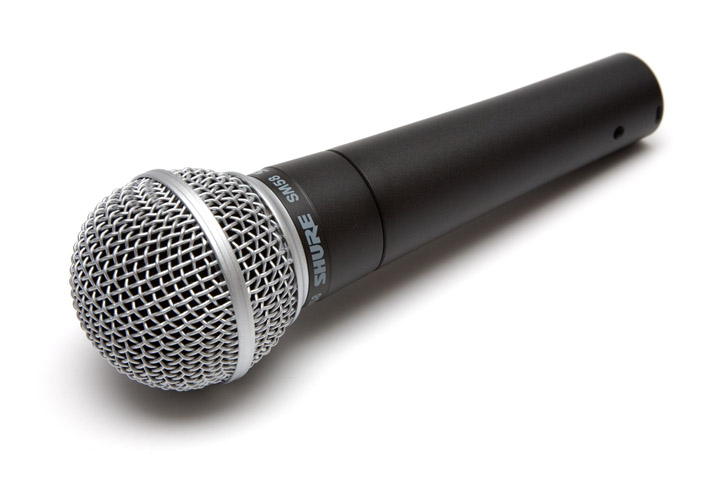
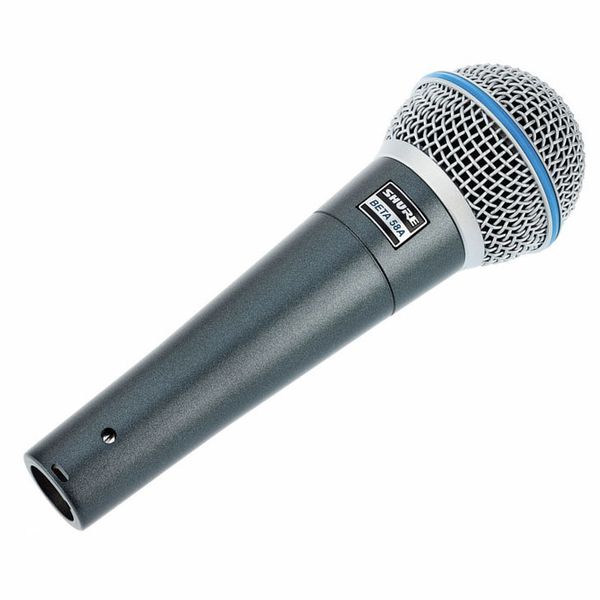
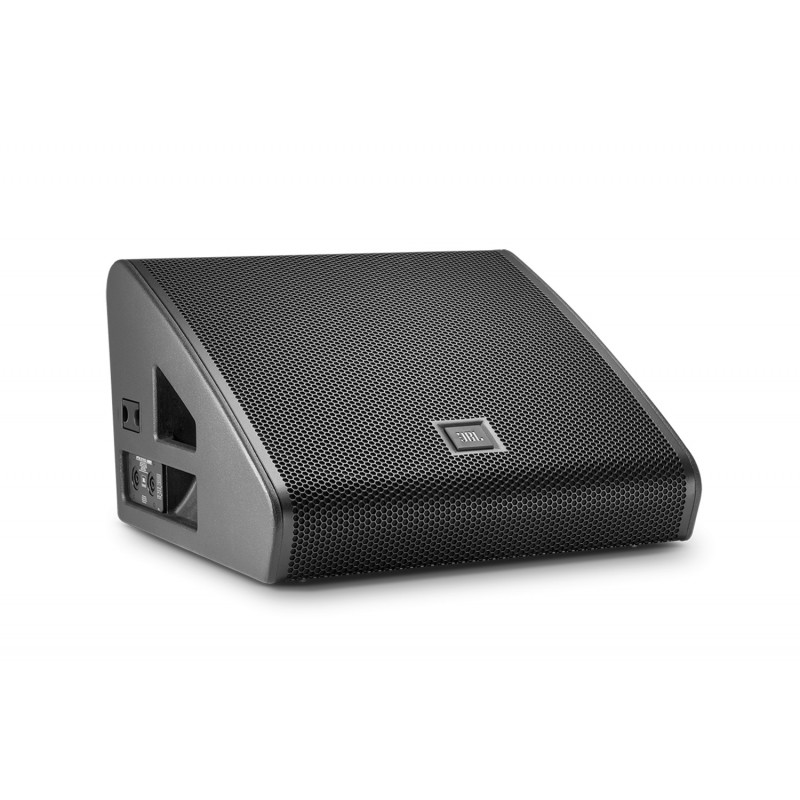
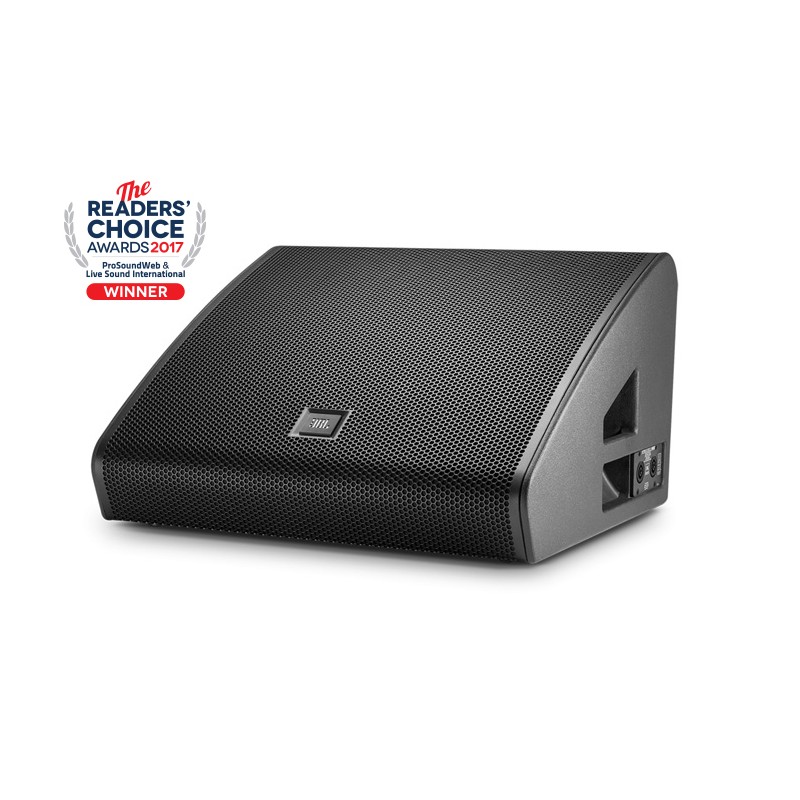
The stage is where the risk is highest, because a wedge monitor points straight at the performer and therefore at their microphone. A cardioid mic such as the Shure SM58 is least sensitive at the back, so the wedge belongs behind the mic, at the performer's feet. A supercardioid such as the Shure BETA 58A has its least sensitive zone slightly off the rear axis, and the wedges are placed accordingly.
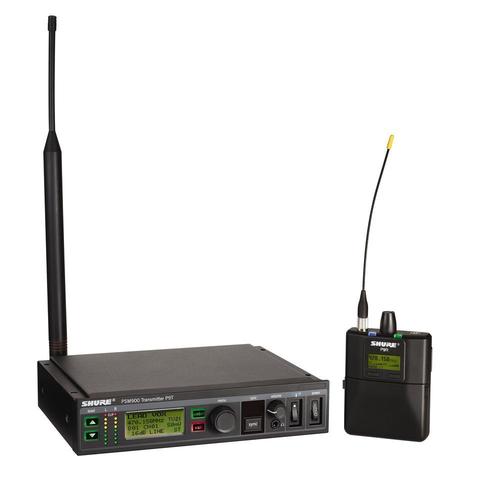
In-ear monitors remove much of the stage feedback, because the sound goes straight into the ear and there is no loud wedge aimed at the mic. A separate guide compares them with wedges.
Common mistakes
Step-by-step prevention is in the feedback prevention guide. These are the mistakes we see most often.
- A presenter walks in front of the main speakers with a wireless mic, or cups the grille with a hand.
- The speaker wears a lavalier but the level is set as if it were a handheld.
- Speakers are put behind or beside the stage so they do not block the view.
- When feedback starts, the whole system is turned down although the problem is one microphone.
- Unused microphones are left open and pick up sound from the stage.