Recording a podcast: microphones, recorder and the room
Podcast listeners forgive a simple picture but not bad sound. A distant, echoey voice, one host louder than the other and ventilation humming in the background make people stop listening. The good news is that a decent recording does not need a studio. It needs the right microphone for each speaker, a recorder that puts every voice on its own track, headphones and a room that does not echo. This guide covers what to rent and how to set it up, both for an ordinary conversation of two to four people and for a show recorded live with an audience. If your sound equipment rental is for recording a concert or conference instead, read "Recording the sound of an event".
First decision: the room
The room affects podcast sound more than the microphone does. In a room with bare walls, glass and a stone floor, the voice bounces back and sounds distant and hollow on the recording. Soft furniture, rugs, curtains and bookshelves absorb and scatter sound. A small office with a sofa and a rug is better for recording than a large empty meeting room.
Listen to the room in silence before recording: ventilation, a fridge, traffic, a door in the next room. The mic will hear them more clearly later than you do now. Switch off what you can, and sit so the mics are not pointing at a window or door.
Dynamic or condenser microphone
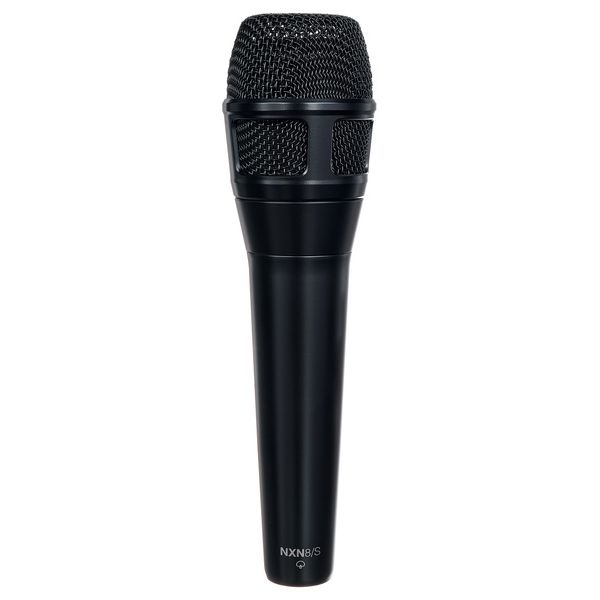
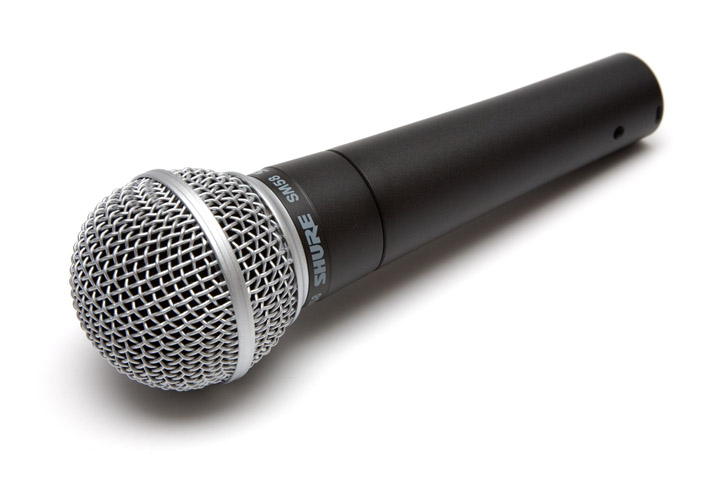
In an ordinary room, a dynamic mic is the safest choice. It picks up mainly the voice close to it and less of the room's echo and the other speakers. The Shure SM58 is simple and robust; the Shure Nexadyne 8/S is a supercardioid dynamic mic that focuses even more on the voice directly in front. Keep a dynamic mic close to the mouth, about a fist's width away.
A condenser mic such as the AKG C414 XLII or Neumann U87 gives a more detailed, fuller voice, but only in a quiet room with good acoustics. In an ordinary room it picks up all the echo and every other speaker. A condenser needs 48 V phantom power, which the recorder or mixer supplies.
- Ordinary office or living room: dynamic, close to the mouth.
- Quiet room with soft acoustics: a condenser is possible.
- Video podcast where the mic must not show: lavalier.
Recorder: a track for each voice
The most important recording rule is that each speaker goes to their own track. Then in editing you can fix one speaker's level without touching the other, cut a cough and reduce noise. If all voices are on one stereo track, the first mistake stays unfixable.
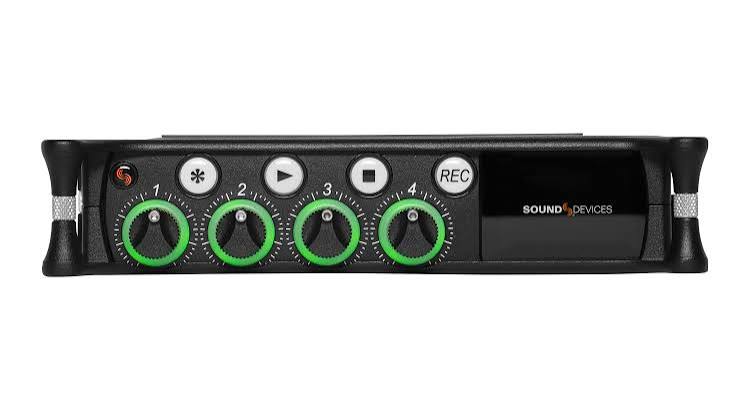
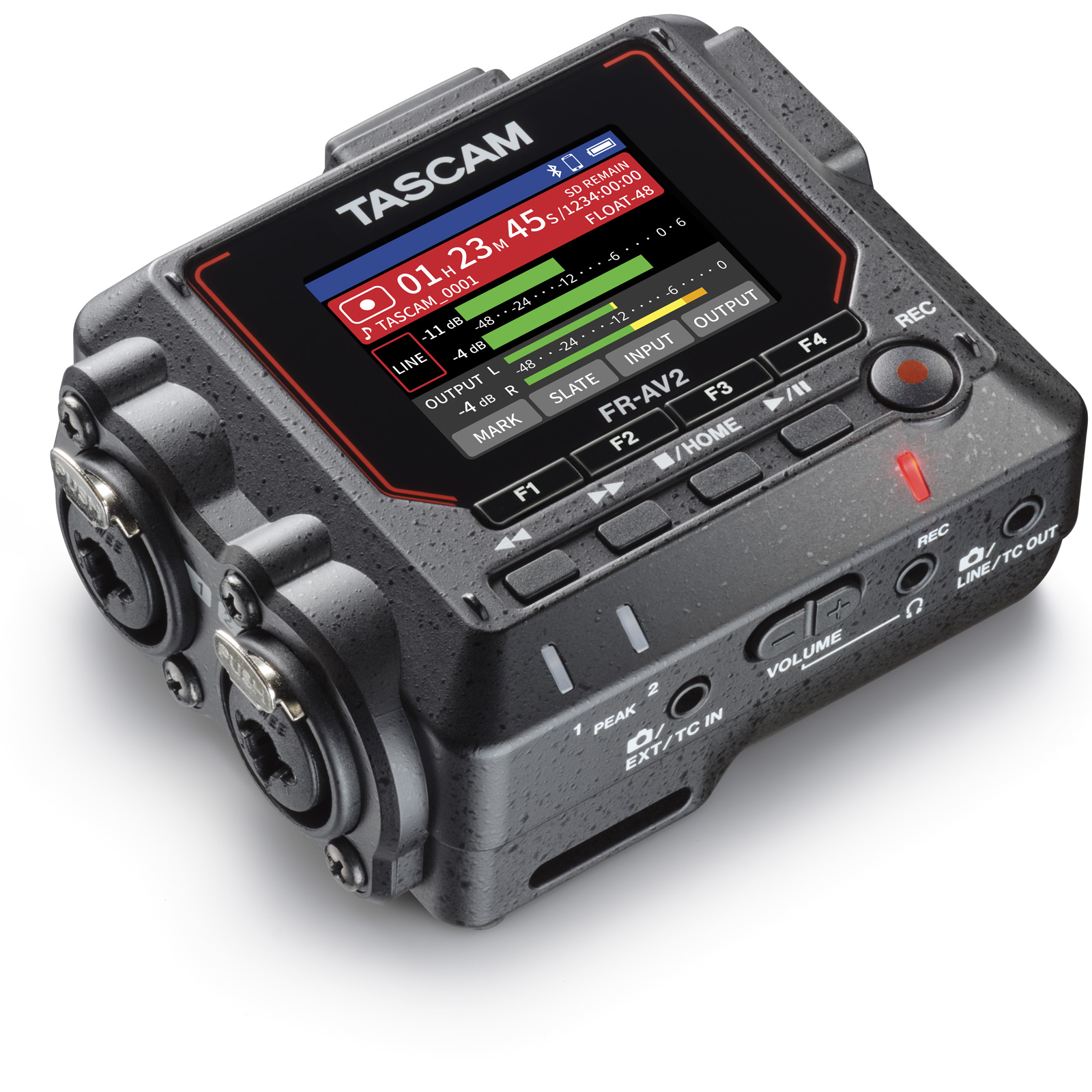
The Sound Devices MixPre6 MKII is a 32-bit float recorder with four mic preamps, recording up to four mics on separate tracks. For two speakers, the TASCAM FR-AV2 has two channels and is also 32-bit float. Float recording means a loud laugh does not distort as easily as on an ordinary recorder, but it still pays to set levels sensibly. With more speakers, the Soundcraft Ui24R records multitrack to a USB drive.
Headphones for everyone
Every speaker should wear headphones. Then they hear themselves through the mic, keep a steady distance and notice immediately if the mic is in the wrong place or something crackles. The person recording hears problems in headphones that go unnoticed in the room, such as clothing rustling against a mic.
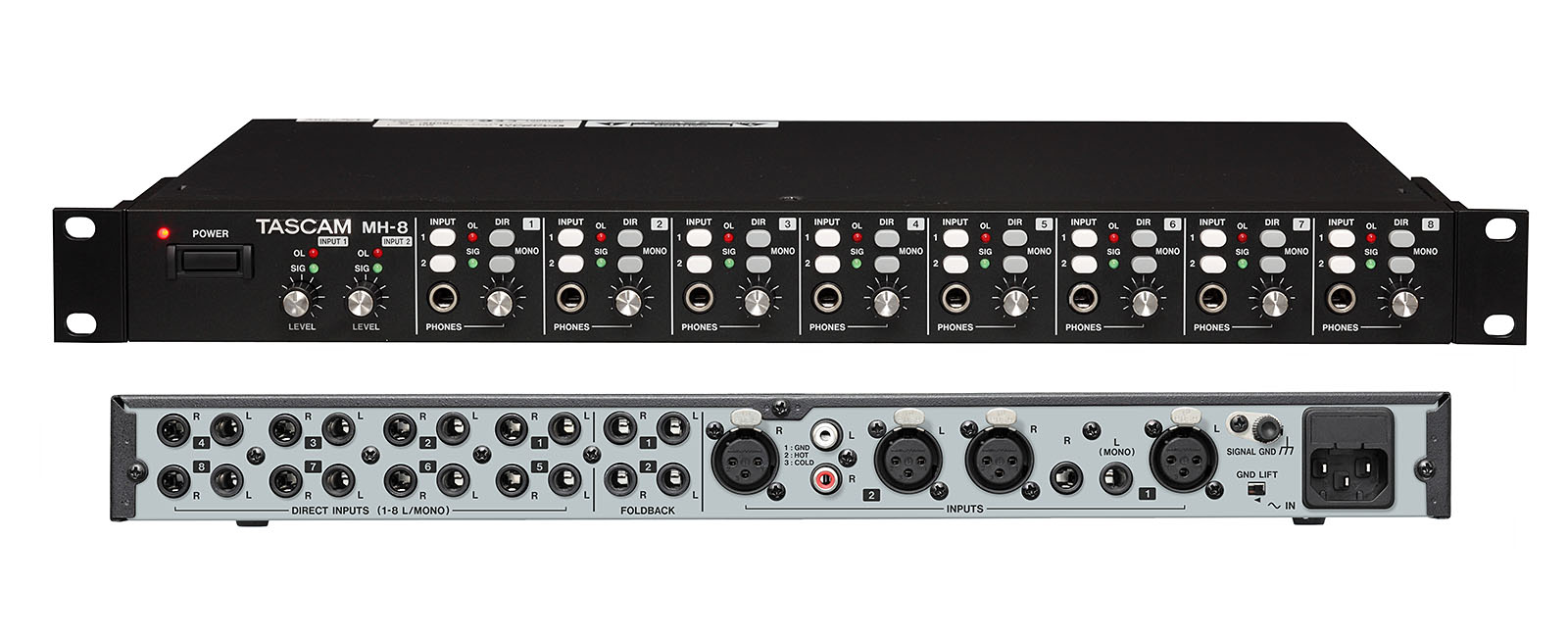
A recorder usually has one headphone output. For several speakers, the TASCAM MH-8 is an eight-output headphone amplifier where everyone sets their own volume. Use closed-back headphones, because sound leaks from open-back ones into the mic.
Placing mics round the table
Sit so the speakers can see each other but each mic points at its own speaker and away from the others. A cardioid mic is least sensitive at the back, so the back of the mic should face the neighbour. For a tabletop mic the short K&M 259/1 stand works; for higher seating, the K&M 252.
Do not put the mic straight on the table, or every knock and clink of a cup will be on the recording. Ask speakers not to tap pens or shuffle papers in front of the mic. If someone tends to lean away, bring the mic closer to them rather than raising their level.
Video podcast and interviews on location
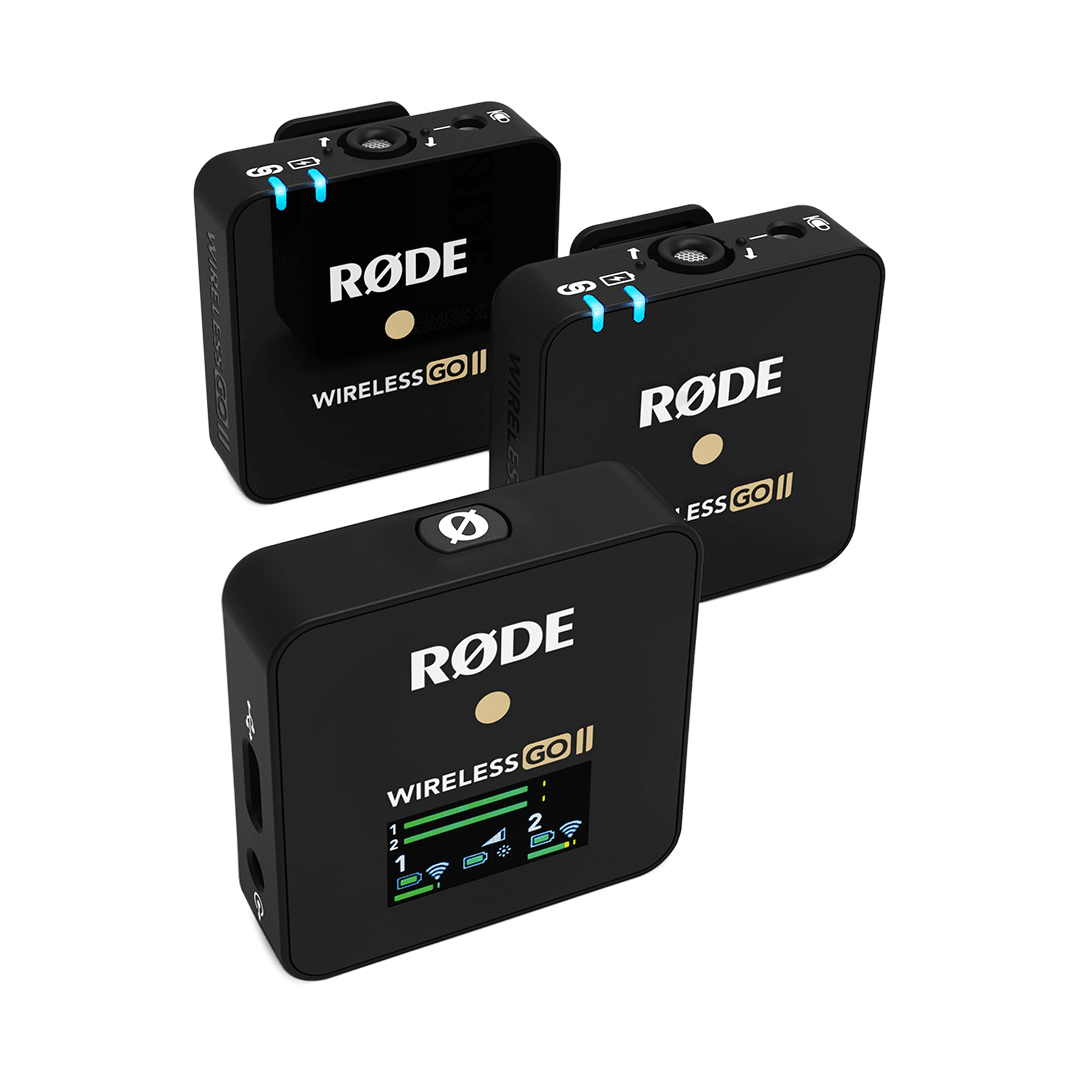
If the show is filmed and a big mic in front of the face does not suit, use lavaliers. The RØDE WIRELESS GO II is a compact two-transmitter wireless system whose transmitters can also record internally, so a backup survives if the radio link drops. The RØDE Lavalier II works with the transmitters. Clip the lav at chest height, and if you hide it under clothing, check the fabric does not rub.
A short shotgun on the camera, such as the Sennheiser MKH 416, can be used, but mainly for room sound and backup. The main sound still comes from each speaker's own mic.
A show recorded live with an audience
When a podcast is recorded on stage in front of an audience, there are two goals at once: the audience must hear and the recording must be clean. Put every speaker's mic into the mixer, send a normal mix to the room speakers, and record each mic separately with the mixer's multitrack recording. The Soundcraft Ui24R does both at once.
Add a couple of mics for audience reactions, for example two Shure SM81 pointing at the room, and a wireless mic for audience questions. Speakers' mics should be dynamic and close to the mouth, otherwise the room speakers end up on the recording. For avoiding feedback, read "How to prevent microphone feedback".