Amplifying an acoustic guitar: DI, microphone or both
On stage the acoustic guitar is one of the fussiest instruments: quiet, delicate and ready to howl as soon as you turn it up. There are three ways to get it into the sound system: from the guitar's pickup through a DI box, with a microphone, or both at once. Each has its own sound and its own risk. This guide walks through connecting each option step by step, when to use which, and what to take from sound equipment rental so the guitar sounds like a guitar and not like a plastic box.
Three routes and what each one gives
A pickup is a sensor built into the guitar. Its signal is the most resistant to feedback, because it does not hear the room, only the vibration of the strings and the body. The price is the tone: a typical piezo under the saddle sounds sharper and more plasticky than the guitar does in a room. A microphone hears the guitar the way an ear does, with the air of the body and the finger noise, but it also hears the speakers, the monitor and the drums. Using both gives you the safety of the pickup and the naturalness of the mic, but it takes two channels and a little care with phase.
The choice depends on what else is happening on stage. A singer alone with a guitar in a quiet hall can use a microphone without worry. In a band with drums and loud monitors, the pickup is almost always all that survives.
- Pickup and DI only: a band, a loud stage, a performer who moves.
- Microphone only: a quiet concert, a guitar without a pickup, a room with nice acoustics.
- Both: a solo or duo set where tone matters and there is time for a sound check.
Pickup and DI box step by step
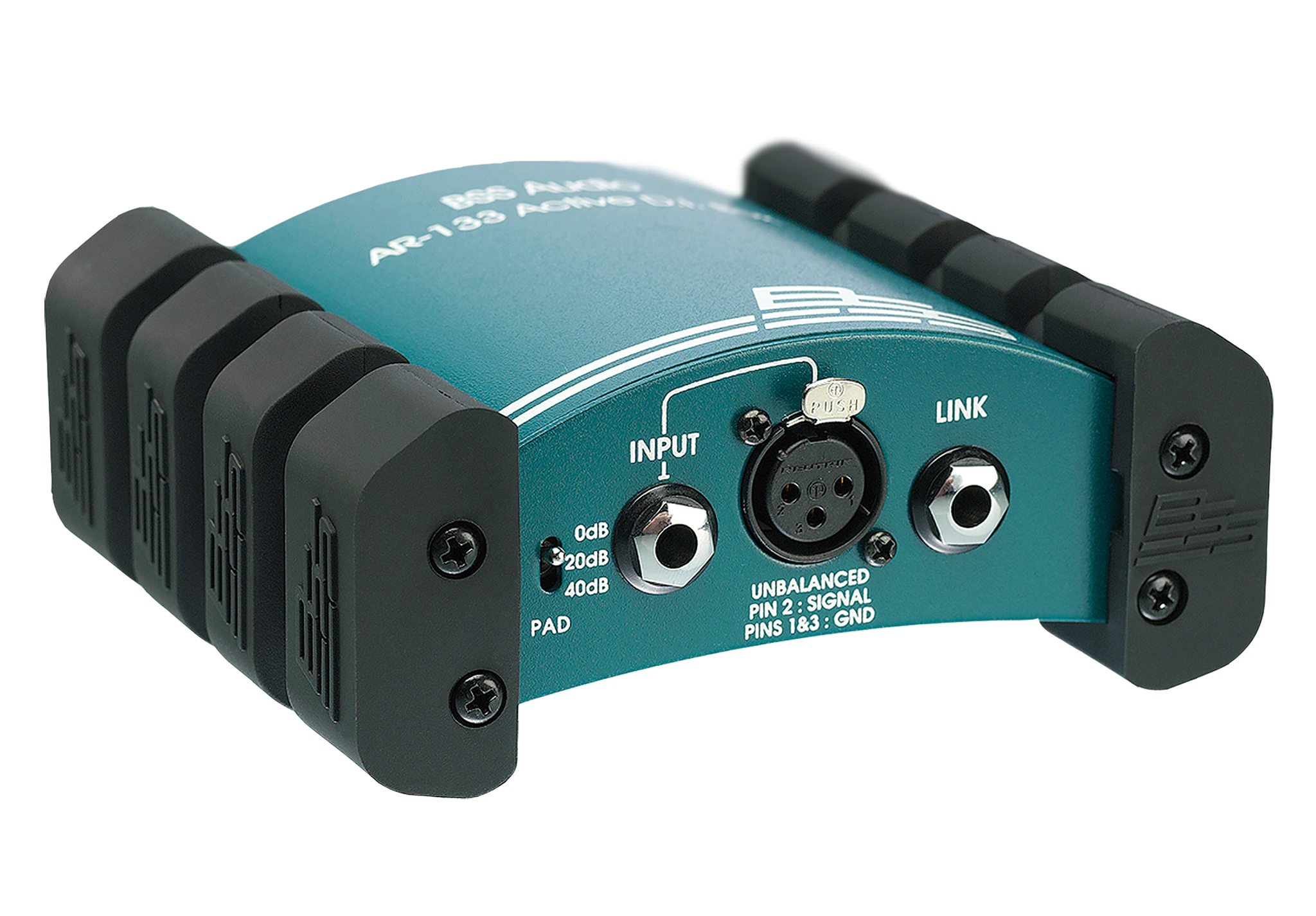
A guitar output is an unbalanced jack with a high impedance. Run it straight into a mixer on a long jack cable and you lose the top end and pick up noise. A DI box turns it into a balanced mic-level signal that travels to the mixer on an XLR cable even tens of metres away. With a passive piezo, where the guitar has no battery, an active DI such as the BSS AR-133 is the better choice, because its high-impedance input does not load the pickup. If the guitar has its own battery-powered preamp, a passive DI works too.
The order is always the same, so nothing pops through the speakers:
- Turn the channel gain on the mixer all the way down and pull the fader.
- Connect the guitar to the DI input with a short jack cable.
- Run an XLR cable from the DI output to the stagebox or a mic input on the mixer.
- For an active DI, switch on 48 V phantom power on that channel; the BSS AR-133 is powered from it.
- Have the guitarist play as loud as they will at the gig and raise the gain until the level is healthy without the red light.
- If you hear a hum, try the ground lift switch on the DI.
Microphone: where and which one
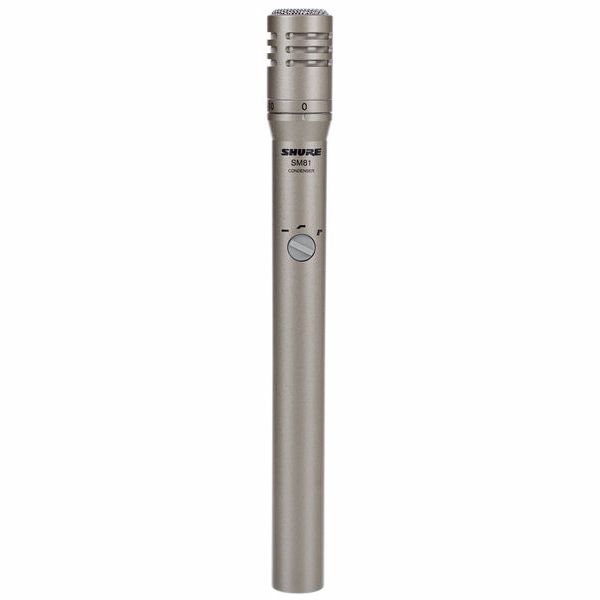
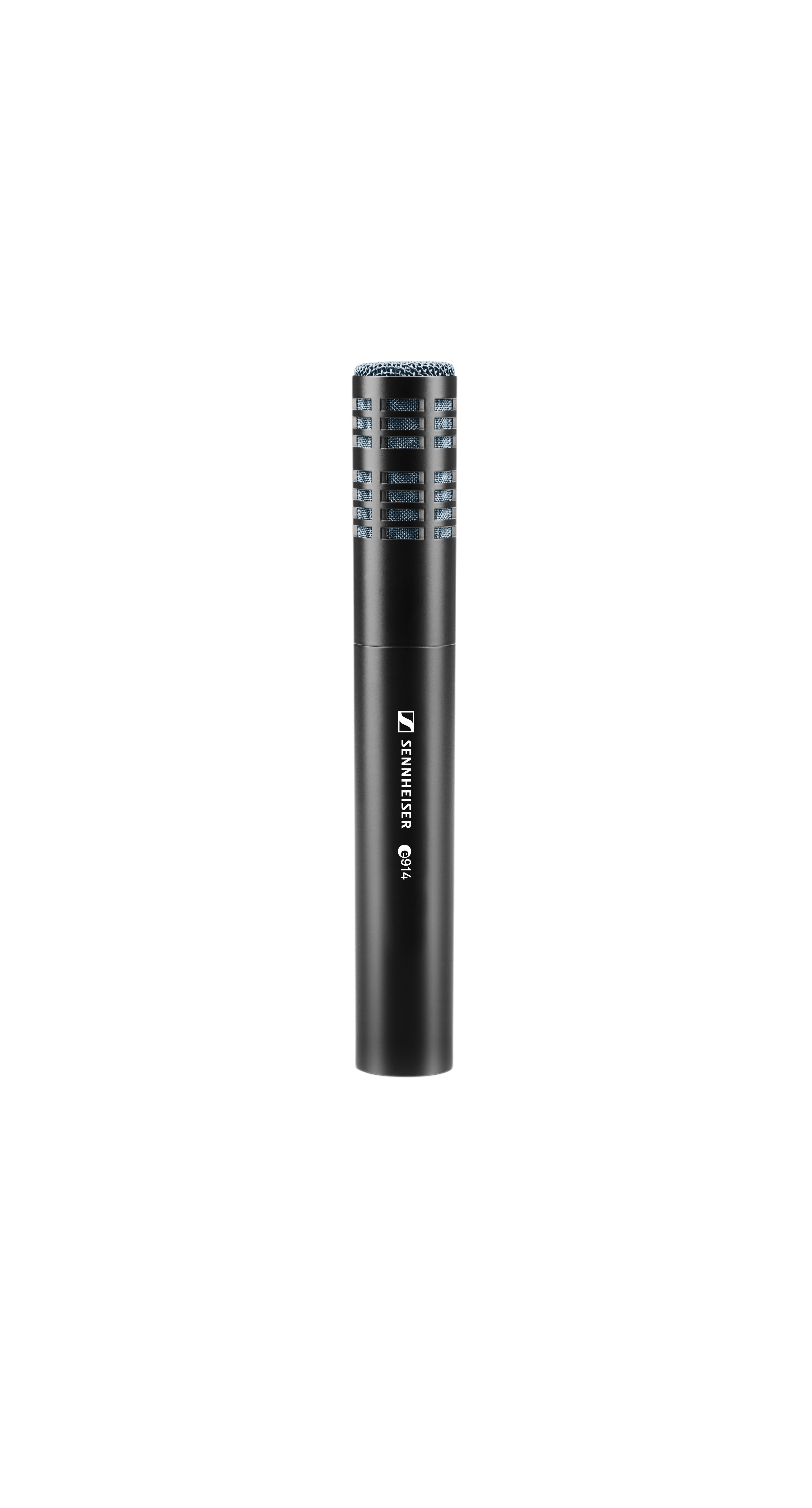
An acoustic guitar suits a small-diaphragm condenser such as the Shure SM81 or Sennheiser e914. Both need phantom power. Aim the mic at the point where the neck meets the body, around the twelfth fret, one to two hand-widths away. Do not put it in front of the soundhole: that is where a thick, boomy bass comes from, which makes the tone woolly and is the first thing to feed back.
The drawback of a mic on a stand is that the guitarist has to stay put. If they move or sway the instrument, the tone changes with every step. A clip-on microphone such as the DPA 4099 solves this, because it moves with the guitar and keeps the distance constant. When using a mic, keep the wedge away from the guitar and aim it at the back of the microphone, where a cardioid is least sensitive.
Both together: blending and phase
When using pickup and microphone together, put them on two separate channels. Start with the pickup alone and set it so the guitar sits clearly in the mix. Then add just enough microphone to make the tone more open and natural. Very little mic is often enough.
The microphone is a few centimetres or decimetres away from the guitar while the pickup is inside it, so the two signals reach the mixer at slightly different times. Sometimes they partly cancel and the bass disappears. Try flipping the polarity on the mic channel: if the sound gets fuller, keep it flipped. Send only the pickup to the monitor, though, because a microphone in a wedge is the shortest road to feedback.
EQ: making a pickup sound more natural
The first step is always cutting the lows with the channel's high-pass filter. The lowest note on an acoustic guitar does not need subwoofer bass, and the body resonance sits right in the low end. Then find the frequency where the guitar starts to boom or ring. A digital mixer such as the Yamaha DM3 or Soundcraft Ui24R has a parametric EQ that can pull that one spot down narrowly without spoiling the rest.
A gentle dip in the upper mids tames the sharp, quacky sound of a piezo. Do not boost the highs to make it brighter: a pickup's top end is already harsh and boosting it exaggerates string squeak. If the guitar has its own preamp with EQ and a phase switch, ask the guitarist to set them flat before the sound check, so the mixer and the instrument are not fighting with two EQs.
The guitarist's own amp and effects
Many guitarists bring an acoustic amp or an effects pedal. Then put the DI box at the end of the chain: guitar into the pedal, pedal into the DI, and the DI's thru output to the amp. The guitarist hears themselves from their own amp and the room gets a clean signal through the DI. If the amp has an XLR output you can use that too, but ask whether it comes before or after the amp's EQ.
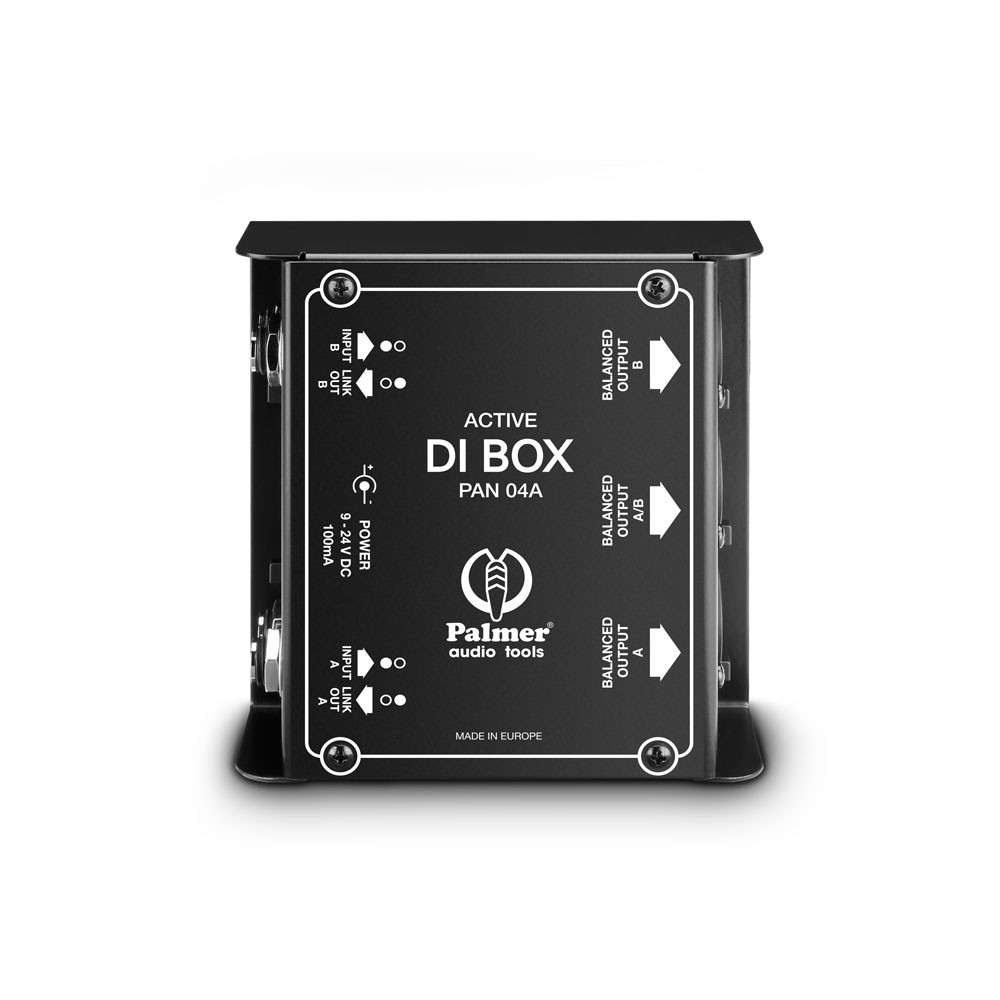
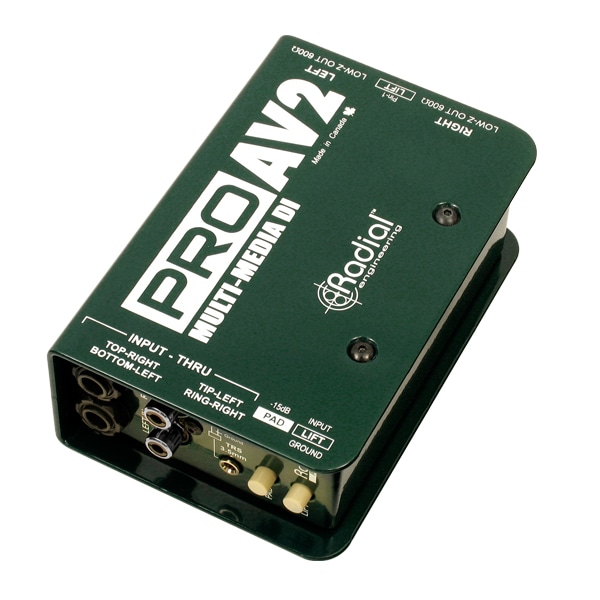
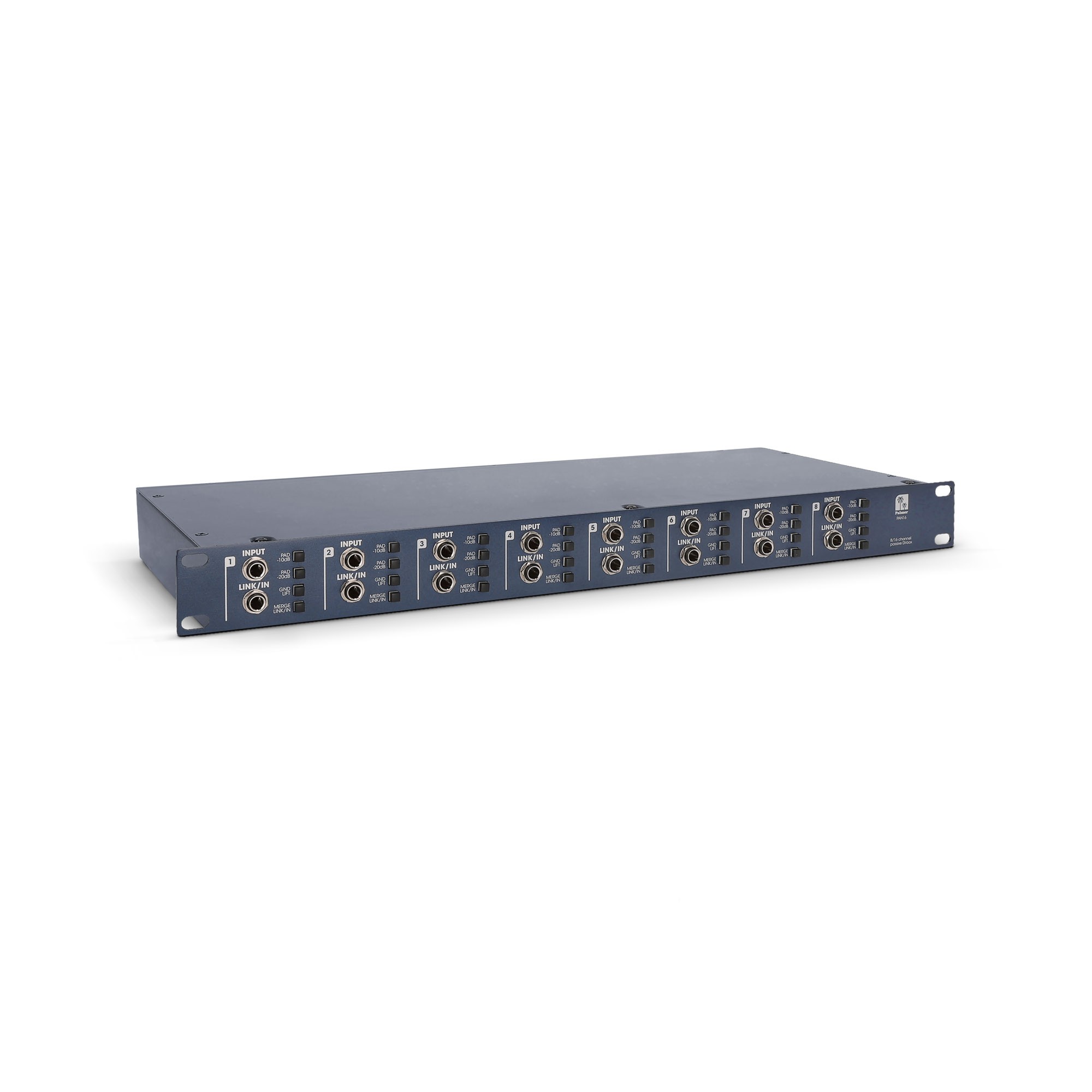
If the guitar runs a stereo effect or the guitarist has two outputs, use a stereo DI such as the active Palmer PAN-04A or the passive Radial PROAV2. For a stage with many acoustic instruments, the Palmer PAN-16 puts eight passive DI channels in one 19-inch rack housing.
What to rent for each situation
A guitar needs very little, but it must all be there when the setup starts. The most common combinations are:
- Singer and guitar with a pickup: one BSS AR-133, one Shure SM58 for the vocal, a small mixer such as the Soundcraft Signature 10.
- Guitar without a pickup: a Shure SM81 or Sennheiser e914 on a K&M 259/1 or K&M 252 stand, a mixer with phantom power.
- Tone matters: the AR-133 and an SM81 on two channels, a mixer that can flip polarity.
- A performer who moves: a DPA 4099 on the instrument plus the pickup through a DI.
- Ready-made for a duo: the Acoustic duo kit for up to 80 people, which has two AR-133 DI boxes.