Compressor
A compressor is a processor that automatically turns down the loudest moments, so the gap between quiet and loud gets smaller and the sound stays more even.
What a compressor does
Picture a technician with a hand on the fader, pulling it down every time the singer gets loud in the chorus. A compressor does the same automatically and much faster. When the signal goes over a set point, the compressor lowers it; anything quieter than that point is left alone.
There are four main settings. Threshold is the point where the compressor starts working. Ratio sets how hard the part above it is pushed down. Attack is how quickly it reacts, and release how quickly it lets go. Make-up gain then lets you bring the whole signal back up.
Where it helps live
For speech, a compressor helps when a presenter sometimes whispers and sometimes laughs into the microphone. A more even level means the quiet sentences are heard and the loud ones do not startle. On vocals it keeps the singer above the band even when the microphone drifts away from the mouth. On bass guitar and kick drum it gives a steady foundation.
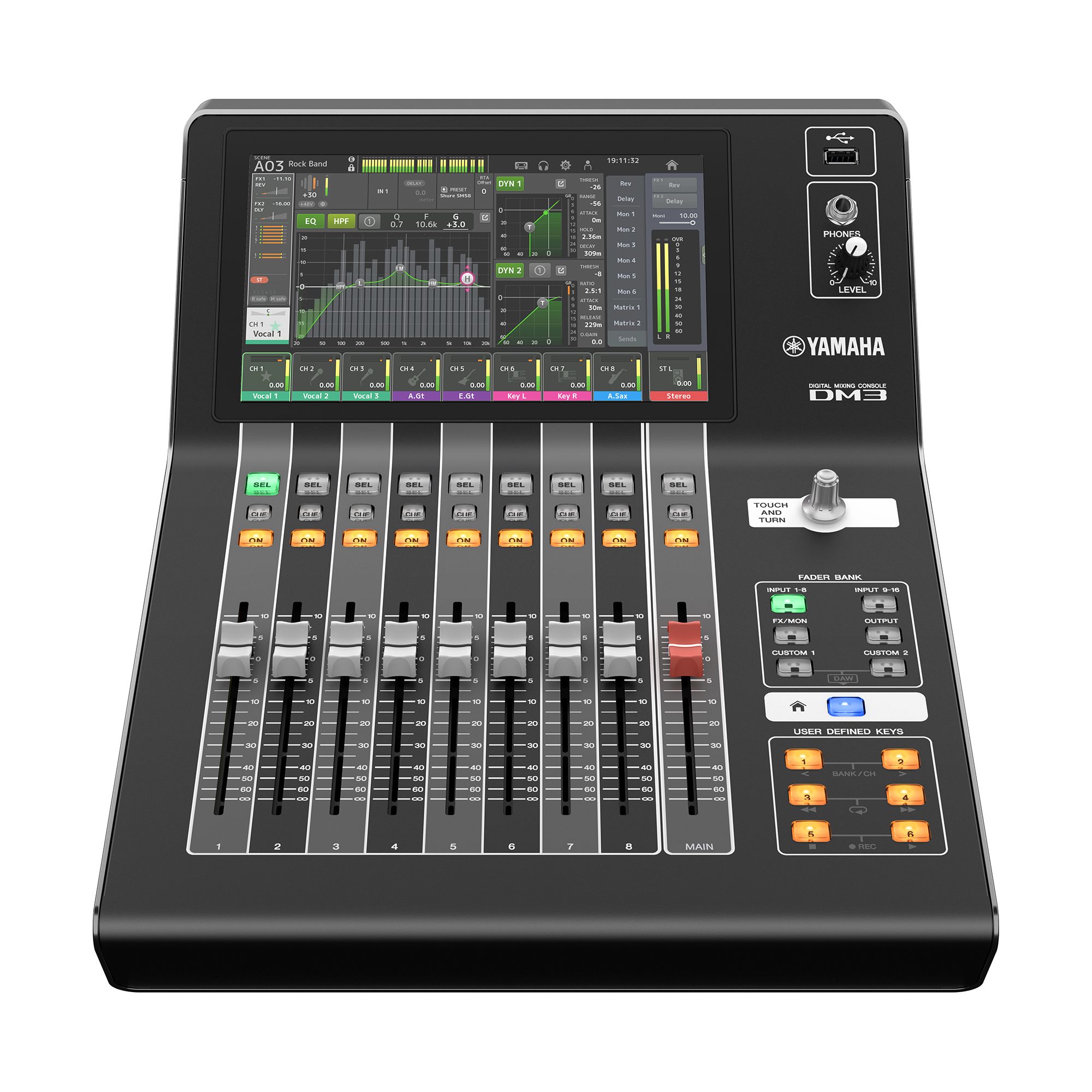
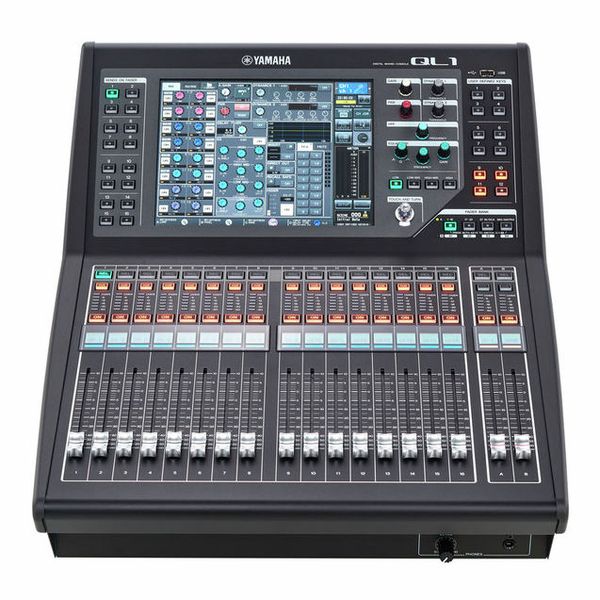
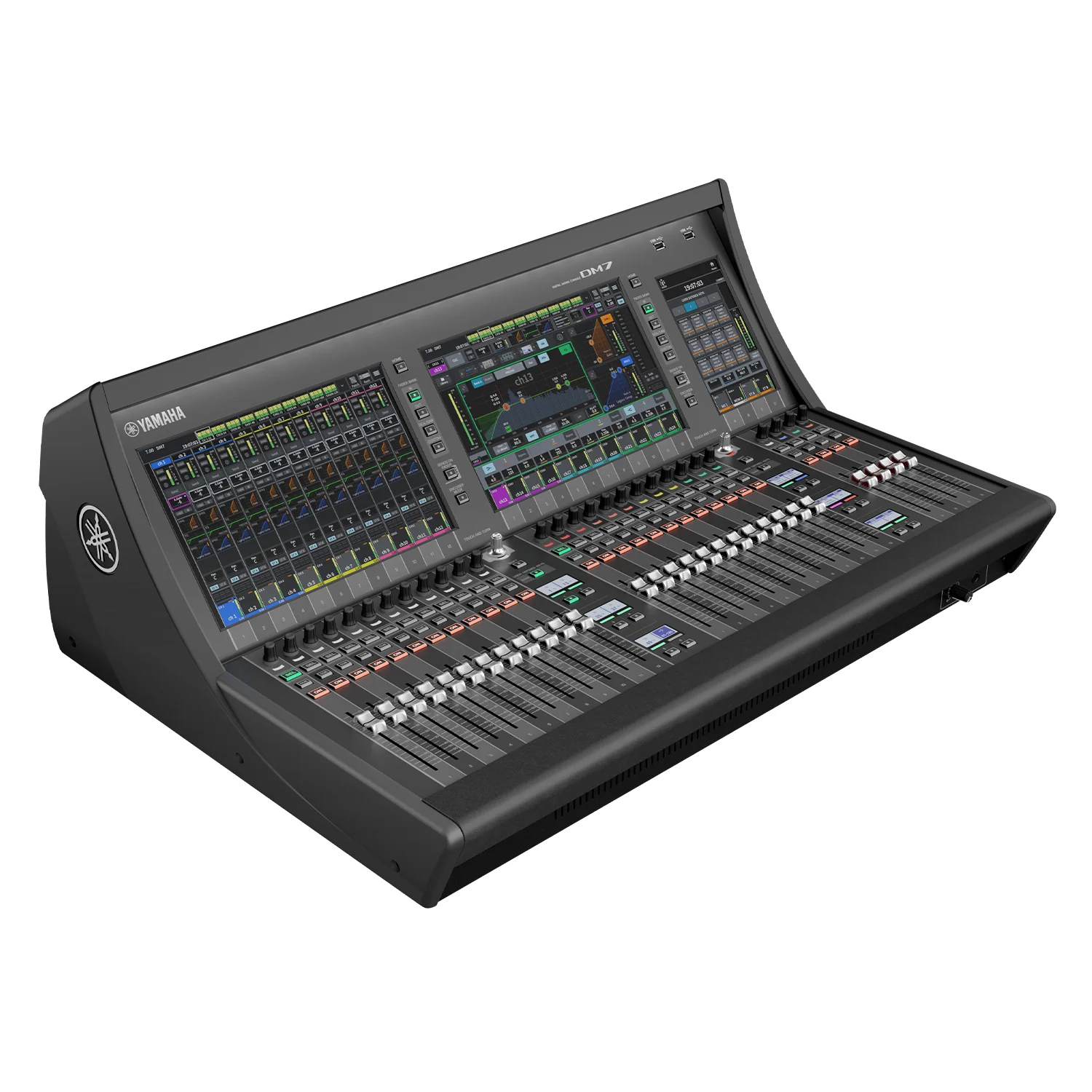
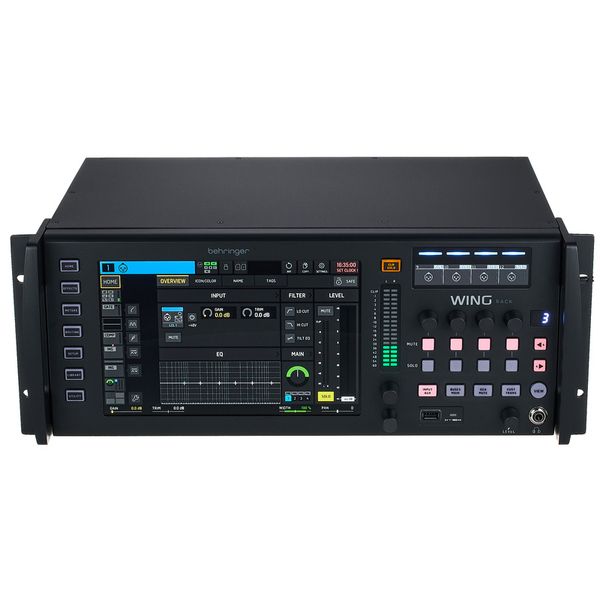
Digital mixers such as the Yamaha DM3, QL1 and DM7 or the Behringer Wing Rack have a compressor on every channel. Small analogue desks rarely have a compressor on every channel; there you do the job with the fader or an outboard unit.
Practical advice
Start with a moderate ratio and set the threshold so the compressor only works on the louder moments. Watch the gain reduction meter: for speech a few decibels is enough, not constant heavy squashing. Listen with it in and out. If you cannot hear a difference, you may not need it.
A compressor does not replace good gain. Set the input level properly first, then the compressor.
Common mistakes
The biggest mistake is over-compressing. When make-up gain lifts the quiet parts, everything around them comes up too: stage noise, monitors and the room. The microphone becomes more sensitive and feedback arrives sooner. Another mistake is a very fast attack on drums, which takes the life out of the hit. A third is confusing a compressor with a limiter; a limiter is mostly speaker protection rather than a tone tool.